Indonesia raises rates in surprise move to defend plunging rupiah
Bank Indonesia raised rates off-cycle for the first time in eight years as the rupiah slid to record lows, signaling deep pressure on capital flows and investor confidence.
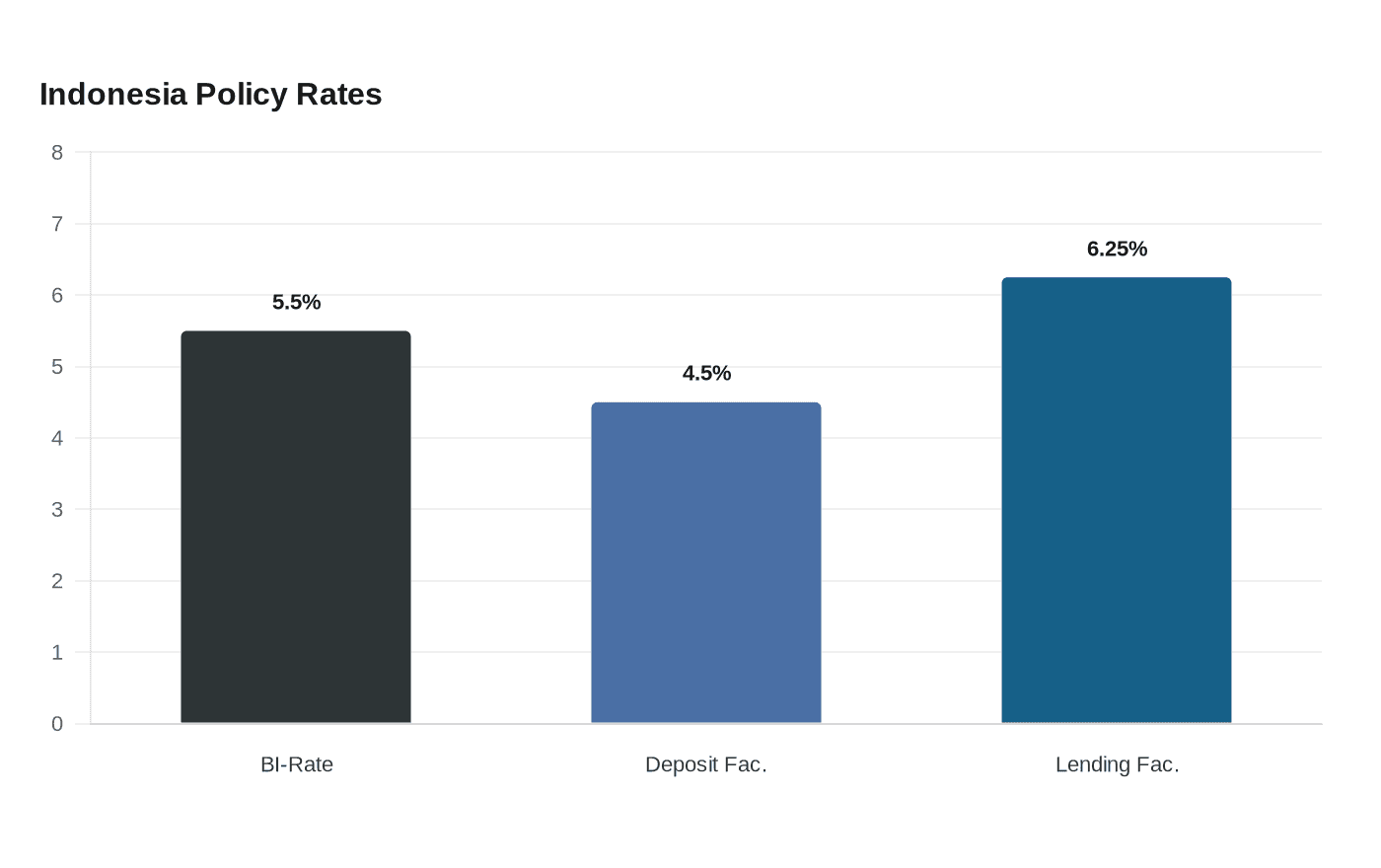
Bank Indonesia delivered an unusual warning shot on June 9, raising its benchmark BI-Rate by 25 basis points to 5.50% in an off-cycle move aimed at halting the rupiah’s slide. The central bank also lifted the Deposit Facility rate to 4.50% and the Lending Facility rate to 6.25%, underlining how seriously it views the pressure building on Southeast Asia’s largest economy.
The decision was striking not only for its timing but for what it said about market stress. It was the first unscheduled rate hike by Bank Indonesia in eight years, and it came just weeks after the central bank had already raised the BI-Rate by 50 basis points to 5.25% at its May 19-20 policy meeting. Even that larger-than-expected move had not been enough to steady the currency.
By June 8, the rupiah had fallen to about Rp18,184 per U.S. dollar before recovering after the announcement. That put the currency down roughly 8% in 2026 and about 7% since the war in the Middle East erupted, making it one of the world’s worst performers this year. For policymakers, the rapid depreciation raised the risk of imported inflation, weaker confidence in local assets and further pressure on foreign-exchange reserves.
Bank Indonesia said the move was designed to strengthen exchange-rate stabilization amid heightened global turmoil and to keep inflation in the government’s 2026 and 2027 target range of 1.5% to 3.5%. The central bank also described the increase as a pre-emptive step to preserve price stability, rather than the start of a broader tightening cycle. Still, the emergency tone of the action suggested a central bank trying to reassure investors that it would not let currency weakness become a more damaging financial spiral.
The strain was visible in markets beyond the foreign-exchange desk. Jakarta’s main stock index had lost more than a third of its value in 2026 before rebounding sharply after the rate decision, with one report saying it rose nearly 5% in morning trade. That kind of swing reflects both relief and fragility: investors welcomed the signal of support, but the underlying pressure remained.
The move also highlighted the limits of Indonesia’s defenses. Bank Indonesia said end-May reserves stood at $144.9 billion, down from $146.2 billion in April, even after a government foreign-currency bond sale. The central bank said that stockpile was equivalent to about 5.6 months of imports, or 5.5 months of imports plus government foreign debt payments, enough for stability but not immunity.
Behind the numbers is a broader emerging-market warning. Reuters analysis had linked investor anxiety to President Prabowo Subianto’s policy agenda, including expansive spending plans such as free meals for schoolchildren, and to fears of capital flight under a strong-dollar, geopolitically volatile backdrop. Bank Indonesia’s off-cycle hike showed how quickly those pressures can force policymakers to choose between growth support and defending financial stability.
This article was produced by Prism’s automated news system from verified source data, official records, and press releases, then run through automated quality and moderation checks before publishing. The system is built and supervised by the people who set the standards it runs under. Read our full AI policy.
Know something we missed? Have a correction or additional information?
Submit a Tip