Inflatable "Chunk" brings whale science to Sagadahoc County
Jessica Woodend brought a 43-foot inflatable whale to Sagadahoc County schools and libraries. It teaches marine anatomy and commemorates a whale lost to entanglement.
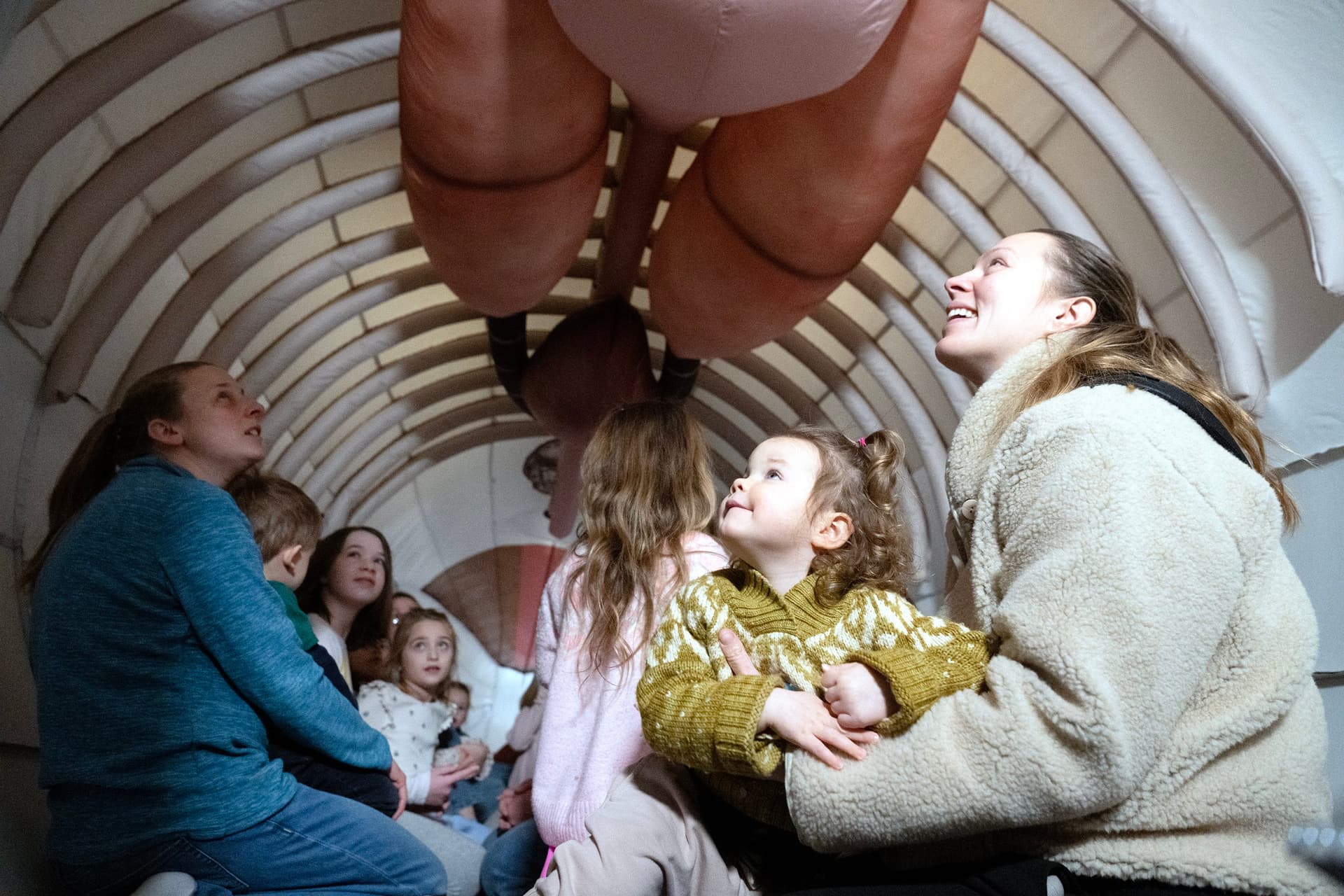
On Jan. 12, 2026, Topsham resident Jessica Woodend set up a life-sized, 43-foot inflatable humpback whale named Chunk at venues around Sagadahoc County as part of her outreach program Within the Whale. The inflatable is designed to be walked through, revealing internal anatomy such as baleen, a heart, lungs and a three-chamber stomach, turning classroom lessons about marine mammals into a hands-on experience.
The exhibit is both educational and commemorative. The inflatable carries the name of a real whale known as Chunk that died after becoming entangled in fishing gear, and Woodend says the display is meant to teach anatomy while keeping attention on the human-wildlife interactions that affect Maine’s coastal waters. Schools, libraries and community centers in the county hosted the display so students and residents could get a literal inside look at whale biology and the conservation issues tied to entanglement.
Woodend bought the custom inflatable in 2024 and has brought it to dozens of locations across Maine. She runs the program for a modest fee with sliding-scale options so smaller community organizations can participate, and she donates a portion of proceeds to marine conservation groups. Those operational choices keep outreach affordable locally while funneling some funds toward conservation work beyond the classroom.
The local impact is practical and cultural. For teachers, the exhibit converts textbook diagrams into a sensory learning opportunity that can improve retention and spark interest in marine science careers. For fishing families and coastal businesses, the display reframes entanglement as a community concern that intersects with livelihoods, safety and regulation. The program’s presence in Sagadahoc County presents an occasion for community conversations about gear practices, wildlife response protocols, and how local institutions can partner on prevention and education.

Looking ahead, Woodend hopes to expand Within the Whale into a nonprofit, a shift that could unlock grant funding, formal partnerships with schools and museums, and a wider slate of conservation activities. For now, the model combines modest earned revenue, donations to conservation groups and targeted community engagement.
The takeaway? If you run a school, library or civic group in Sagadahoc County, booking Chunk can be an affordable way to bring marine biology and entanglement awareness directly to your audience. Our two cents? Treat it as both a science lesson and a community conversation starter — it’s one way to keep coastal livelihoods and whale safety on the same page.
Sources:
Know something we missed? Have a correction or additional information?
Submit a Tip