Inflation jumps in April as Fed's preferred gauge rises 3.8%
Energy costs pushed the Fed’s preferred inflation gauge to 3.8%, a sharp test for Kevin Warsh just days into his new role.
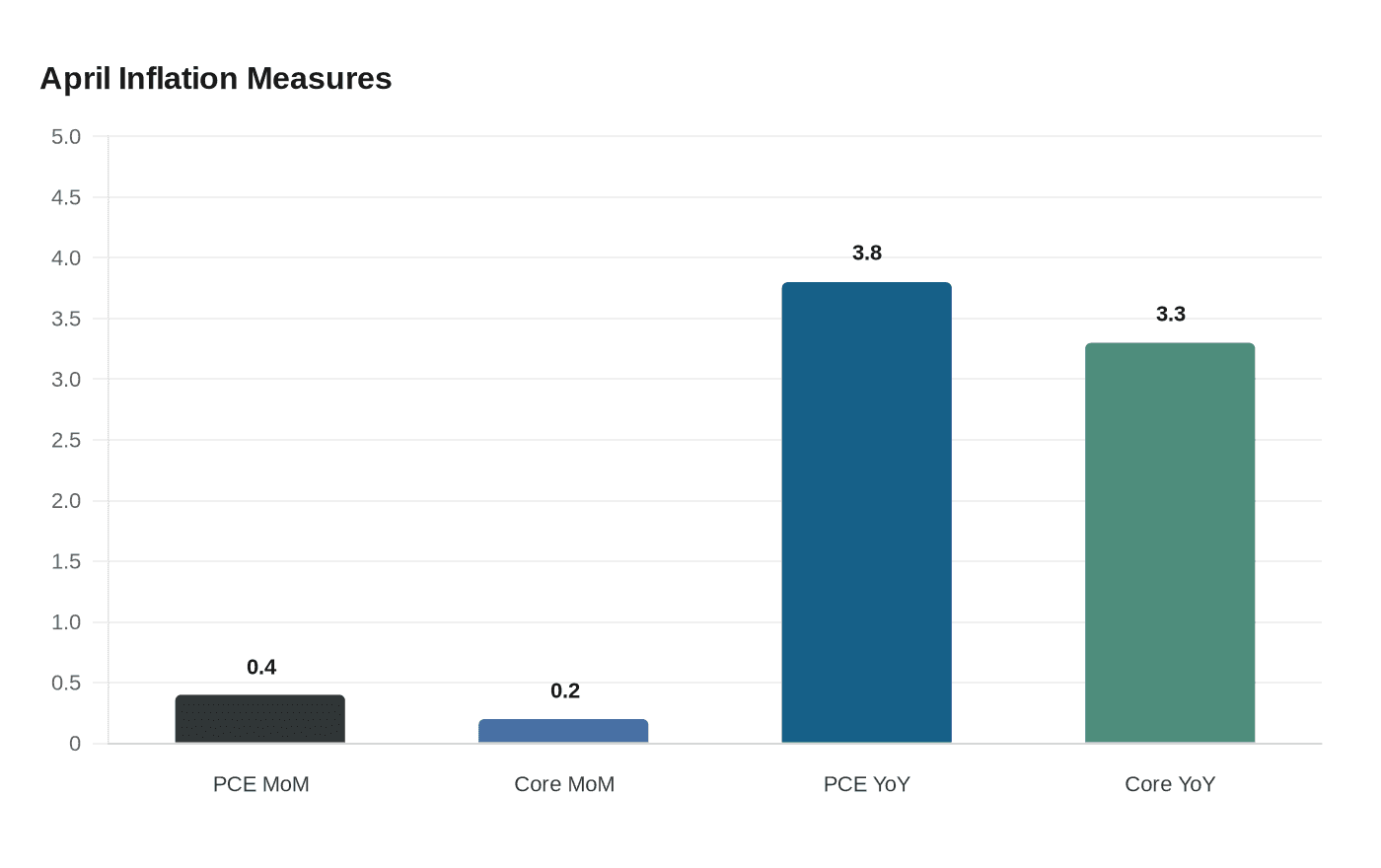
Inflation accelerated in April, handing new Federal Reserve chief Kevin Warsh an early test as energy-driven price gains pushed the central bank’s preferred gauge up 3.8% from a year earlier and weakened the case for near-term rate cuts.
The Bureau of Economic Analysis said Thursday that the personal consumption expenditures price index rose 0.4% from March, its fastest monthly increase in months, while the core measure excluding food and energy climbed 0.2%. The annual headline reading was the largest since May 2023. Core PCE rose 3.3% from a year earlier, still well above the Fed’s 2% target.
The report showed inflation taking a bite out of household demand. Nominal personal consumption expenditures rose $111.1 billion in April, including a $67.2 billion gain in services spending and a $44.0 billion increase in goods spending. But real PCE, adjusted for inflation, increased only 0.1%, a sign that more of the month’s spending reflected higher prices rather than stronger purchasing power. The personal saving rate fell to 2.6%.
The April data arrives as Warsh begins his tenure with less room to maneuver than many investors had hoped. He took the oath of office on May 22, after President Donald Trump nominated him on March 4, the Senate confirmed him on May 12 and then elevated him to chair on May 13. The Federal Open Market Committee unanimously selected him the same day he was sworn in.
The inflation jump was driven in large part by energy costs, according to Reuters. Gasoline prices rose sharply in April as the war with Iran disrupted shipping through the Strait of Hormuz and strained global supply chains, including flows of fertilizers, aluminum and consumer products. Reuters also reported that the national average retail gasoline price rose 12.3% in April and more than 50% since the war began at the end of February.
For the Fed, the timing is awkward. Minutes from the April 28-29 meeting already showed a growing number of policymakers open to raising rates if inflation does not ease. With headline PCE now moving further from target, the new reading strengthens expectations that the central bank could keep interest rates unchanged well into next year. Markets have begun to price in the possibility of higher rates if inflation remains elevated, a shift that would keep borrowing costs high for households and businesses and prolong pressure on budgets already strained by pricier fuel and slower real spending.
This article was produced by Prism’s automated news system from verified source data, official records, and press releases, then run through automated quality and moderation checks before publishing. The system is built and supervised by the people who set the standards it runs under. Read our full AI policy.
Did this article answer your question?