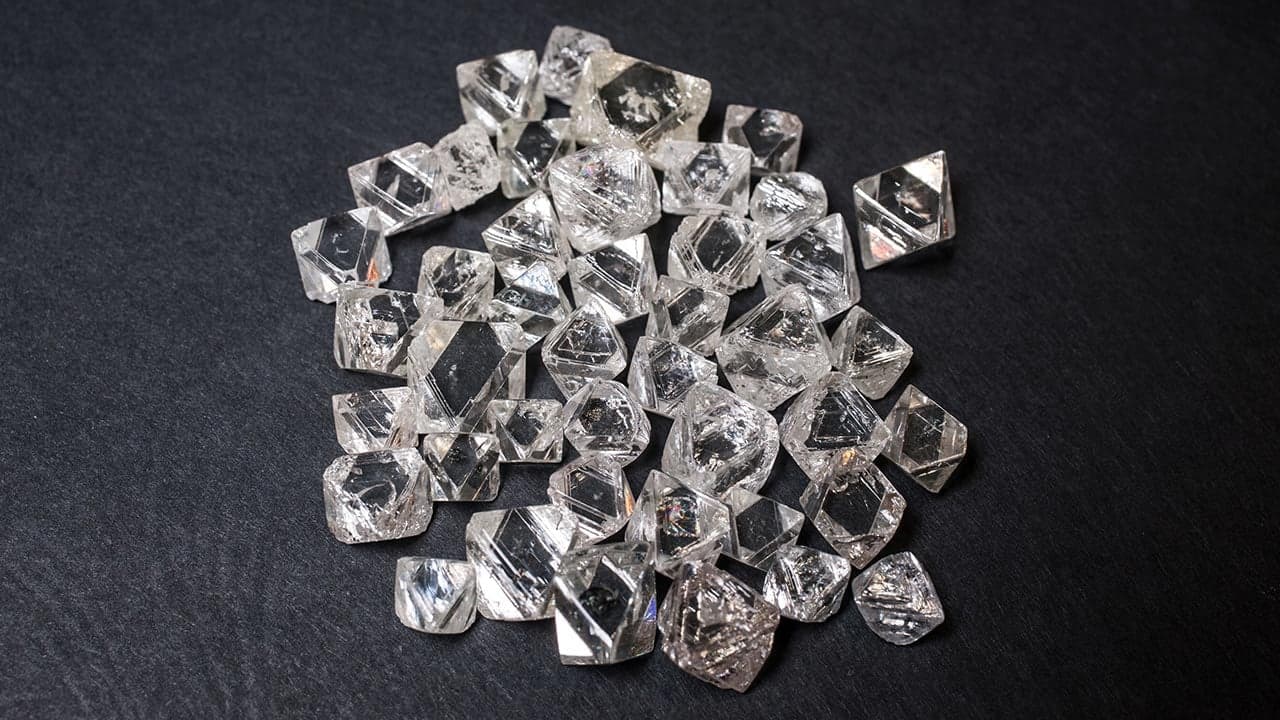
Insuring Diamond Jewelry: Coverage, Documentation, and Policy Reviews for Collectors and Retailers
homeowners and renters policies often have low sublimits for jewelry; schedule or buy specialty jewelry insurance, with annual premiums typically about 1-2% of appraised value.

Natural diamond jewelry is a meaningful investment worth protecting. Homeowners and renters policies often have low sublimits for jewelry; standalone jewelry insurance or a rider can provide comprehensive coverage for loss, theft, accidental damage, and mysterious disappeanc, so the choice of vehicle matters from the moment you leave the showroom.
Why insure: risk and reassurance Natural diamond jewelry is valuable, making it uniquely vulnerable to loss, theft, or accidental damage. Insurance is the practical mechanism to ensure that when the unexpected happens, your pieces can be repaired, replaced, or reimbursed without compromising on quality or sentiment, as a well-crafted jewelry insurance policy ensures. That reassurance is especially important for collectors and retailers who combine financial value with provenance and craftsmanship.
Types of coverage and what they protect For items valued at $1,000 or more, there are several types of coverage—homeowners, renters, or standalone policies—but specialty jewelry insurance offers the best coverage. Homeowners and renters policies can be useful for lower-value pieces, but their low sublimits make them unreliable for higher-value diamonds. A scheduled jewelry policy offers the most comprehensive protection and ensures that your diamond jewelry is fully insured based on its appraised value. The words available in policy language matter: the right policy should explicitly cover theft, loss, and damage, and may use additional language such as accidental damage; one supplied phrasing even lists "mysterious disappeanc" as a covered risk, though that text is truncated in the available wording.
Thresholds, premiums, and cost expectations Set a pragmatic threshold for when to move from a homeowners or renters policy to specialty coverage. The guidance used here is clear: for items valued at $1,000 or more, specialty coverage is recommended. Annual premiums are usually around 1-2% of the appraised value, which gives a quick budgeting rule: a piece appraised at $10,000 could carry an annual premium in the $100-200 range. Those figures are industry-level guidance to help you evaluate quotes, not a substitute for reviewing actual insurer offers.
Appraisals and valuation discipline Start by knowing the value of your jewelry. Have your diamond jewelry appraised by a professional to determine its current market value, because a diamond grading report is different from an appraisal and is not a substitute for proper valuation. Regular appraisals every 3-5 years are important as natural diamonds can appreciate in value over time. Remember that physical changes matter for coverage: resizing or modifying your jewelry could affect its insured value, and market fluctuations could also play a role in adjusting coverage.
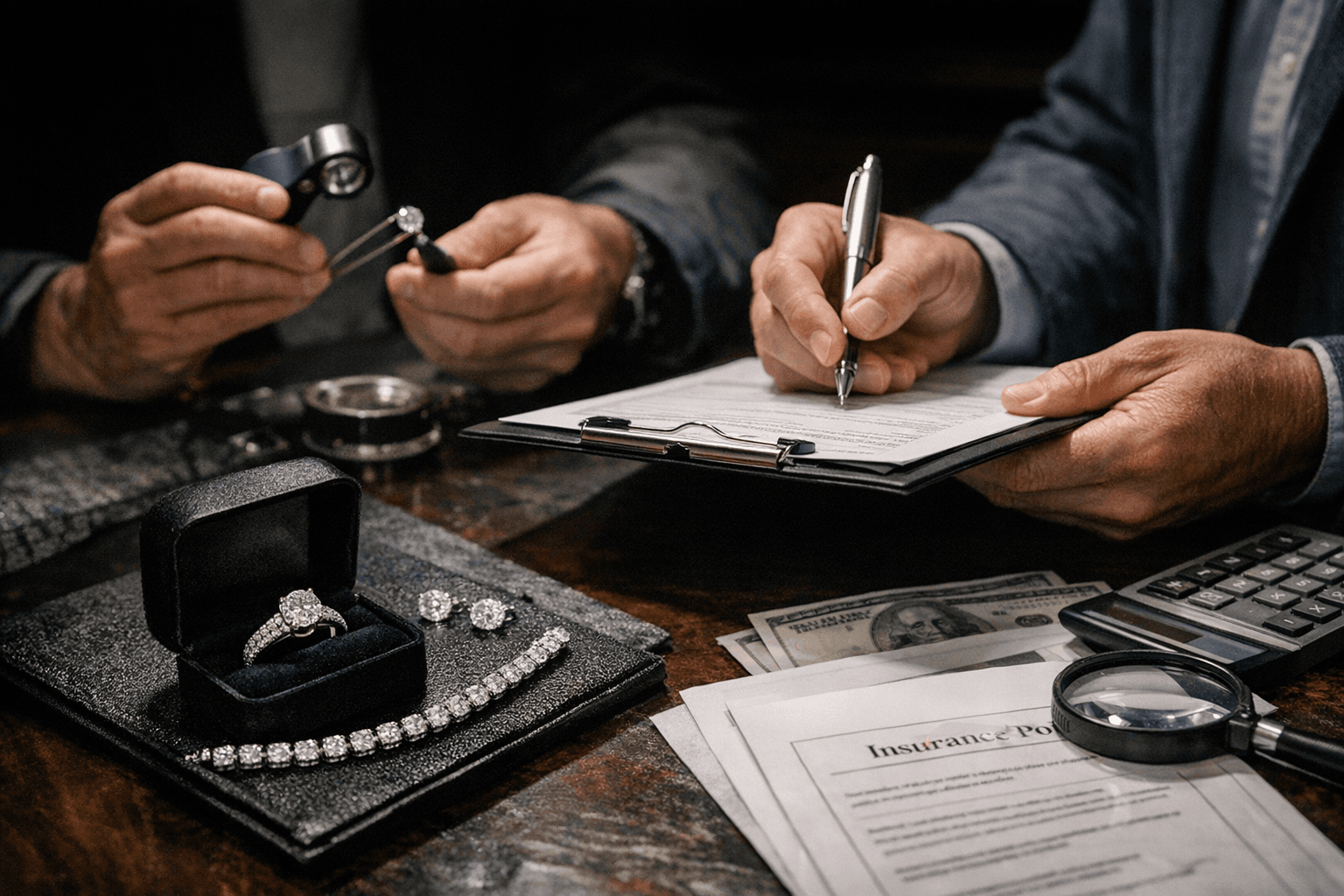
Documentation that makes claims straightforward Maintain thorough records, including photographs, receipts, and appraisals for each piece of jewelry. These documents will be necessary to support any insurance claims you make in the event of loss or damage. Photograph settings and distinctive hallmarks, keep receipts or invoices that show retail or replacement cost, and store appraisal reports alongside certificates and grading documentation so you can demonstrate provenance and value quickly to an insurer.
Policy review and upkeep Review your policy regularly, at least whenever you alter a piece or after an appraisal update. As your diamond jewelry’s value may change over time, make sure to review your policy to ensure it reflects any changes. Scheduled items should have appraisals on file so that, in the event of a claim, the insurer can rely on an established valuation rather than a contested retail price.
- Get pieces professionally appraised, and update appraisals every 3-5 years.
- Choose a scheduled or specialty jewelry policy for items over $1,000 to avoid low sublimits.
- Expect annual premiums around 1-2% of the appraised value when budgeting for insurance.
- Maintain thorough records, including photographs, receipts, and appraisals, to support any claims.
- Review your policy after resizing, modifying, or when markets shift to keep coverage aligned with value.
Practical checklist for collectors and retailers
A final note on protection and provenance Insuring diamond jewelry is not only about replacing monetary value; it is about preserving craftsmanship, provenance, and the specific stories that make a piece meaningful. A scheduled jewelry policy aligned with up-to-date appraisals and clear documentation is the simplest way to protect both the financial and sentimental components of a collection. When coverage is selected and maintained this way, the promise that pieces can be repaired, replaced, or reimbursed is more than a line in a contract, it is the difference between loss and continuity for collectors and retailers alike.
Know something we missed? Have a correction or additional information?
Submit a Tip