Investors sue Trump and Bondi over approval of TikTok U.S. sale
The Public Integrity Project sued in the D.C. Circuit, alleging the administration's approval of a majority‑American TikTok deal violated the 2024 anti‑propaganda law and enriched Trump allies.
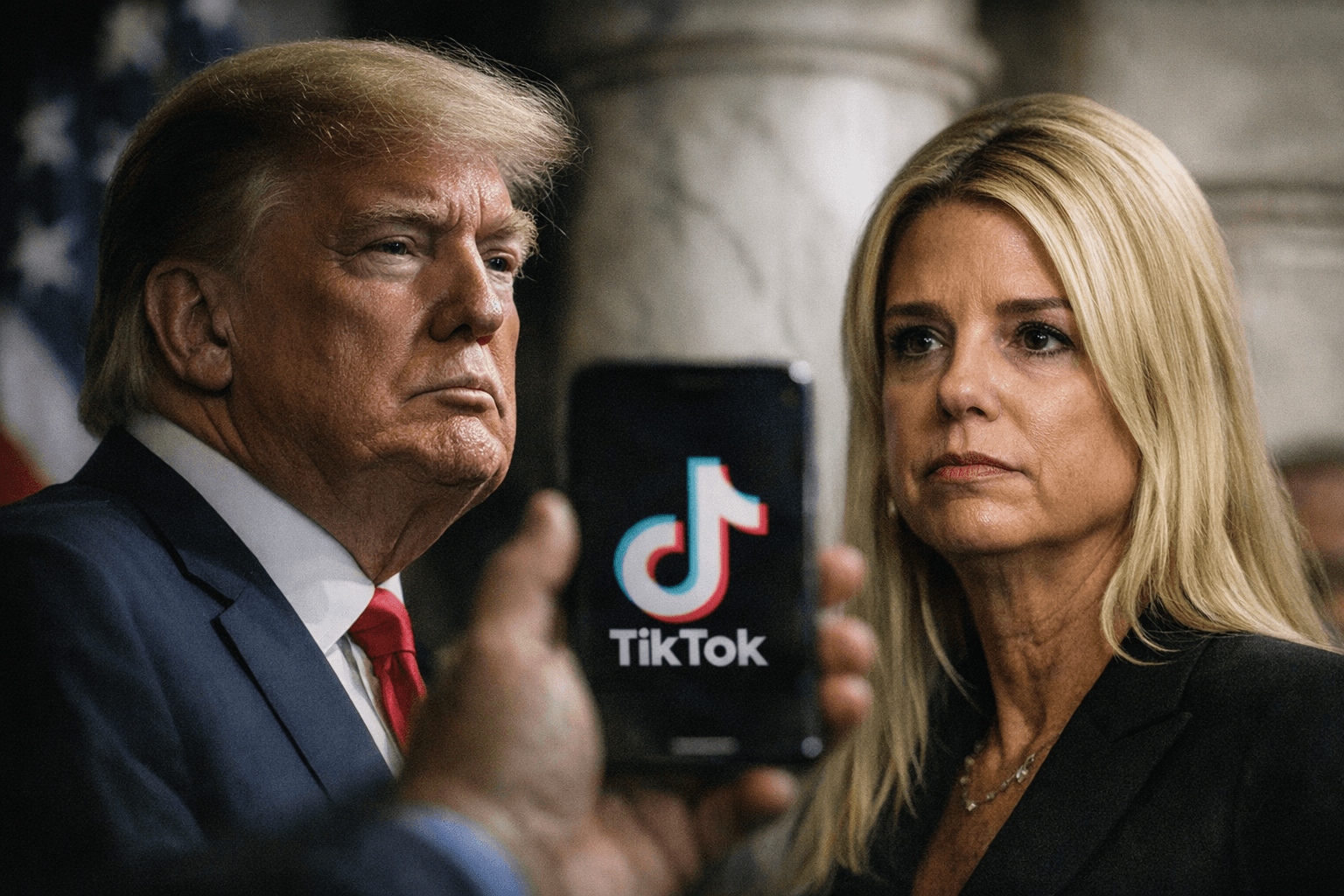
The Public Integrity Project filed a lawsuit in the U.S. Court of Appeals for the D.C. Circuit on March 5, 2026, challenging President Donald Trump’s and Attorney General Pam Bondi’s approval of a deal that transferred control of TikTok’s U.S. operations to a majority‑American joint venture. The complaint argues the arrangement flouts a 2024 law intended to prevent the spread of Chinese government propaganda and has financially benefited investors with close ties to the president.
Two individual plaintiffs named in the filing are software engineers Zhaocheng Anthony Tan and Garrett Reid, who say they own stock in Alphabet Inc. and Meta Platforms Inc., respectively. The complaint says both companies, rivals of TikTok, were expected to gain after the law passed in 2024 and that they and other investors were harmed by the administration’s failure to enforce it.
The transaction at the center of the suit moved TikTok’s U.S. business into a new investor group that includes Oracle, Abu Dhabi’s MGX, affiliates of Susquehanna International Group, and General Atlantic, among other firms. Under the approved structure, ByteDance would continue to own TikTok’s recommendation algorithm while the new investor consortium would control a U.S. data infrastructure arm. The complaint contends that this division of technical control undermines the statute’s purpose by leaving critical algorithmic decision making with ByteDance while placing user data in the hands of the investor group.
The lawsuit quotes the investor roster as parties that “have close ties to the President, and have at times personally enriched him.” It also includes a forceful critique of the deal’s design from Ballou: “The original motivation for this law was to prevent the Chinese government from pushing propaganda onto American audiences,” Ballou said. “The deal that the president approved is the absolute worst of all possible worlds, because right now ByteDance continues to own the algorithm, which means that it can censor the content that it doesn’t like, but at the same time Oracle controls the data and it can censor the information that it doesn’t like. Really it’s a situation that’s going to be terrible for users, and terrible for free speech on the platform.”
President Trump, who signed an executive order in September that federal officials said paved the way for the transaction and approved the sale in January, celebrated the outcome on social media: “I am so happy to have helped in saving TikTok!” he wrote, calling the result a “very dramatic, final, and beautiful conclusion.”
Beyond legal theory, the suit raises questions with clear market consequences. Control of recommendation algorithms and user data are core to targeted advertising revenue and content moderation strategies; splitting those functions between a foreign parent and a U.S. investor consortium could alter competitive dynamics across digital advertising and social platforms. Plaintiffs argue that Alphabet and Meta were poised to benefit from strict enforcement of the 2024 law, and that the approved deal deprived them and their shareholders of that expected competitive advantage.
The filing signals continued legal and political scrutiny of how national security, campaign finance ties, and commercial interests intersect in large tech transactions. The case arrives at a moment of elevated regulatory attention to foreign influence in digital media and could shape how future cross‑border platform deals are structured and reviewed. The Public Integrity Project lodged its challenge in the D.C. Circuit on March 5, 2026; the court will determine whether the administration’s approval complied with the 2024 statute and related legal obligations.
This article was produced by Prism’s automated news system from verified source data, official records, and press releases, then run through automated quality and moderation checks before publishing. The system is built and supervised by the people who set the standards it runs under. Read our full AI policy.
Did this article answer your question?


