IOC Requires Genetic Testing to Determine Women's Event Eligibility Starting 2028
The IOC banned transgender women from the Olympics using a one-time SRY gene test, a policy taking effect at the 2028 LA Games that also affects athletes like Caster Semenya.
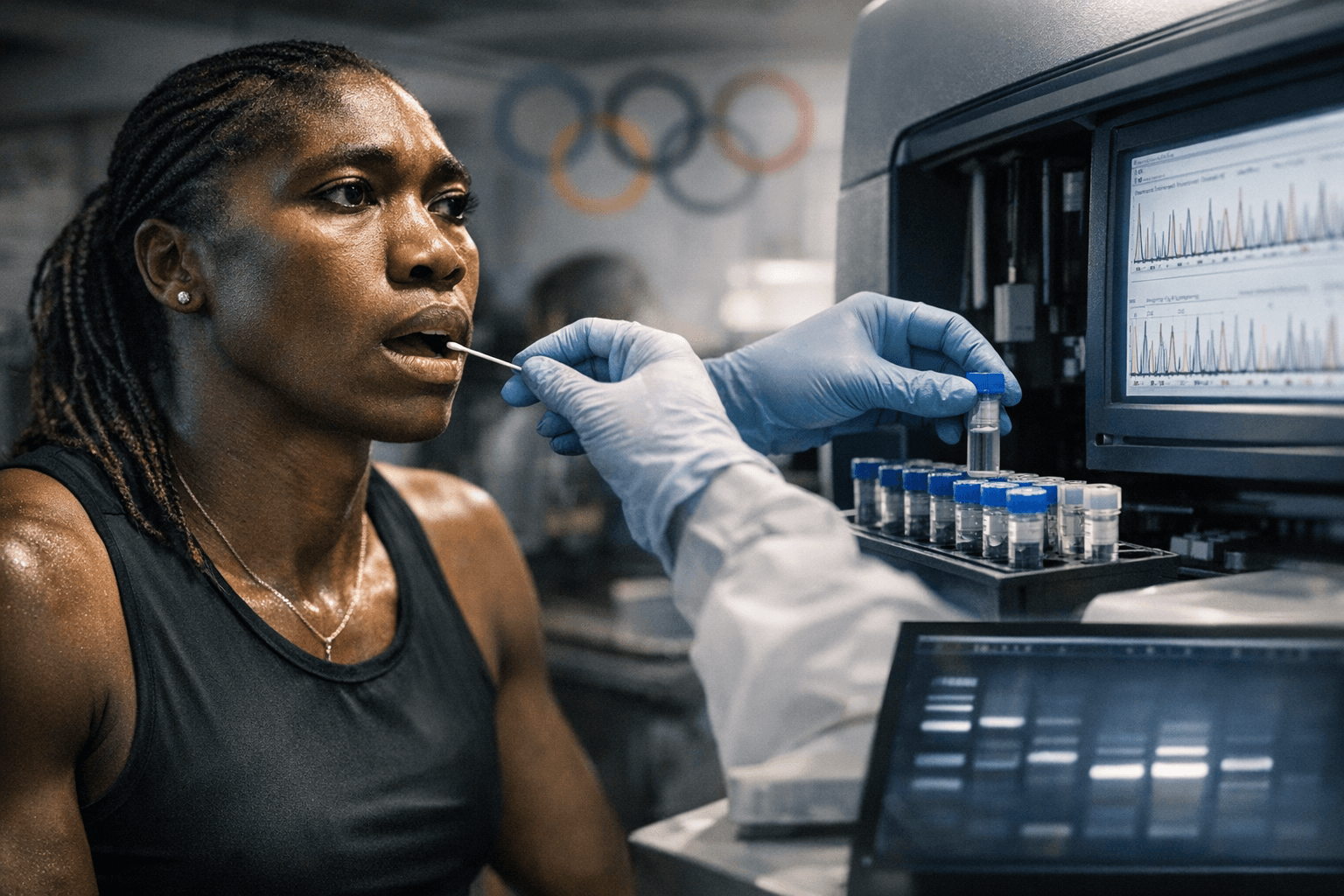
Caster Semenya, a two-time Olympic champion runner born female in South Africa with naturally elevated testosterone levels, learned Thursday that the International Olympic Committee's sweeping new eligibility policy would bar her from competing in women's events at the Olympics, alongside transgender women athletes. The policy, published after an IOC executive board meeting, marks the most significant overhaul of female-category eligibility rules in the organization's history.
"Eligibility for any female category event at the Olympic Games or any other IOC event, including individual and team sports, is now limited to biological females," the IOC said, with eligibility to be determined by a mandatory gene test once in an athlete's career. The policy, which takes effect for the LA Olympics in July 2028, "protects fairness, safety and integrity in the female category," the IOC said.
The test screens for "the SRY gene, a segment of DNA typically found on the Y chromosome that initiates male sex development in utero and indicates the presence of testes/testicles." Athletes will be screened through their saliva, a cheek swab or a blood sample. Based on those results, "no athlete with an SRY-positive screen is eligible for competition in the female category at an IOC event," the committee said. Athletes diagnosed with Complete Androgen Insensitivity Syndrome or other rare differences in sex development who do not benefit from the anabolic or performance-enhancing effects of testosterone may still be allowed to participate in the women's category.
Kirsty Coventry, the first woman to lead the Olympic body in its 132-year history, set up a review of "protecting the female category" as one of her first major decisions after taking office last June. In September 2025, the IOC established a working group that examined scientific, medical, and legal developments since 2021, drawing members from all five continents with expertise spanning sports science, endocrinology, transgender medicine, women's health, ethics, and law. IOC President Coventry said in a statement: "As a former athlete, I passionately believe in the rights of all Olympians to take part in fair competition."
The 10-page IOC document details research that being born male gives physical advantages that a working group of experts believes are retained, noting: "Males experience three significant testosterone peaks: in utero, in mini-puberty of infancy and beginning in adolescent puberty through adulthood." The document also quantified those advantages, stating the male performance edge over biological women was "10-12% in most running and swimming events," at least 20% in "most throwing and jumping events," and could be "greater than 100%" in explosive power events including "punching sports."
Before the 2024 Paris Olympics, three top-tier sports, track and field, swimming, and cycling, had already excluded transgender women who had been through male puberty. The IOC's new policy supplants that fragmented approach. Coventry and the IOC had wanted a clear, unified policy instead of continuing to advise sports' governing bodies who previously drafted their own rules. The mandatory gender screening, already conducted by the governing bodies of track and field, skiing, and boxing, is still likely to be criticized by human rights experts and activist groups.
Semenya called the change "exclusion with a new name," stating: "I have carried this weight. So have other women of color who deserved better from sport." She added: "Reintroducing genetic screening is not progress, it is walking backward."
It remains unclear how many, if any, transgender women are competing at an Olympic level. No woman who transitioned from being born male competed at the 2024 Paris Summer Games, though weightlifter Laurel Hubbard did at the Tokyo Olympics in 2021 without winning a medal. One of the two women's boxing gold medalists at the center of the gender controversy in Paris, Lin Yu-ting of Taiwan, passed her gene test and can return to competition, the World Boxing governing body confirmed last week.
In the U.S., President Donald Trump signed the executive order "Keeping Men Out of Women's Sports" in February 2025 and pledged to deny visas to some athletes attempting to compete at the LA Olympics; the order also threatened to "rescind all funds" from organizations that allowed transgender athletes to compete in women's sports. Within months, the U.S. Olympic body updated its guidance to national sports bodies citing an obligation to comply with the White House.
Before Thursday's announcement, more than 80 human rights and sports advocacy groups called on the IOC to reject a blanket ban on transgender and intersex athletes and criticized universal "genetic sex testing" as regressive. The IOC, whose Olympic Charter states that access to play sport is a human right, said the policy "is not retroactive and does not apply to any grassroots or recreational sports programs." The gap between that stated principle and what the policy now requires at the elite level will define the debate for years before Los Angeles opens its Games.
Know something we missed? Have a correction or additional information?
Submit a Tip