Iran Demands Funds Released Before Weekend Nuclear Talks Proceed
Iran's parliament speaker Ghalibaf posted two preconditions for Saturday's Islamabad talks: a Lebanon ceasefire and the release of billions in frozen Iranian assets abroad.
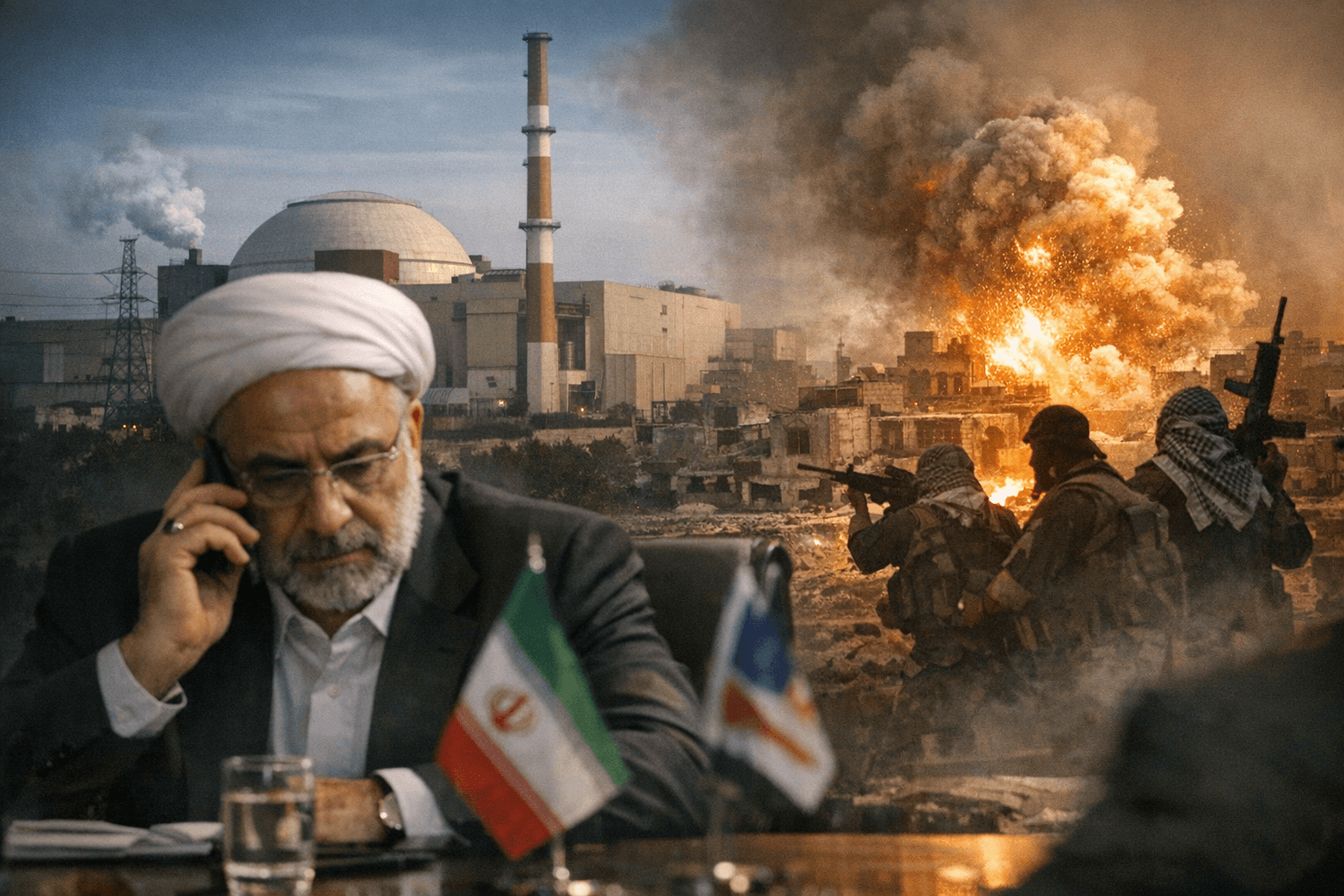
Mohammad Bagher Ghalibaf, the speaker of Iran's parliament, posted two explicit preconditions on X that upended the diplomatic calendar for weekend nuclear talks in Islamabad, declaring that a Lebanon ceasefire and the release of Iran's blocked assets abroad must be fulfilled before any negotiations with the United States can begin. The demand, framed as an enforcement of commitments already agreed upon, threatened to stall what would have been the highest-level direct engagement between Washington and Tehran since the 1979 Islamic Revolution.
"Two of the measures mutually agreed upon between the parties have yet to be implemented: a ceasefire in Lebanon and the release of Iran's blocked assets prior to the commencement of negotiations. These two matters must be fulfilled before negotiations begin," Ghalibaf wrote.
The talks were set to begin Saturday morning local time in Islamabad. Vice President JD Vance was confirmed to lead the U.S. delegation, with Special Envoy Steve Witkoff and Jared Kushner also part of the team. Iran's delegation was expected to be led by Ghalibaf and Foreign Minister Abbas Araghchi.
The asset demand carries specific financial and legal weight. Iranian reserves frozen under U.S. sanctions are scattered across multiple jurisdictions: roughly $7 billion had been held in South Korea before being transferred to Qatar in 2023 as part of a prisoner swap, then effectively refrozen; an estimated $6 to $10 billion remains tied up in Iraq; and approximately $20 billion sits in China, with smaller amounts in Japan and Luxembourg. Unfreezing any of those reserves requires action from Washington because Trump withdrew from the 2015 JCPOA in 2018 and reimposed wide-ranging sanctions, effectively re-freezing Iran's assets abroad. Any release now would require Treasury Department waivers from the Office of Foreign Assets Control, a process carrying significant political exposure in Washington. When the JCPOA was finalized in 2015, Iran agreed to significantly reduce its nuclear program in exchange for access to more than $100 billion in frozen assets.
The demand to release blocked assets has been a recurring issue in past negotiations, but this marks the first time it has been raised as a formal prerequisite to the upcoming ceasefire talks. By elevating it to a gate condition rather than an agenda item, Ghalibaf effectively inverted the standard negotiating sequence: rather than building trust through a shared table, Iran is demanding proof of American good faith before anyone sits down.
That posture reflects both fiscal pressure and domestic politics in Tehran. With Iran's sanctions-constrained revenue running well below its estimated monthly obligations, access to blocked funds carries urgent economic significance. It also signals that hardline factions, represented most visibly by Ghalibaf, a former Revolutionary Guards commander, are unwilling to let the appearance of engagement proceed without concrete U.S. concessions they can point to at home.
The Lebanon dispute compounded the uncertainty. When Pakistani Prime Minister Shehbaz Sharif announced the ceasefire, he specified that Lebanon was included. But Israel resumed its offensive in Lebanon in the hours after the ceasefire was announced. Trump told PBS News Hour that Lebanon was not included in the deal, calling what was happening there a "separate skirmish." Israel conducted its biggest wave of strikes on Lebanon since the war began on the first day of the ceasefire, killing at least 303 people.
As of Friday, JD Vance had already boarded Air Force Two at Joint Base Andrews, bound for Pakistan, leaving the question of whether Iran's preconditions would be met, or quietly set aside, to the final hours before the talks were scheduled to begin.
This article was produced by Prism’s automated news system from verified source data, official records, and press releases, then run through automated quality and moderation checks before publishing. The system is built and supervised by the people who set the standards it runs under. Read our full AI policy.
Did this article answer your question?