Iran demands visa, security guarantees for World Cup participation
Iran's federation set 10 conditions for World Cup play, demanding visa and security guarantees after its president was denied entry to Canada.
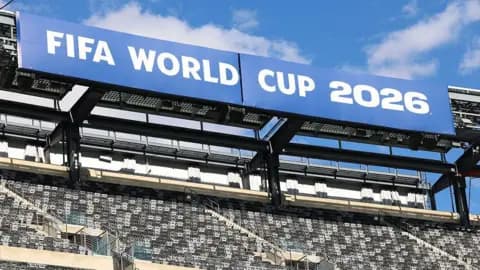
Iran has turned its place in the 2026 World Cup into a diplomatic stress test, presenting FIFA with 10 conditions and insisting it will compete “without any retreat from our beliefs, culture and convictions.” The federation said the hosts “must take our concerns into account” as it sought guarantees on visas, security and the treatment of its delegation across the United States, Mexico and Canada.
The demands came after Mehdi Taj, president of the Iranian Football Federation, was denied entry to Canada before last month’s FIFA Congress, reportedly because of his links to the Islamic Revolutionary Guard Corps. That episode sharpened Tehran’s concerns about who could travel, who could be stopped at the border and how far political disputes might spill into a tournament scheduled to run from June 11 to July 19, 2026.

Among the conditions published by Iranian media, Iran wants visas guaranteed for all players, coaches and officials travelling with the team, including those who completed military service with the IRGC. Iranian officials also want respect for the national flag and anthem, stronger security at airports, hotels and stadiums, and they have reportedly asked journalists to keep questions to “technical football matters.” Those requests draw a hard line between what FIFA can shape and what it cannot. FIFA can set tournament protocols, manage official venues and press arrangements, and influence the day-to-day treatment of delegations. It cannot override U.S. border controls, Canadian immigration decisions or security vetting by national authorities.
The political backdrop is unusually fraught. Iran’s presence at the tournament had been shrouded in uncertainty since the eruption of war in the Middle East in February after U.S. and Israeli strikes, and Iran’s sports minister had said in March that the team would not participate before later reversing course. Iran has now said it will definitely take part. U.S. Secretary of State Marco Rubio has said Iranian footballers would be welcome, while warning that people with IRGC links could still face restrictions on entering the United States. FIFA president Gianni Infantino has said Iran will play its World Cup games in the United States as scheduled.
On the field, Iran is drawn in Group G with New Zealand, Belgium and Egypt. It is due to be based in Tucson, Arizona, and will open against New Zealand in Los Angeles on June 15. Iranian officials have pointed to players such as Mehdi Taremi and Ehsan Hajsafi as examples of people they believe should not face visa problems despite questions over military service. The result is more than a football dispute: it is a live test of how much control FIFA can exert when geopolitics collides with the world’s biggest sporting event.
This article was produced by Prism’s automated news system from verified source data, official records, and press releases, then run through automated quality and moderation checks before publishing. The system is built and supervised by the people who set the standards it runs under. Read our full AI policy.
Did this article answer your question?
.jpg&w=1920&q=75)