Iran fires deadly salvo at Kuwait after new U.S. strikes
Iran’s strike on Kuwait landed after Trump said talks were “going on continuously,” sharpening fears that diplomacy and retaliation are moving on separate tracks.

Iran launched a deadly missile and drone salvo at Kuwait after President Donald Trump insisted that talks with Tehran were “going on continuously,” a sharp clash that underscored how quickly the crisis with the United States and its Gulf partners was escalating.
The attack came as Iran said it was retaliating for new U.S. strikes, turning a message of continued diplomacy into a battlefield warning. The timing mattered as much as the attack itself: one side was describing contact as ongoing, while the other answered with missiles and drones over Gulf territory.
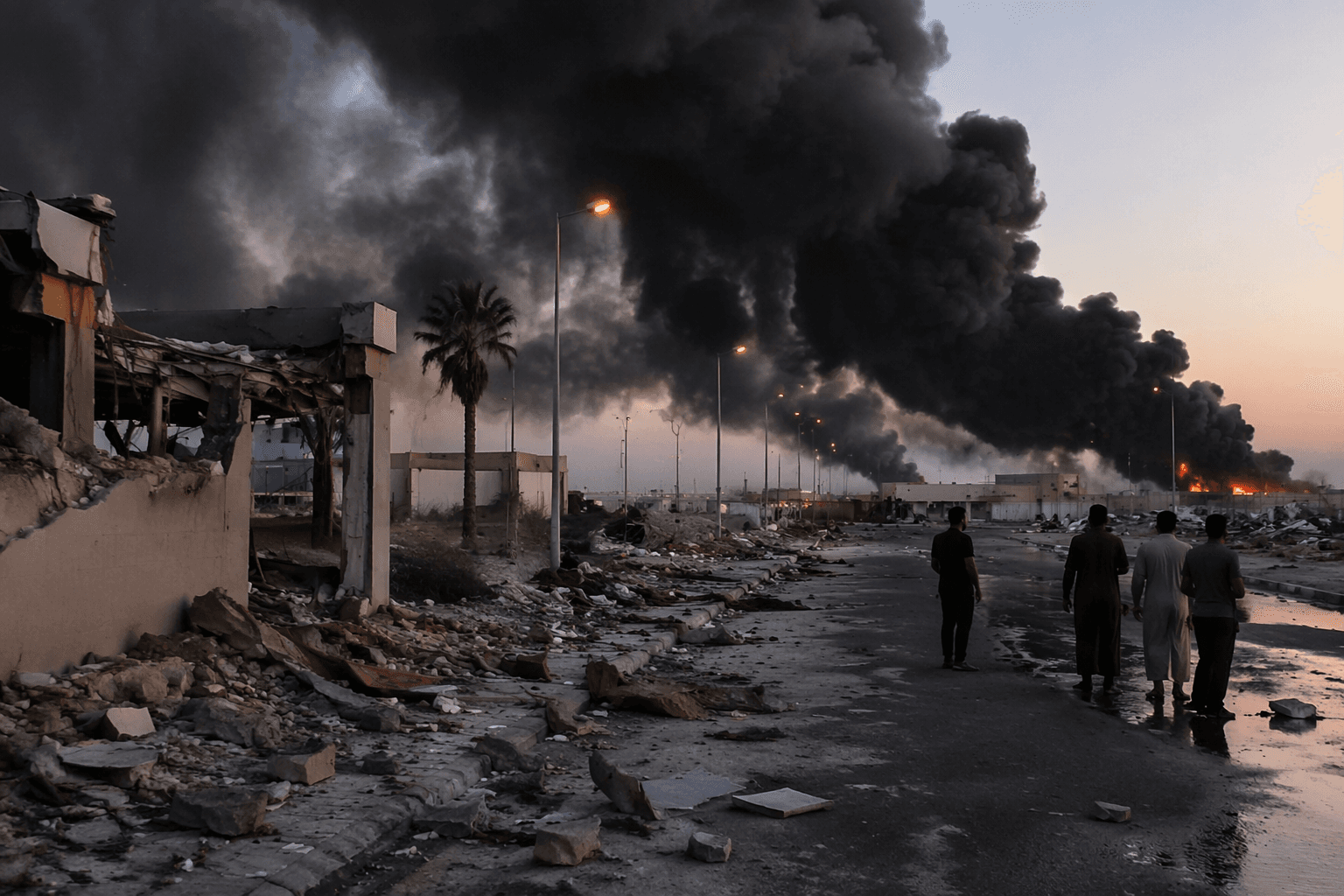
Kuwait’s role in the confrontation now carries immediate consequences for U.S. forces and for neighboring states that depend on stability in the Gulf. A strike on Kuwaiti soil raises the risk that American military assets, regional air defenses, and civilian sites could all be pulled deeper into the conflict if the exchange continues. It also signals that the retaliation is no longer confined to rhetoric or isolated flashes of force.
The episode exposed how fragile crisis management has become. Public claims that talks are still alive did not stop the launch, and the launch did not appear to slow the broader spiral between Washington and Tehran. Instead, the sequence suggested a widening regional confrontation in which diplomatic messaging and military action are moving at the same time, on opposite tracks.
For Gulf allies watching the exchange, the strike on Kuwait was a warning that the conflict could spread beyond any single target or border. With each new volley, the distance between negotiation and escalation narrows, and the margin for error around U.S. forces in the region grows thinner.
This article was produced by Prism’s automated news system from verified source data, official records, and press releases, then run through automated quality and moderation checks before publishing. The system is built and supervised by the people who set the standards it runs under. Read our full AI policy.
Know something we missed? Have a correction or additional information?
Submit a Tip