Iran seizes sanctioned tanker in Gulf of Oman after Hormuz clashes
Iran seized the sanctioned tanker Ocean Koi in the Gulf of Oman, a move seen as theater with real stakes for shipping, sanctions and oil flows.
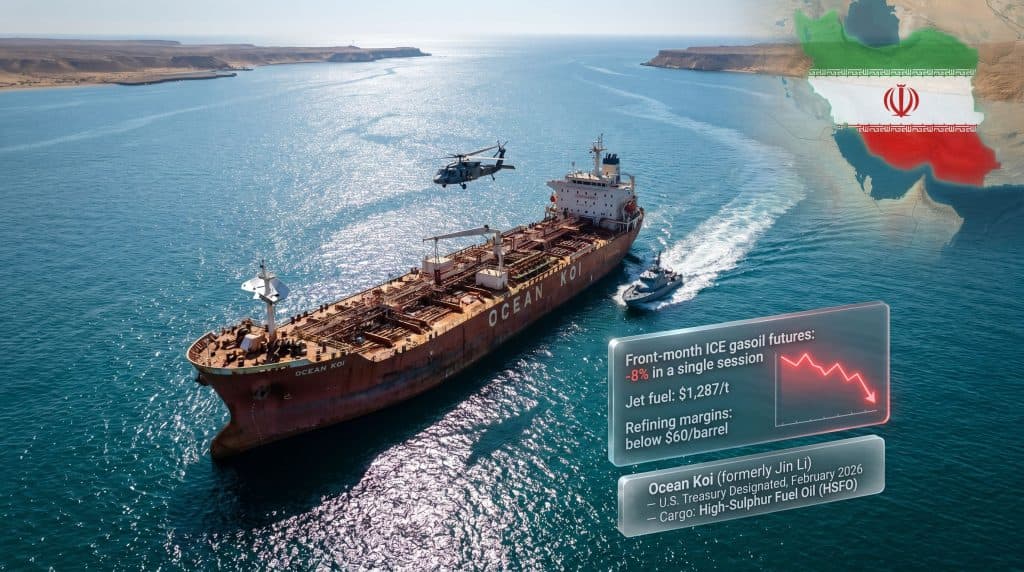
Iran’s seizure of the Barbados-flagged tanker Ocean Koi in the Gulf of Oman landed as both a warning and a display of leverage. A maritime tracking company called the move likely performative, saying the Chinese-owned ship had an “established history within the Iranian trade ecosystem,” a detail that points to symbolism as much as disruption.
Iranian state media said the vessel was carrying Iranian oil, had tried to “harm and disrupt oil exports” by taking advantage of regional conditions, and was escorted to Iran’s southern coast before being handed to judicial authorities. The tanker had already been under U.S. sanctions since February, making it a poor candidate for surprise and a useful stage prop for a government eager to show it can punish pressure in the waterways that matter most.
The timing sharpened the message. The seizure came after U.S. and Iranian forces clashed in the Strait of Hormuz, the narrow chokepoint that carried about one-fifth of the world’s oil flows before the U.S.-Israeli war on Iran began on February 28, 2026. Iran has largely closed that route, and each new confrontation now carries implications far beyond one tanker. The practical effect is not just on one ship’s cargo, but on the calculation every insurer, ship owner and trader makes when a hull crosses the Gulf of Oman or approaches Hormuz.
The deeper issue is how much of this is sanctions enforcement and how much is choreographed retaliation. On February 25, the U.S. Treasury Department sanctioned more than 30 individuals, entities and vessels tied to Iran’s illicit petroleum sales and weapons-related procurement. Treasury said Iran’s shadow fleet moves petroleum and petroleum products to foreign markets and helps finance domestic repression, terrorist proxies and weapons programs. In that light, Ocean Koi looks less like an isolated catch than another vessel caught in a broader contest over revenue, coercion and maritime control.
Rudaw reported that OFAC identified Ocean Koi in February as part of Iran’s shadow fleet, and said it was linked to Ocean Kudos Shipping Co. Ltd., a Marshall Islands-registered company described by U.S. authorities as a front tied to Iranian oil-trading networks. If that history holds, the seizure sends a message not only to Washington, but also to ship operators, insurers and intermediaries already working in the gray zone of Iran-linked trade. Tehran appears to be signaling that it can still turn sanctions pressure into spectacle, even when the cargo, the ship and the network behind it were already known.
This article was produced by Prism’s automated news system from verified source data, official records, and press releases, then run through automated quality and moderation checks before publishing. The system is built and supervised by the people who set the standards it runs under. Read our full AI policy.
Did this article answer your question?