Iran team faces security delays and visa issues on U.S. World Cup trip
Security coils, police blockades and visa problems greeted Iran at LAX, turning a World Cup trip into a lesson in geopolitics on U.S. soil.

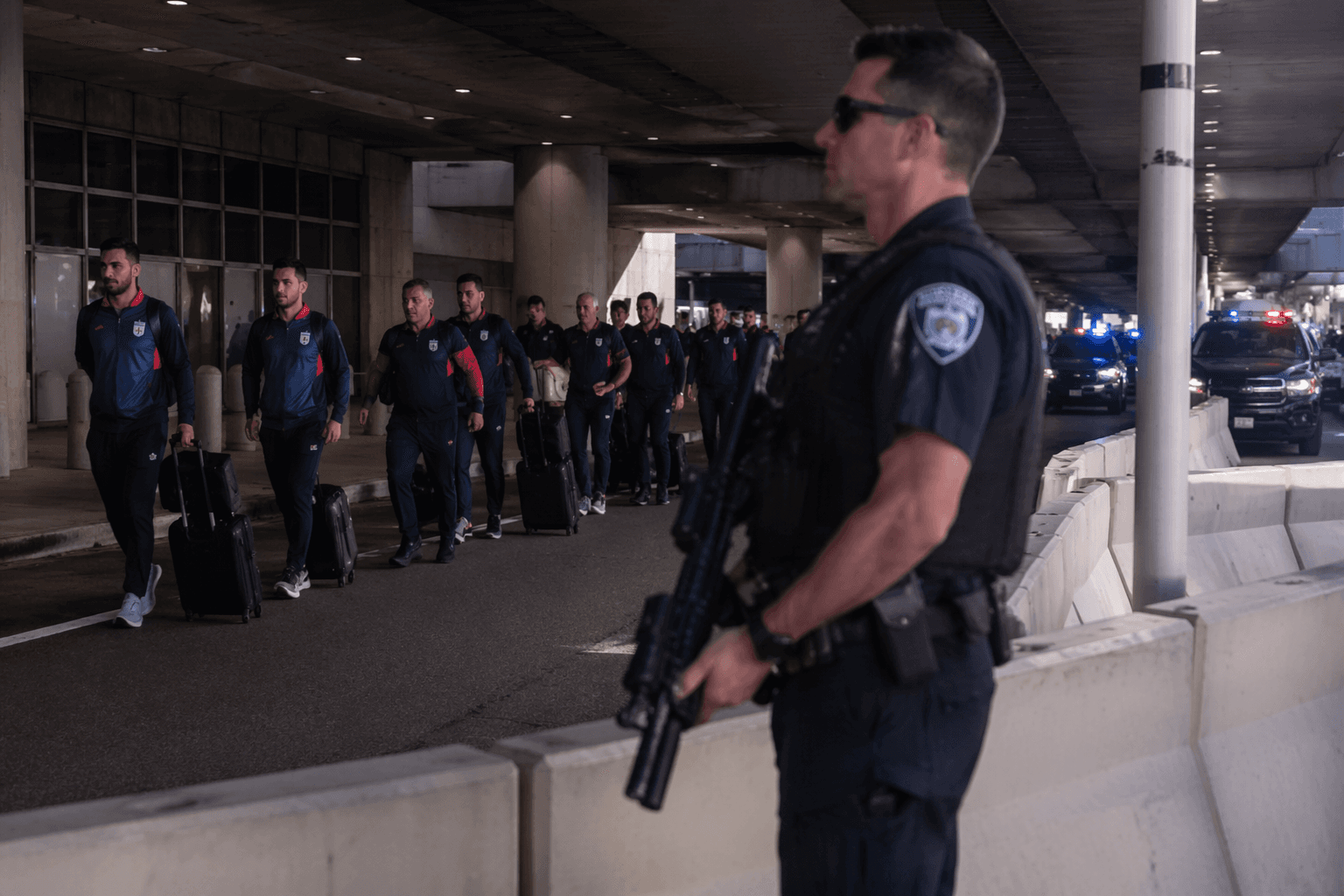
Security coils, police blockades and a rushed airport departure greeted Iran’s World Cup team when it landed at Los Angeles International Airport, turning a soccer trip into a reminder that global sports can never fully escape politics. The team arrived on Sunday, June 14, after a short flight from Tijuana, Mexico, and Reuters reported the A320 touched down at 4:11 p.m. ET after a second landing attempt.
The scene around the team hotel showed how tightly controlled the trip had become. Police were already blocking sidewalks and stretching concertina security coils around the property, while the delegation moved under heavy watch as it entered its first U.S. stop of the tournament. Iran’s base camp had previously been moved from Arizona to Mexico after the war with the United States broke out, underscoring how the conflict reshaped even the team’s logistics.
Iran opened group-stage play against New Zealand in Los Angeles on June 16, in a match that carried a political charge beyond the scoreline. The two countries had never met at a World Cup, and the backdrop around the stadium was just as charged as the one on the field. Demonstrators nearby called for democracy and regime change in Iran, while supporters in Tijuana had given the squad a warm sendoff before departure.
Mehdi Taremi said the team had been dealing with numerous distractions since arriving, including visa problems, and described the atmosphere as less joyful because of the tensions surrounding the war with co-host United States. He also said FIFA had rejected Iran’s request to play its group-stage matches outside the United States, citing logistics and contracts. For a delegation already navigating conflict, the decision forced Iran to absorb more of the tournament’s security and diplomatic strain on American soil.
Those pressures did not end after the opening stretch. After a later match in Los Angeles, the squad was reportedly required to leave the country immediately and return to Tijuana, a move that drew criticism from coach Amir Ghalenoei and from Taremi, who said the conditions felt like a distraction and left the team feeling badly treated. The handling of Iran’s trip has now become part of a broader story about who gets protected, who gets constrained and how international sport changes once geopolitics enters the travel schedule.
This article was produced by Prism’s automated news system from verified source data, official records, and press releases, then run through automated quality and moderation checks before publishing. The system is built and supervised by the people who set the standards it runs under. Read our full AI policy.
Did this article answer your question?