Iran War Drives Gas Prices Sky High, Inflation Hits 3.3%
Gas prices hit $4.11 per gallon after the U.S.-Israel war on Iran shut the Strait of Hormuz, driving March inflation to 3.3%, the highest since May 2024.
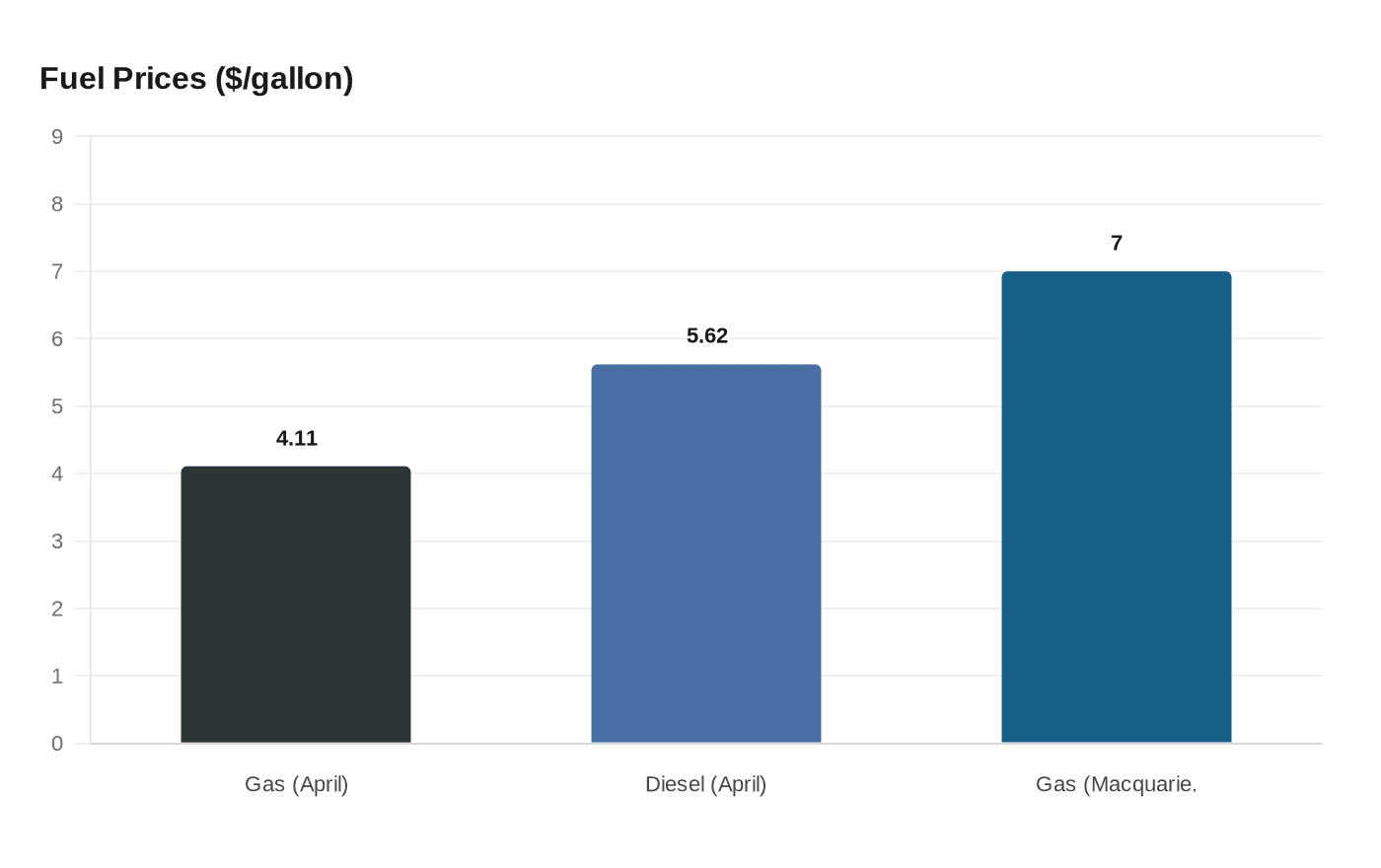
The chain reaction moved fast. When U.S. and Israeli military strikes on Iran effectively halted shipping through the Strait of Hormuz in late February, roughly one-fifth of the world's oil and gas supply was yanked from the market overnight. Within the first week alone, the average American gas price jumped 48 cents per gallon. By April, the national average had climbed to $4.11 per gallon, up 38 percent since the conflict began, according to the American Automobile Association.
The Consumer Price Index report released Friday morning showed inflation running at a 3.3% annual rate in March, the highest since May 2024 and nearly a full percentage point above February's 2.4% reading. Pantheon Economics identified the underlying fuel surge as the largest one-month jump in costs since at least 1957.
Diesel has climbed even faster than regular gasoline, reaching $5.62 per gallon, a 49 percent increase since the war began. That matters well beyond the pump. Joe Brusuelas, chief economist at RSM US, estimated that a 10% rise in diesel pushes the headline CPI by 0.1%, meaning the price that fills truckers' tanks is systematically rewriting grocery receipts and delivery charges across the supply chain. Mark Zandi, chief economist at Moody's Analytics, put it plainly: "We should see a bit of a bump in the cost of airline tickets. Grocery prices will probably be a bit higher."
Crude oil benchmarks reflect the severity. West Texas Intermediate climbed to $115.48 per barrel on April 6; Brent crude rose to nearly $112 per barrel. Oxford Economics forecast that CPI inflation will exceed 4% by April. Macquarie Group strategists warned that if the war extends into summer, oil could reach $200 per barrel and pump prices could hit $7 per gallon, a scenario they assigned a 40% probability.

The Strait of Hormuz is not just an oil artery. About one-third of global fertilizer supply also transits it, and fuel costs account for 40 to 50 percent of all variable crop production costs in the United States. The head of the International Energy Agency called the situation "the greatest global energy security challenge in history."
The Federal Reserve, caught between supply-driven inflation and a slowing economy, held borrowing costs steady at its March 17-18 meeting. But minutes released Wednesday indicate some policymakers are now considering a future rate hike. The 10-year Treasury yield hit 4.46% on March 27, its highest since July 2025, while the 30-year mortgage rate climbed to 6.38% on March 26. The central bank's traditional tools, designed to cool demand, offer limited relief when inflation originates from a military blockade of global shipping lanes.
Consumers were already strained before the war began. Elizabeth Pancotti, managing director of policy and advocacy at Groundwork Collaborative, noted that hardship withdrawals from 401(k)s reached a record in 2025, while loan delinquency rates rose even among higher-income households. "If you pile on to that, I think you go from flashing warning signs to major flashing alarm bells," Pancotti said.
One modest counterweight: the effective tariff rate has fallen to about 8%, down from a peak of 21% in April 2025, according to the Yale Budget Lab. Bernard Yaros, lead U.S. economist at Oxford Economics, said "most of the tariff pass-through has occurred," suggesting that front is no longer adding fresh pressure.
The Trump administration drew criticism for failing to refill the Strategic Petroleum Reserve before launching strikes, leaving the economy more exposed to the supply shock. President Trump dismissed the consumer cost, saying it is "a very small price to pay for U.S.A., and World, Safety and Peace." The last time gasoline crossed $4 per gallon nationally was 2022, when Russia invaded Ukraine. That episode proved temporary. With Macquarie's $7-per-gallon scenario now carrying four-in-ten odds, Jeremy Siegel, senior economist at WisdomTree, captured the stakes plainly: gasoline is "the most visible price in the economy for consumers, and when that price jumps it hits psychology immediately.
Know something we missed? Have a correction or additional information?
Submit a Tip