Iran warns it will strike U.S. bases if Washington attacks
Iran says it would hit U.S. bases in the region if attacked, following indirect nuclear talks in Oman that both sides called constructive.

Iranian Foreign Minister Abbas Araqchi warned that Tehran would strike U.S. military bases across the Middle East if the United States mounted an attack, telling Qatari Al Jazeera TV that such strikes would be aimed at American installations rather than the countries that host them, Reuters reported. The comments came a day after indirect nuclear talks between Iran and Washington in Oman that both sides described as positive and agreed to continue.
“It would not be possible to attack American soil, but we will target their bases in the region,” Araqchi said, Reuters reported, adding that Iran would not strike neighboring countries: “We will not attack neighbouring countries; rather, we will target U.S. bases stationed in them. There is a big difference between the two.” Araqchi also framed Tehran’s negotiating posture narrowly, saying, “Any dialogue requires refraining from threats and pressure. (Tehran) only discusses its nuclear issue ... We do not discuss any other issue with the U.S.,” Reuters reported.
The exchange follows a recent cycle of strikes and counterstrikes that has raised regional tensions. Reuters noted that “last June” the United States bombed Iranian nuclear facilities as part of the final stages of a 12-day Israeli campaign, a move Fox News has called “Operation Midnight Hammer.” Iran retaliated with a missile strike on Al-Udeid Air Base in Qatar, and Fox News quoted a Truth Social post by President Donald Trump saying, “There have been 14 missiles fired, 13 were knocked down, and 1 was ‘set free,’ because it was headed in a nonthreatening direction.”
Reuters also reported that Tehran has since said it halted uranium enrichment activity and that Iran’s negotiators are seeking recognition of a right to enrich. Tehran has warned against placing its missile programme on the negotiating table, saying doing so would leave it vulnerable to Israeli attack, Reuters reported.
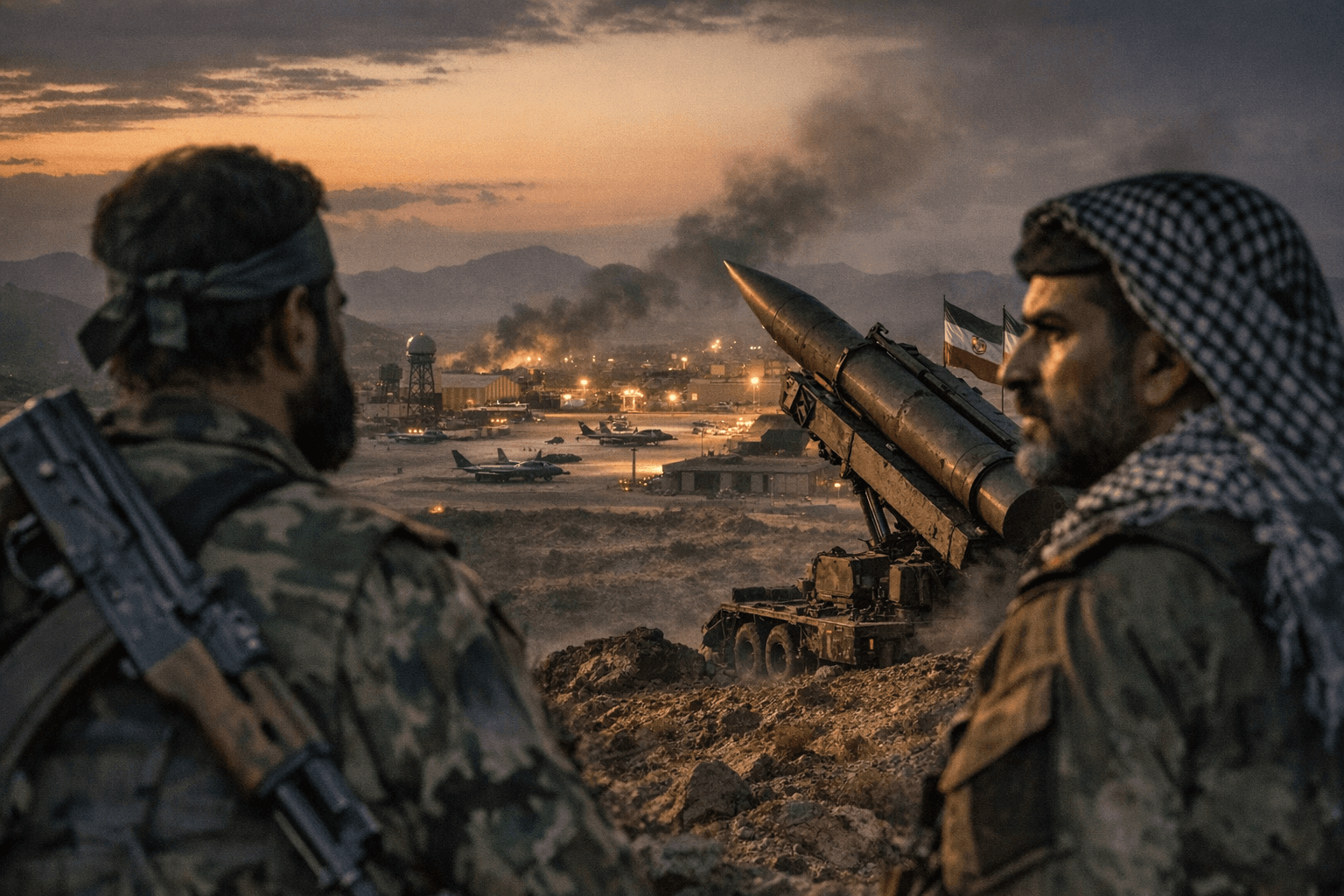
Regional diplomacy appears strained as Tehran signals both willingness to engage on nuclear issues and readiness to respond militarily to external strikes. IranIntl, citing a senior Iranian official who spoke to Reuters, reported that Tehran has warned governments hosting U.S. forces, naming Saudi Arabia, the United Arab Emirates and Turkey, that U.S. bases on their soil could be targeted if the U.S. attacks Iran, and that Iran had asked those governments to try to prevent any U.S. action.
The immediate market and policy implications are significant. Renewed threats to U.S. bases and the risk of retaliatory strikes raise insurance and shipping costs in the Gulf and the broader energy corridor, increasing the risk premium on oil markets even without an actual interruption of flows. Military posturing typically pushes investors toward safe-haven assets and can lift defense and aerospace stocks while weighing on regional equities and currencies. For governments, the warning complicates calculations about host-nation exposure and the political cost of hosting U.S. forces.
Longer term, the episode underlines a persistent pattern: parallel tracks of limited diplomacy on nuclear issues and high-stakes deterrence around missiles and regional posture. Araqchi’s insistence that Iran will confine talks to nuclear matters signals a narrow negotiating scope that could prolong stalemate unless confidence-building measures expand. Both sides signaled a willingness to continue indirect talks; Reuters reported Araqchi said no date had yet been set for the next round, while some outlets noted U.S. leadership suggested talks could follow soon. How quickly those diplomatic channels deliver tangible steps will determine whether markets and regional capitals can move back from a heightened risk footing.
This article was produced by Prism’s automated news system from verified source data, official records, and press releases, then run through automated quality and moderation checks before publishing. The system is built and supervised by the people who set the standards it runs under. Read our full AI policy.
Did this article answer your question?


