Iran’s power brokers shape talks with Washington after truce
Abbas Araghchi fronted the talks, but Mohammad Bagher Ghalibaf and Mojtaba Khamenei showed who can really greenlight any deal with Washington.
Iran’s negotiations with Washington were never just about one diplomat at the table. Abbas Araghchi served as the country’s diplomatic face, but Mohammad Bagher Ghalibaf, the parliament speaker and a former Revolutionary Guards commander, emerged as a crucial bridge between Iran’s political, security and clerical power centers, while Mojtaba Khamenei’s role underscored how much still depended on the supreme leader’s camp.
Ghalibaf’s rise reflected a wartime shift inside Tehran. A former Tehran mayor, police chief and presidential candidate, he became a key conduit at a moment when hard power and political survival overlapped more tightly than before. That made him more than a ceremonial lawmaker: he was a pragmatic power broker positioned to help translate battlefield pressure into political decisions, and to connect the Islamic Revolutionary Guard Corps, clerical institutions and civilian leadership.
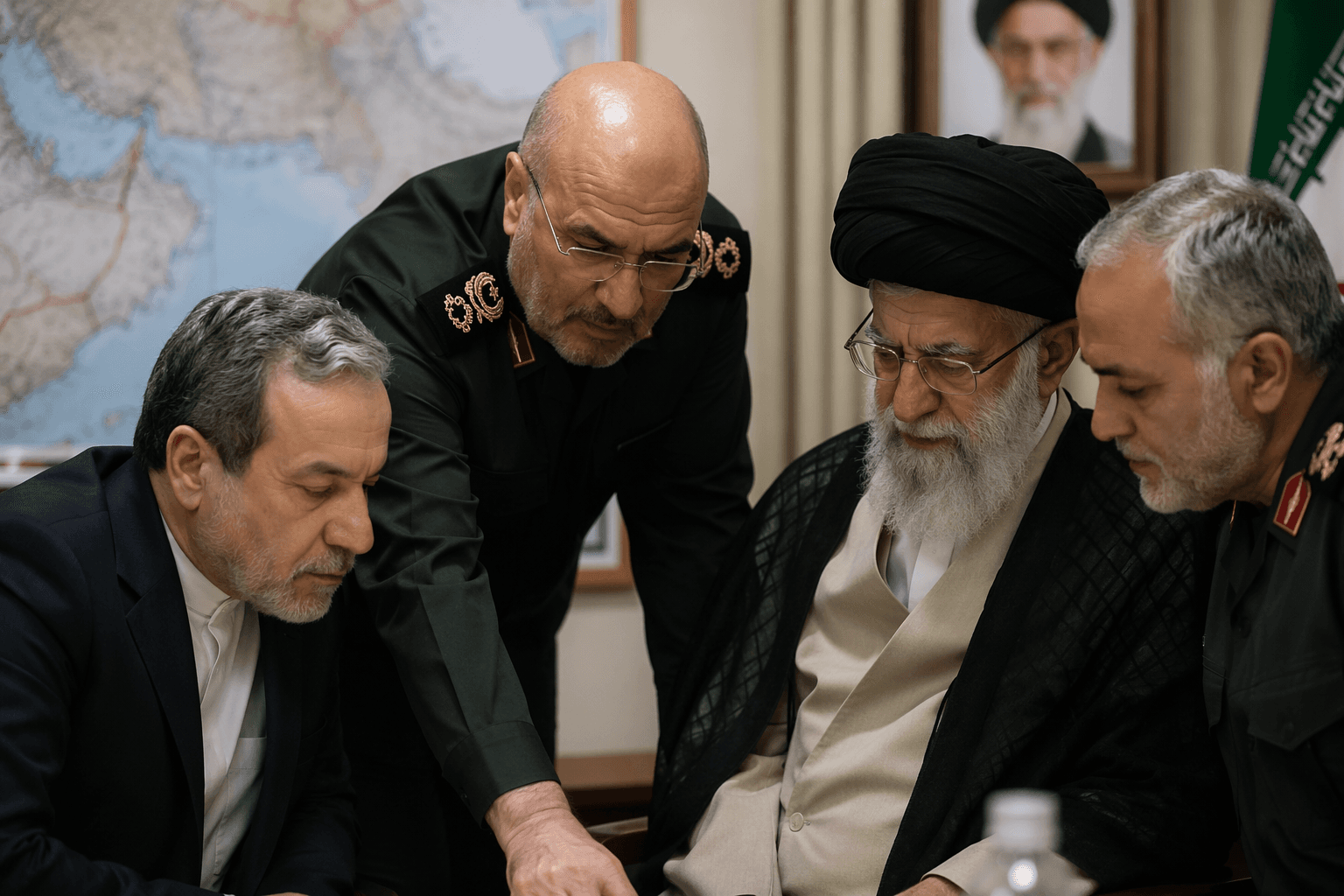
The latest talks followed an April 8 truce and unfolded against deep distrust between Tehran and Washington. In early June, Marco Rubio said Mojtaba Khamenei appeared to be taking a more active role as negotiations continued. Separate reporting said any arrangement with the United States would need approval from the Supreme Leader and the Supreme National Security Council to carry legitimacy inside Iran, a reminder that the foreign minister alone cannot seal a lasting deal.
That internal tension was visible after the agreement was announced. Ghalibaf signaled a move away from war and confrontation toward rebuilding prosperity, a tone that suggested space for pragmatists inside the system. At the same time, Iran’s supreme leader distanced himself from the agreement and framed it as the president’s responsibility, not proof that Tehran had yielded to U.S. demands. The split showed the balancing act inside the regime, where no settlement can alienate hardliners and no opening can ignore those pushing for relief.
The agenda also reached beyond the bilateral file. On June 21, follow-up talks in Switzerland brought U.S. and Iranian officials back into the same diplomatic orbit, while Tehran sought Washington’s pressure on Israel to halt the war in Lebanon. That broader bargaining set the terms for any truce: in Tehran, the real negotiations run through a system of rival authorities, not a single negotiator.
This article was produced by Prism’s automated news system from verified source data, official records, and press releases, then run through automated quality and moderation checks before publishing. The system is built and supervised by the people who set the standards it runs under. Read our full AI policy.
Know something we missed? Have a correction or additional information?
Submit a Tip