Iraqi militant accused of plotting attacks in U.S. and Europe arrested
A senior Kata’ib Hizballah figure was brought into U.S. custody and accused of directing a network tied to nearly 20 attacks across the United States, Europe and Canada.
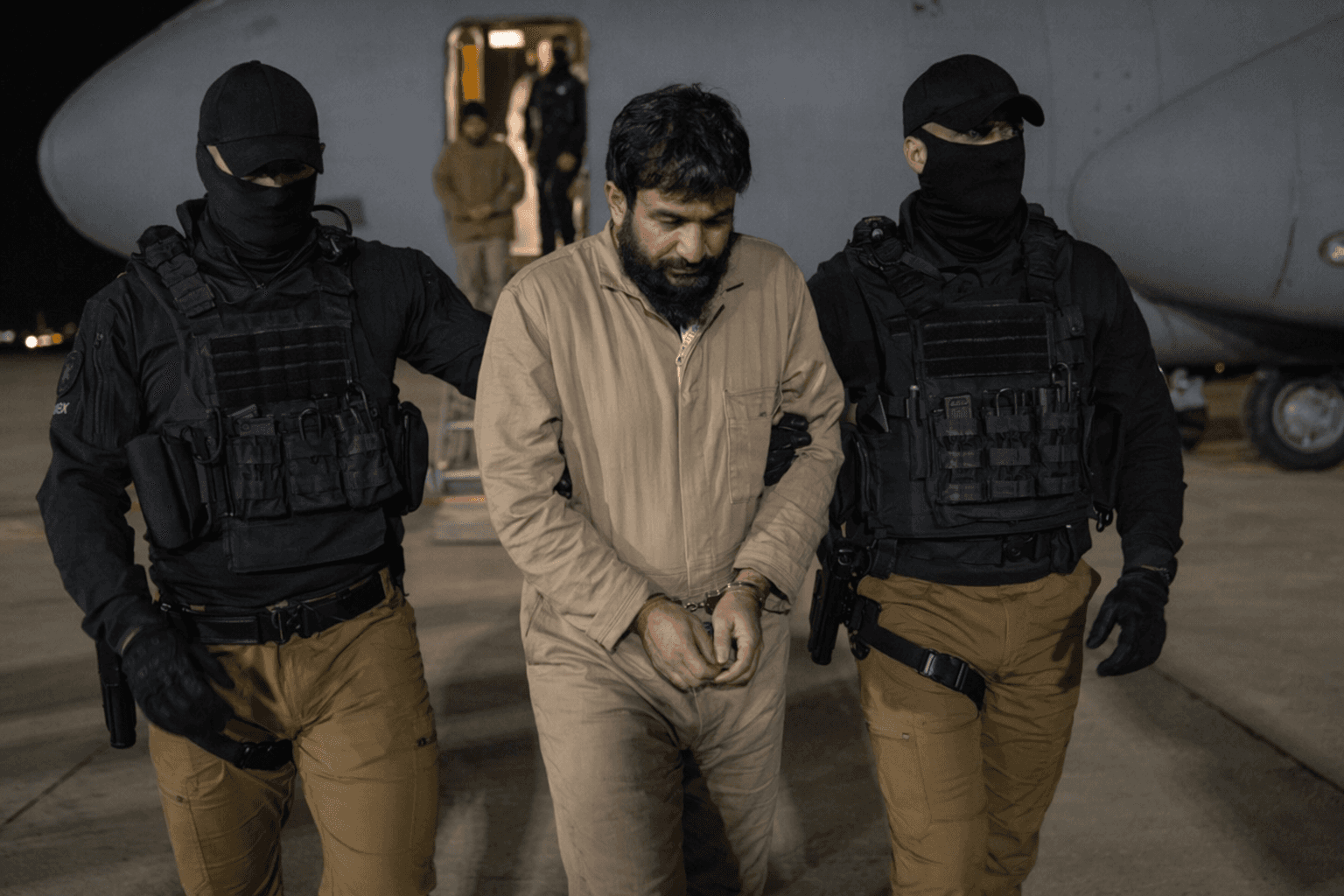
Federal authorities said Mohammad Baqer Saad Dawood Al-Saadi, an Iraqi national and senior member of Kata’ib Hizballah, was transferred into U.S. custody overseas and brought to New York to face six terrorism-related charges. He appeared before U.S. Magistrate Judge Sarah Netburn in Manhattan and was ordered detained pending trial, placing a commander accused of operating across continents inside the U.S. criminal system.
Prosecutors say Al-Saadi acted on behalf of Kata’ib Hizballah and the Islamic Revolutionary Guard Corps, and that in April and May 2026 he tried to coordinate and carry out attacks in the United States, including against Jewish institutions in New York City. The complaint alleges he was involved in nearly 20 attacks and attempted attacks across Europe and the United States, a scale that suggests more than a single plot and points to a distributed threat with operational reach.
The alleged target list stretched beyond New York. Authorities said discussions included possible attacks in California and Arizona, while reporting tied the case to Jewish centers in Los Angeles and Scottsdale, Arizona. Other coverage said the suspected network also extended to Europe and Canada, including a synagogue attack and a shooting at the U.S. consulate in Toronto in March 2026, with planned stabbing attacks in London also under review. Together, the allegations describe a transnational campaign aimed at Jewish and American targets, not an isolated domestic case.
Officials said the threat was credible now because the alleged activity was current, coordinated and tied to an active wave of violence linked by prosecutors to retaliation after the war that began in February 2026. Acting Attorney General Todd Blanche said the arrest put an alleged terrorist commander in U.S. custody, while FBI Director Kash Patel called the operation a successful FTOC and thanked agents, tactical units and interagency partners, including Ambassador Tom Barrack, for helping lead what he described as a joint sequenced operation. National Security Division official John A. Eisenberg said the complaint alleges Al-Saadi coordinated attacks across Europe and threatened national security.

The case underscores a counterterrorism gap that has challenged U.S. and European authorities alike: militant networks can use overseas planning, local facilitators and fast-moving retaliation cycles to probe for soft targets before a full picture emerges. By charging Al-Saadi in federal court rather than treating the matter as a distant foreign threat, prosecutors signaled that the alleged planning crossed directly into homeland security territory, where Jewish institutions, city centers and U.S. diplomatic facilities remain exposed to coordinated violence.
Know something we missed? Have a correction or additional information?
Submit a Tip