Islamabad Tightens Security as It Prepares to Host High‑Stakes US–Iran Talks
Pakistan sealed Islamabad's Red Zone with army units and barbed wire to host the first US-Iran talks since a fragile ceasefire halted 39 days of war killing 3,800 people.
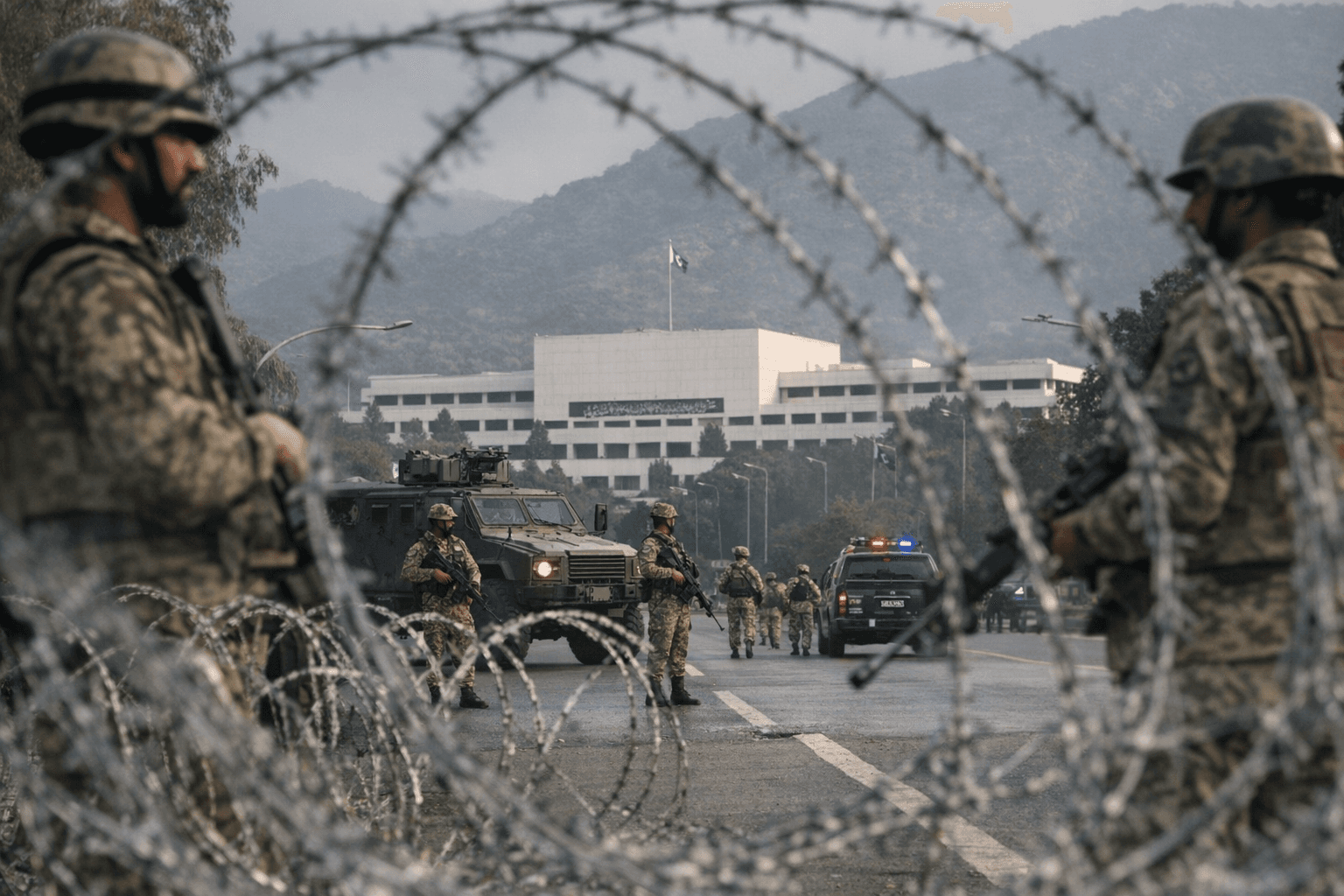
The army arrived before dawn. By the time Islamabad's government quarter stirred, containers and barbed wire had sealed roads leading into the Red Zone, and soldiers flanked the gates of diplomatic missions and luxury hotels. Schools and government offices were shuttered under declared local holidays. The capital, already accustomed to periodic security crises, had been converted into something closer to a fortified compound in preparation for a single day of diplomacy: indirect talks between the United States and Iran, held at the Serena Hotel on April 10.
The security posture was itself a message about the fragility of what Pakistan was attempting to protect. The ceasefire that brought both sides to Islamabad was announced on April 7, barely 90 minutes before Trump's self-imposed deadline to resume strikes on Iranian infrastructure. It paused Operation Epic Fury on its 39th day, a conflict that has killed at least 3,800 people across ten nations. Trump said he agreed to the pause "based on conversations with Prime Minister Shehbaz Sharif and Field Marshal Asim Munir, of Pakistan," a public acknowledgment that set the stage for Islamabad's outsized role in what followed.
Pakistan's leverage with Washington rests on a relationship cultivated carefully. Sharif and Army Chief Asim Munir visited the White House in September 2025, meeting Trump, Vance, and Secretary of State Marco Rubio. Its credibility with Tehran derives from different ground: a shared Muslim-majority identity, non-membership in any US-aligned Gulf coalition, and backchannel lines that Gulf Cooperation Council states could not provide. Intra-GCC disagreements over a ceasefire and a diplomatic dialogue with Iran created the need for exactly that kind of actor. Both Washington and Tehran needed a country neither side could accuse of working exclusively for the other.
The format of the talks reflected that mutual suspicion. Rather than a face-to-face negotiation, Pakistani officials acted as shuttle brokers, carrying proposals and responses between delegations in separate rooms. On the American side, Vance led a team that also included Trump's special envoy Steve Witkoff and Jared Kushner. A 30-member US advance team had already reached Islamabad to assess the security arrangements, with the talks expected to be held at the Serena Hotel. Interior Minister Mohsin Naqvi personally assured the American delegation of "foolproof security" and confirmed coordination with foreign agencies. Iran sent Parliament Speaker Mohammad Baqer Qalibaf, though the delegation's departure remained uncertain: Iran's Ambassador Reza Amiri Moghadam posted that Iranian negotiators were en route, then deleted the statement as the situation in Lebanon deteriorated following Israeli air strikes he described as a breach of the ceasefire.
Lebanon crystallized the gaps that made every security measure around these talks feel provisional. Trump excluded Lebanon from the ceasefire's scope, and Netanyahu immediately rejected Pakistan's stance on the matter. On enrichment, the distance is equally stark: Iran's 10-point proposal includes an acceptance of Iran's right to enrichment, but Leavitt called Iran's enriched uranium "a red line that the President is not going to back away from." Vance himself had described the existing pause as a "fragile truce," a characterization that doubled as a quiet warning about what failure in Islamabad would cost.
For Pakistan, the stakes are generational. Sharif framed the negotiations as a "historic moment," and the claim is defensible: no other country managed to pull these two parties toward the same table. But the sealed roads ringing the Serena Hotel were also a reminder that hosting this dialogue carries real exposure. A breakdown that sends oil markets spiraling, or an Iranian walkout triggered by news from Beirut, would attach Pakistan's name to failure rather than statesmanship. The EU, Gulf states, and China all watched proceedings closely for signals that de-escalation could endure beyond a temporary truce. The 3,800 people killed in the 39 days before anyone thought to ask Islamabad for help represent the cost of the alternative.
This article was produced by Prism’s automated news system from verified source data, official records, and press releases, then run through automated quality and moderation checks before publishing. The system is built and supervised by the people who set the standards it runs under. Read our full AI policy.
Did this article answer your question?