Islamic State-linked fighters kill 16 in Congo as Ebola spreads
Militia gunmen killed 16 in Mbau as Ebola cases emerged nearby, tightening a crisis where violence is already blocking surveillance, tracing and treatment.

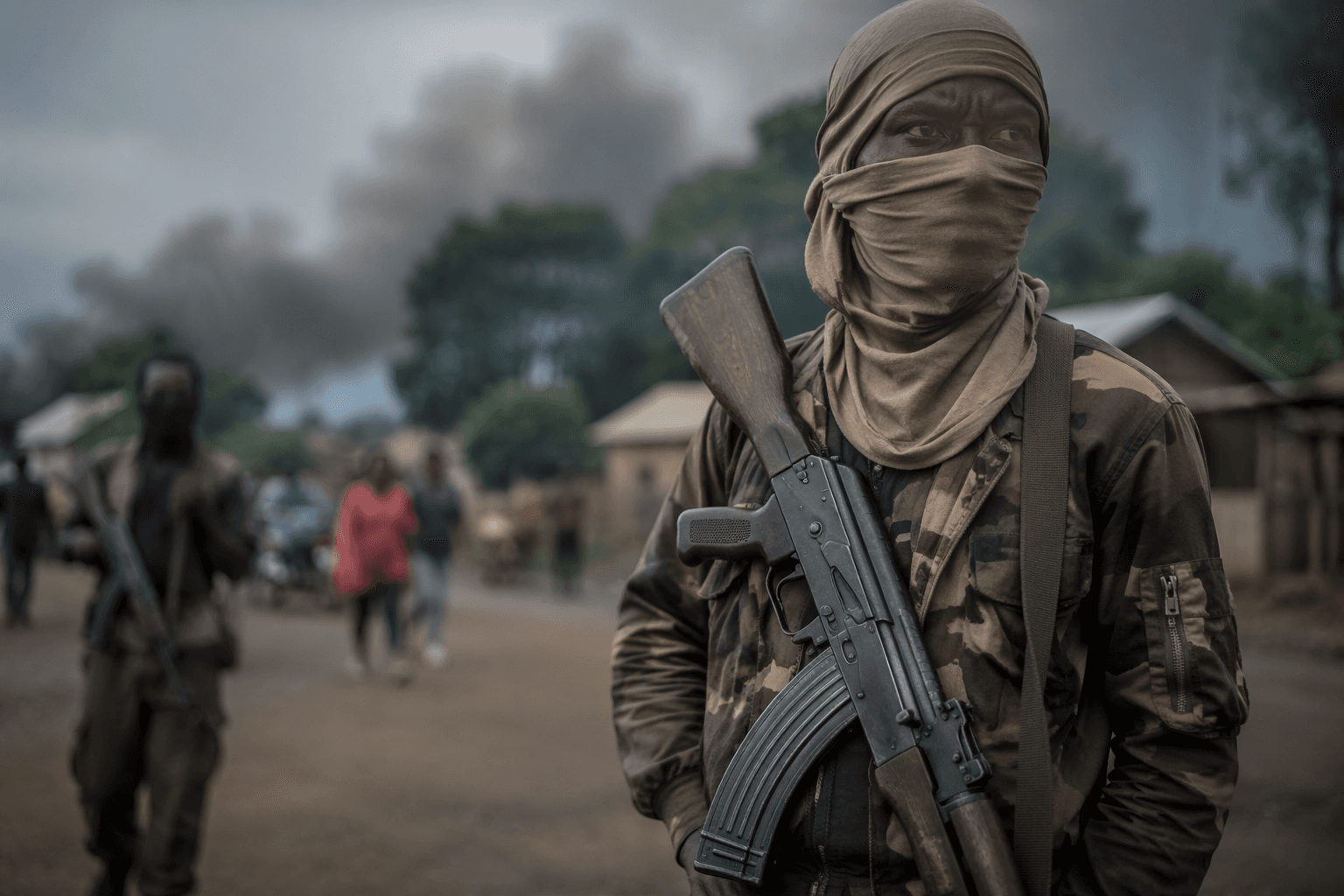
Fighters linked to Islamic State killed 16 civilians in the village of Mbau in eastern Democratic Republic of Congo, deepening a security crisis that is now colliding with an Ebola outbreak already spreading through the same zone. The attack hit North Kivu’s Beni territory on Tuesday night, according to regional Congolese army spokesperson Lieutenant Marc Elongo.
The armed group was the Allied Democratic Forces, a Ugandan-origin movement that has operated for years in eastern Congo and pledged allegiance to Islamic State about a decade ago. The assault came as health authorities were already tracking Ebola cases near the violence, with four confirmed infections identified close to the attack site, including two in Beni and two in Oicha. That overlap leaves little room for error in a region where every movement is already constrained by fear.
The latest killings also followed a separate weekend attack in Beni in which ADF fighters killed 15 civilians and a soldier, underscoring how the territory remains trapped in a cycle of militia violence. For disease control teams, the danger is not only the body count. Insecurity can block surveillance, delay treatment, disrupt vaccination efforts and keep health workers from reaching families quickly enough to isolate patients and trace contacts.
The Ebola strain involved is Bundibugyo virus disease, and the World Health Organization says there is no licensed vaccine or specific treatment. The outbreak was officially declared in the Democratic Republic of Congo on May 15, 2026, after laboratory confirmation from blood samples taken in Rwampara Health Zone in Ituri Province, and WHO later classified it as a Public Health Emergency of International Concern on May 17. The agency said the emergency is unfolding amid humanitarian crisis, insecurity, remote and densely populated areas, and heavy population and trade movement, conditions that make containment far harder.
The World Health Organization said it was scaling up surveillance, contact tracing, clinical preparedness, community engagement and cross-border preparedness with Congo and Uganda. The Centers for Disease Control and Prevention said this was Congo’s 17th Ebola outbreak since 1976 and its second Bundibugyo outbreak, with previous outbreaks in Uganda in 2007 and Congo in 2012. CDC said most current cases in Congo have been among people ages 20 to 39, and about two-thirds have been female patients.

By the time the outbreak crossed into Uganda, the risk was no longer confined to a single province. In eastern Congo, armed groups, weak roads and repeated displacement are turning a local massacre into a wider public-health threat with regional consequences.
This article was produced by Prism’s automated news system from verified source data, official records, and press releases, then run through automated quality and moderation checks before publishing. The system is built and supervised by the people who set the standards it runs under. Read our full AI policy.
Know something we missed? Have a correction or additional information?
Submit a Tip