Island Transit Adds Two Electric Paratransit Vans, Boosts 2035 Zero-Emission Goal
Island Transit added two battery-electric paratransit vans and charging at its Coupeville facility, advancing its zero-emission-by-2035 plan and affecting local paratransit and on-demand service.

Island Transit added two battery-electric vans to its fleet, a tangible step toward eliminating carbon emissions from county transit operations by 2035. The new vehicles are E Ford 350EL models converted by Lightning eMotors and will support paratransit and on-demand services across Island County.
Island Transit installed charging infrastructure at its Coupeville facility to support the vans’ daily operation. The agency positioned the vehicles to serve riders who depend on paratransit and flexible on-demand trips, bringing quieter, lower-emission rides to community members who rely on those services for medical appointments, shopping and daily mobility.
Island Transit leaders said the vehicles are a visible step in a longer transition that must account for rural routes, power resiliency and long daily distances. Those operational realities shape how the agency plans charging schedules, vehicle deployment and maintenance so the electric vans can meet the county’s geographically dispersed travel patterns without compromising reliability.
The program’s immediate purpose is twofold: demonstrate electric-vehicle technology in real-world paratransit operations and build out the local charging network needed for a broader zero-emission fleet. The E Ford 350EL conversions by Lightning eMotors are the first in a phased effort; additional vehicles were anticipated as the program progresses. Installing chargers at Coupeville establishes a local hub for overnight charging and routine servicing as Island Transit evaluates range, turnaround times and energy needs.
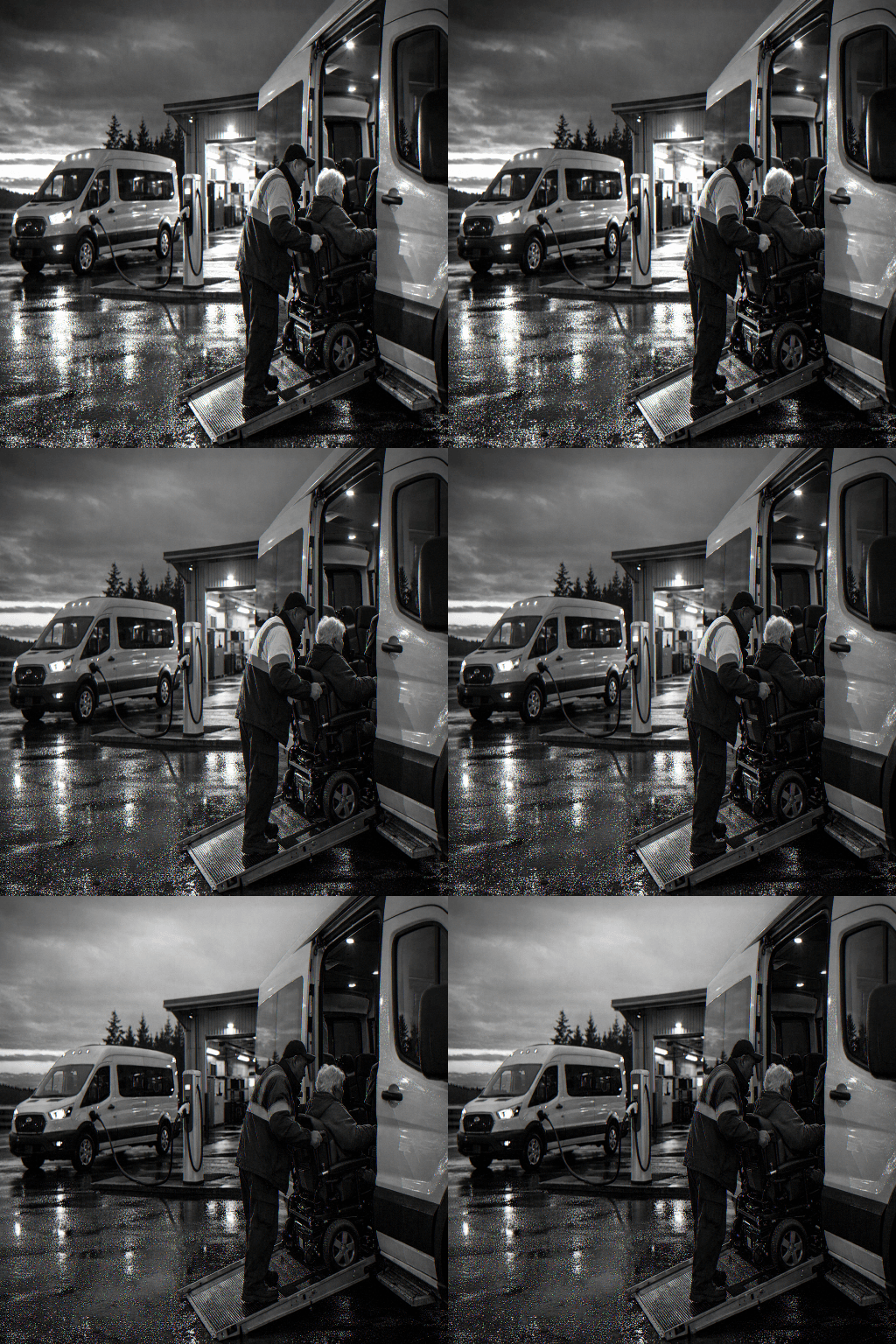
For Island County residents, especially seniors and people with disabilities who use paratransit, the shift to battery-electric vans means incremental benefits now and potential systemwide gains over time. Electric vans can lower local emissions and reduce noise on neighborhood streets while giving the agency data to refine routes and charging windows. At the same time, rural distances and the need for power resiliency remain central planning concerns, requiring coordination with utility providers and contingency planning for outages.
As Island Transit expands its electric-vehicle program, residents can expect to see more converted vans and incremental upgrades to charging infrastructure. The Coupeville installation marks the start of operational testing and data collection that will inform how the agency scales toward its zero-emission-by-2035 goal while keeping paratransit and on-demand services dependable across the island.
Sources:
Know something we missed? Have a correction or additional information?
Submit a Tip