Israel demolishes entire Lebanese villages in border offensive
Remote blasts flattened Taybeh, Naqoura and Deir Seryan, turning border villages to rubble and raising fears that displaced families may never return.
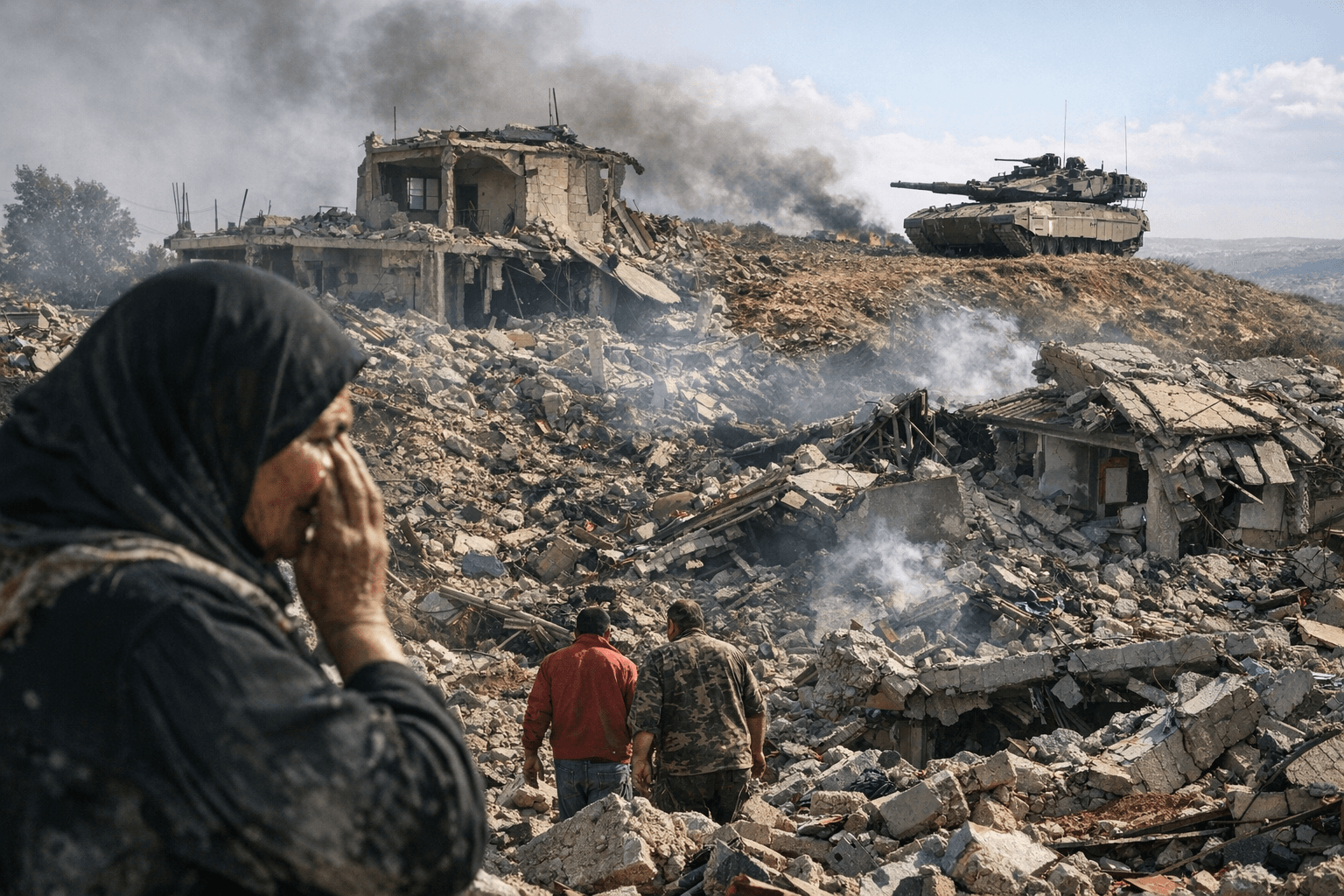
Israeli forces have begun remaking the south Lebanon border by demolishing entire villages, using explosives and remote detonations to flatten homes in Taybeh, Naqoura and Deir Seryan. Videos from the military and social media showed walls collapsing in huge blasts, a display of force that is changing the landscape long after the fighting line has shifted.
The destruction goes beyond battlefield damage. Reuters independently confirmed one explosion in Taybeh by matching the road layout, nearby buildings, a cemetery and vegetation to the site. In public remarks, Israel Katz called for the demolition of “all houses” in border areas, framing the campaign as a way to block threats to communities in northern Israel. That language, combined with the razing already under way, points to a policy aimed not just at Hezbollah positions but at the civilian fabric of the border zone itself.
The wider campaign in Lebanon intensified after the U.S.-Iran ceasefire announcement, with Israel carrying out what it described as its heaviest strikes on Lebanon in the conflict so far. Human Rights Watch said more than 100 Israeli strikes across Lebanon on 8 April killed over 300 people and damaged the last main bridge linking southern Lebanon with the rest of the country. The group warned that unusable crossings over the Litani River could cut tens of thousands of people off from humanitarian aid, food and health care. The United Nations called the casualty reports “appalling” and later said humanitarians feared attacks on ambulances and looming food shortages in the south.
Lebanese authorities said the broader wave of Israeli air raids had killed more than 1,450 people and displaced about 1.2 million since 2 March. The scale of destruction, coupled with repeated strikes on roads, bridges and villages, has made return far more difficult than simple ceasefire lines suggest. Rebuilding would require not only clearing rubble but restoring access, services and security in neighborhoods that may no longer exist in usable form.
The political fight over what comes next is just as unresolved. Dozens of states condemned attacks on U.N. peacekeepers after three Indonesian soldiers were killed, while 13 Lebanese state security officers were killed in an Israeli strike on 10 April and buried the next day, deepening anger in Beirut. Talks are planned for next week in Washington, where Israeli and Lebanese officials remain split over the ceasefire’s scope, Hezbollah’s disarmament and whether a wider buffer zone should be imposed along the border.
This article was produced by Prism’s automated news system from verified source data, official records, and press releases, then run through automated quality and moderation checks before publishing. The system is built and supervised by the people who set the standards it runs under. Read our full AI policy.
Did this article answer your question?


