Israel-Gaza war deepens partisan divide in US election campaign
Israel and Gaza have turned a foreign-policy fight into a party-coalition test, exposing new splits among voters, activists, and national-security hawks ahead of 2028.
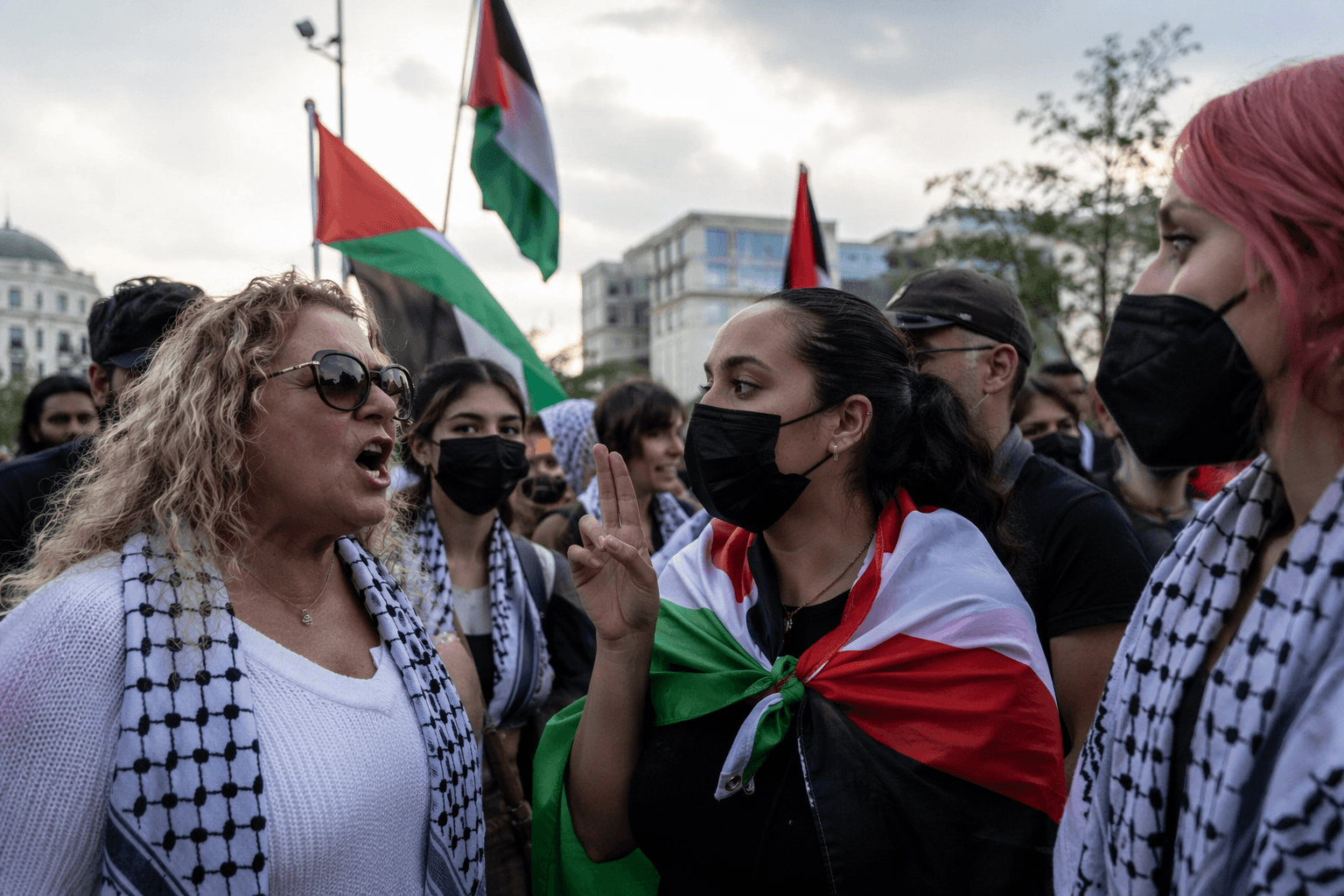
In battleground states such as Michigan and Pennsylvania, the Gaza conflict has become a campaign issue that forces both parties to answer the same question in different ways: how much support for Israel is still politically sustainable, and at what cost to party unity. The war has moved far beyond the Middle East and into the center of American coalition politics.
A war that voters already see as wider than Gaza
AP-NORC polling in October 2024 found that about half of voters were extremely or very worried the fighting could expand into a broader regional war. Fewer, about 4 in 10, were worried the United States would be pulled directly into it, and the political blame game was already sharply partisan. About 6 in 10 Democrats said the Israeli government bore a lot of responsibility for the war’s escalation, while only about one-quarter of Republicans said the same.
In the same poll, only about 2 in 10 voters blamed the U.S. government a lot for the escalation, while support was stronger for sanctions on Iran than for providing weapons or government funds to aid Israel’s military. There was little public support for deploying U.S. troops.
The Democratic coalition is fragmenting in plain sight
For Democrats, the strain began after Hamas’s Oct. 7, 2023 attack on Israel, which killed about 1,200 people and led to more than 200 hostages being taken. The subsequent war in Gaza, and then the wider confrontation involving Iran and Hezbollah, hardened views inside a party already split between older pro-Israel institutional politics and younger activists demanding a sharper break with Benjamin Netanyahu’s government.
By September 2024, the divide had not narrowed. Democrats were more likely to be critical of Israel, while Republicans were more likely to see Israel as a U.S. ally. President Joe Biden kept military support flowing to Israel while pressing for a cease-fire, but that balancing act did not quiet criticism inside his own coalition.
The primary season showed that the issue was no longer theoretical. Nine months after Oct. 7, the war’s impact was visible in Michigan, where a large Arab-American community helped make the conflict politically immediate, and on college campuses, where younger voters organized protests. Rep. Jamaal Bowman became the first Democratic incumbent of 2024 to lose a primary on June 25, after attacking Israel’s conduct in the war and facing heavy spending from AIPAC-backed efforts on behalf of his opponent, Westchester County Executive George Latimer.
In Brookings' analysis, far-left anti-Israel positions were rare, held by just 7% of Democratic candidates and only 2% of primary winners.
The Republican split is quieter, but it is real
Republicans still enter this debate with a stronger instinct to defend Israel, but the old consensus is no longer unbroken. A 2025 Chicago Council on Global Affairs survey fielded July 18-30, 2025, found that the once-bipartisan security partnership between the United States and Israel had fractured along ideological and generational lines inside both parties.

In that survey, 69% of liberal Democrats said the United States provides Israel too much support, and 60% said it gives too much military aid. Among MAGA Republicans, 55% said the United States strikes the right balance in its support for Israel, and 48% said it sends the right amount of military aid. Non-MAGA Republicans were more divided, with 33% saying the balance was right and 41% saying military aid was about right.
In the same survey, 74% of liberal Democrats favored Palestinian statehood, while majorities of both MAGA Republicans and non-MAGA Republicans opposed it.
Iran turned a Gaza fight into a broader test of authority
The latest stress test came in June 2025, when Democrats split over how to respond as Donald Trump considered intervening against Iran’s nuclear program. Progressives pushed for a unified, explicit rejection of military action, while party leaders took a narrower position: Congress should have a role before any use of force. The split turned the dispute into a procedural fight over who gets to authorize war.
Rep. Ro Khanna called Trump’s consideration of an attack “a defining moment for our party” and introduced legislation with Rep. Thomas Massie, a Republican, to require explicit congressional authorization before U.S. forces could be used against Iran. Sen. Bernie Sanders also warned that supporting Netanyahu’s war against Iran would be a catastrophic mistake. At the same time, many Democrats with 2028 ambitions stayed cautious or silent.
This article was produced by Prism’s automated news system from verified source data, official records, and press releases, then run through automated quality and moderation checks before publishing. The system is built and supervised by the people who set the standards it runs under. Read our full AI policy.
Did this article answer your question?

