Israel strikes Beirut suburbs, raising fears ceasefire may collapse
Israel hit Beirut’s southern suburbs for the first time since the April 16 truce, killing a senior Hezbollah figure and testing a fragile ceasefire.
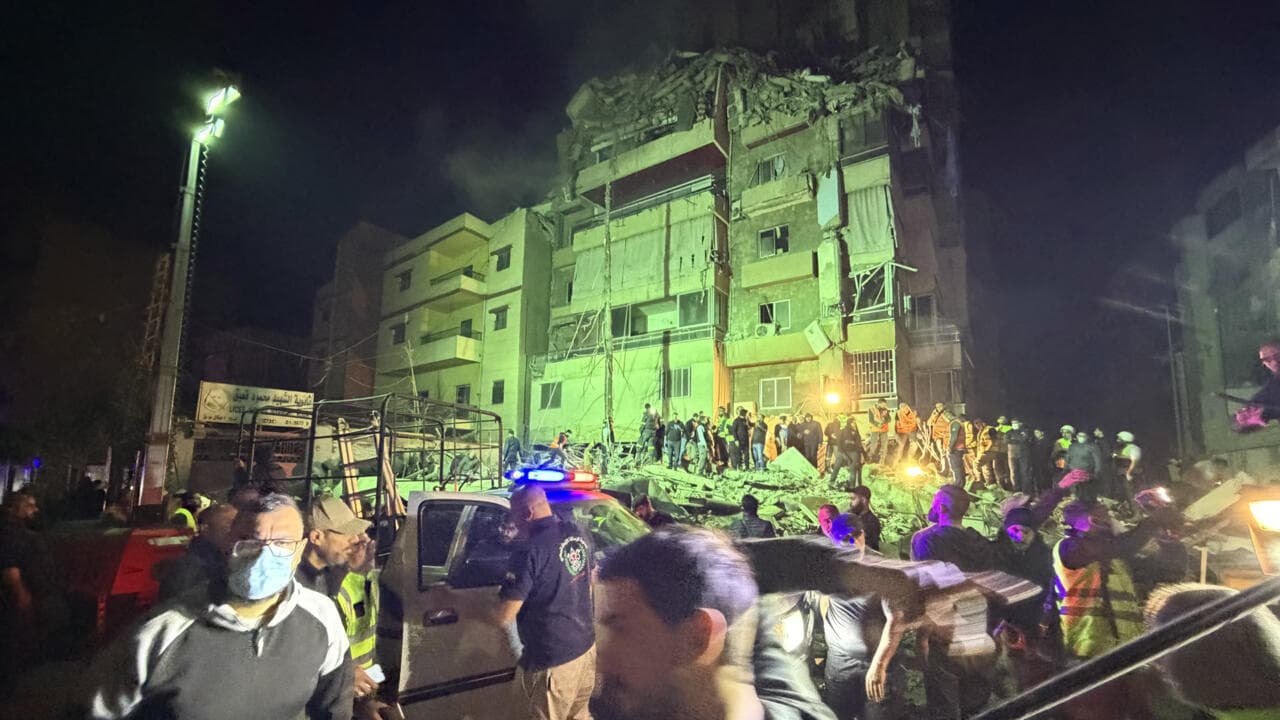
Israel’s strike on Beirut’s southern suburbs marked the first attack on the capital since the April 16 ceasefire with Hezbollah and pushed the truce into its most dangerous test yet. The hit landed in Haret Hreik, in the Dahiyeh area of Ghobeiri, a Hezbollah stronghold that has long sat at the center of the group’s military and political infrastructure.
Israel said it targeted a commander in Hezbollah’s elite Radwan force, the battle-hardened unit that has played a leading role in the fighting along the Lebanon-Israel frontier. A source close to Hezbollah identified the man killed as Malek Ballout, also transliterated Balou or Ballout, and said he was the Radwan force’s operations commander. The strike gave both sides immediate evidence for sharply different claims: Israel pointed to a high-value military target, while Hezbollah treated the killing as proof that Israel had again crossed a line the ceasefire was meant to hold.
The attack comes against a ceasefire brokered by the United States and France that took effect on November 27, 2024, after nearly 14 months of war. The agreement was supposed to let civilians on both sides of the Blue Line return home safely, with Israel withdrawing from southern Lebanon over roughly 60 days and Hezbollah pulling its forces north of the Litani River. A monitoring mechanism led by the United States and involving Lebanese forces was intended to oversee compliance, but Israel has continued to strike alleged Hezbollah targets elsewhere in Lebanon, feeding accusations that the truce has been eroding for months.
That broader pattern is why the Beirut strike carried such political weight. The ceasefire was built on the logic of United Nations Security Council Resolution 1701, adopted in August 2006 to end the last major Israel-Hezbollah war and still the key reference point for later arrangements. Now, with Beirut hit for the first time since the truce began, the question is no longer only whether one commander was killed. It is whether the deal itself can survive repeated violations, mutual accusations, and the temptation on both sides to answer force with force.
Lebanese officials have already urged France and the United States to intervene against ceasefire breaches, underscoring how much the truce depends on outside pressure as well as local restraint. For Washington, the strike is another reminder that American diplomacy is tied to a fragile security architecture in Lebanon, where every round of escalation risks drawing in new actors and widening a conflict that still sits perilously close to the Blue Line.
This article was produced by Prism’s automated news system from verified source data, official records, and press releases, then run through automated quality and moderation checks before publishing. The system is built and supervised by the people who set the standards it runs under. Read our full AI policy.
Did this article answer your question?


