Israeli nationalists test al-Aqsa status quo with prayer visits
Israeli nationalists are pressing against al-Aqsa’s prayer ban, and more than 1,100 entered the compound during a Jerusalem Day march as the old rules fray.
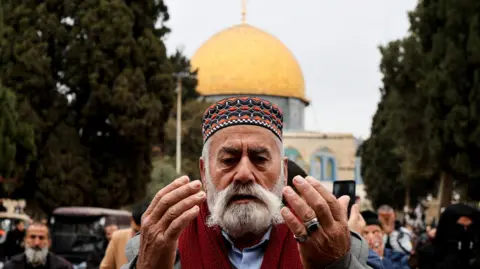
At al-Aqsa Mosque compound, a rule that once seemed fixed is being tested in small but consequential ways. The long-standing status quo, rooted in Ottoman-era practice and reinforced after Israel captured East Jerusalem in 1967, allows non-Muslim visits but bars prayer and other religious rites at one of Islam’s holiest sites, also revered by Jews as the Temple Mount.
That arrangement depends on careful restraint. The Jerusalem Islamic Waqf, under Jordanian custodianship, manages the compound’s day-to-day affairs, while Jordan is the agreed custodian of the Islamic and Christian holy sites in Jerusalem’s Old City. Israeli police determine how strictly the ban on non-Muslim prayer is enforced, and their choices can either preserve the balance or loosen it further.
Prime Minister Benjamin Netanyahu has repeatedly insisted that Israel’s policy “has not changed and will not change.” Yet National Security Minister Itamar Ben-Gvir has openly challenged the convention by visiting the compound and saying he prayed there, a move condemned by Palestinians, Jordan and the United States. For critics, the danger is not only the violation itself but the precedent it sets when repeated by a senior minister with police authority nearby.
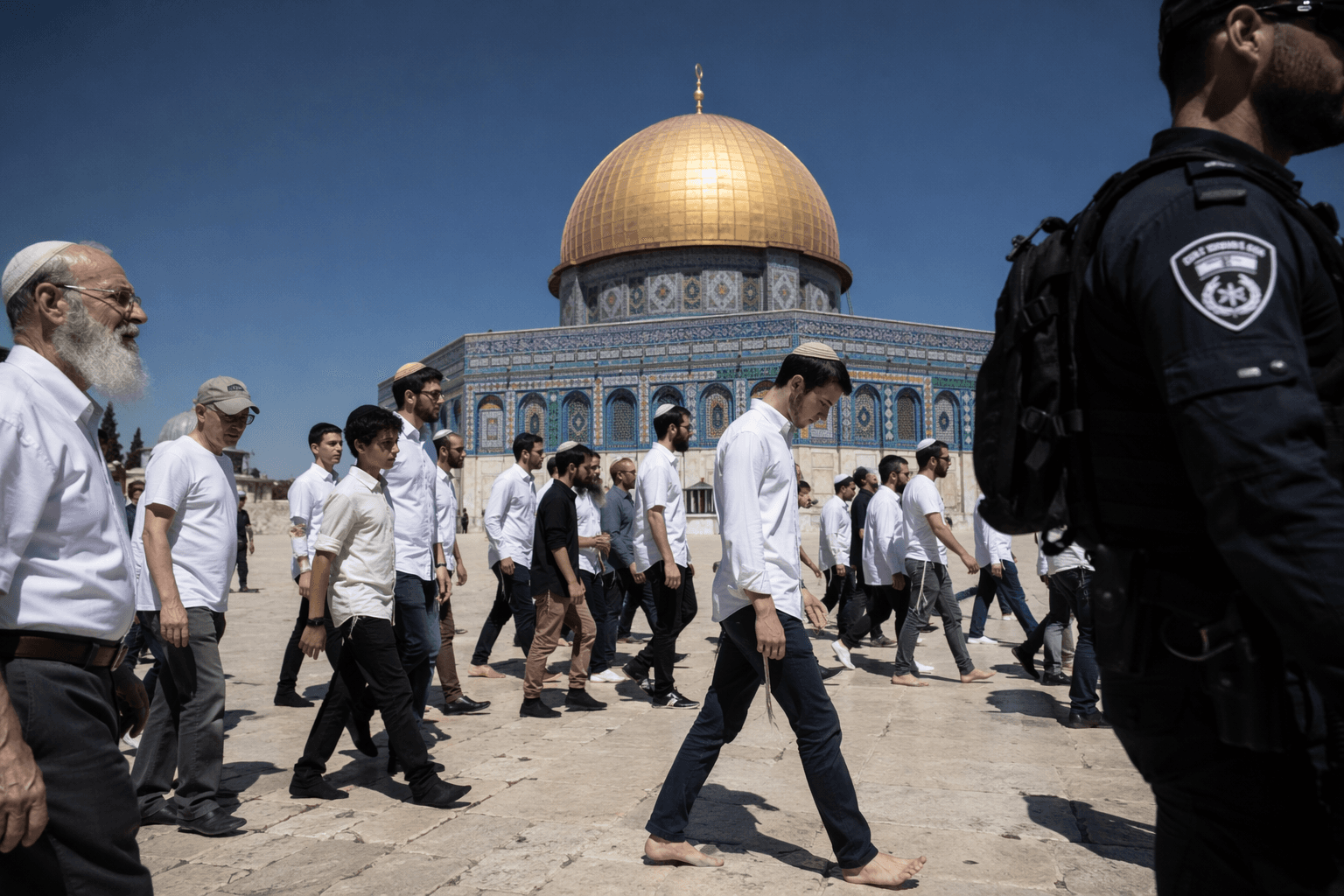
The compound’s sensitivity makes each breach politically explosive. The Jerusalem Waqf said more than 1,100 Israelis entered the site during the June 5, 2024 Jerusalem Day march, one of the starkest recent examples of how nationalist activity can push against the limits of the arrangement. In other recent incidents, thousands of Israeli nationalist marchers and settlers gathered near or entered the area under police protection, underscoring how quickly a local dispute over access can become a wider confrontation over sovereignty.
The stakes were sharpened again in March 2026, when reporting said Israel closed Al-Aqsa for 12 days during Ramadan and would allow no more than 10,000 Palestinians from the West Bank for the first Ramadan prayer, far below traditional crowds. Palestinian Muslim worshippers were at times left praying in the road when large gatherings were restricted, a visible sign of how access controls reverberate beyond the compound gates.
That is why al-Aqsa remains uniquely combustible. The site sits at the intersection of Palestinian national identity, Israeli politics, Jordanian custodianship and wider Muslim and Jewish claims. When the unwritten rules erode, even incrementally, the consequences can reach Jerusalem’s streets, the West Bank and regional diplomacy almost immediately.
This article was produced by Prism’s automated news system from verified source data, official records, and press releases, then run through automated quality and moderation checks before publishing. The system is built and supervised by the people who set the standards it runs under. Read our full AI policy.
Did this article answer your question?