Jack Hughes' overtime goal gives U.S. first Olympic men's hockey gold since 1980
Jack Hughes scored 1:41 into 3-on-3 overtime as the United States beat Canada 2-1, ending a 46-year gold drought and spotlighting college pipelines and access gaps in youth hockey.
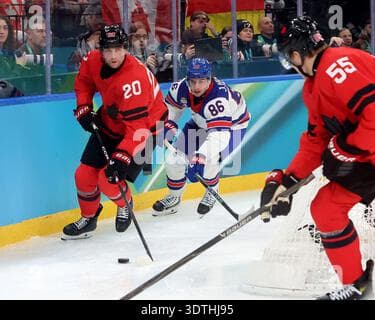
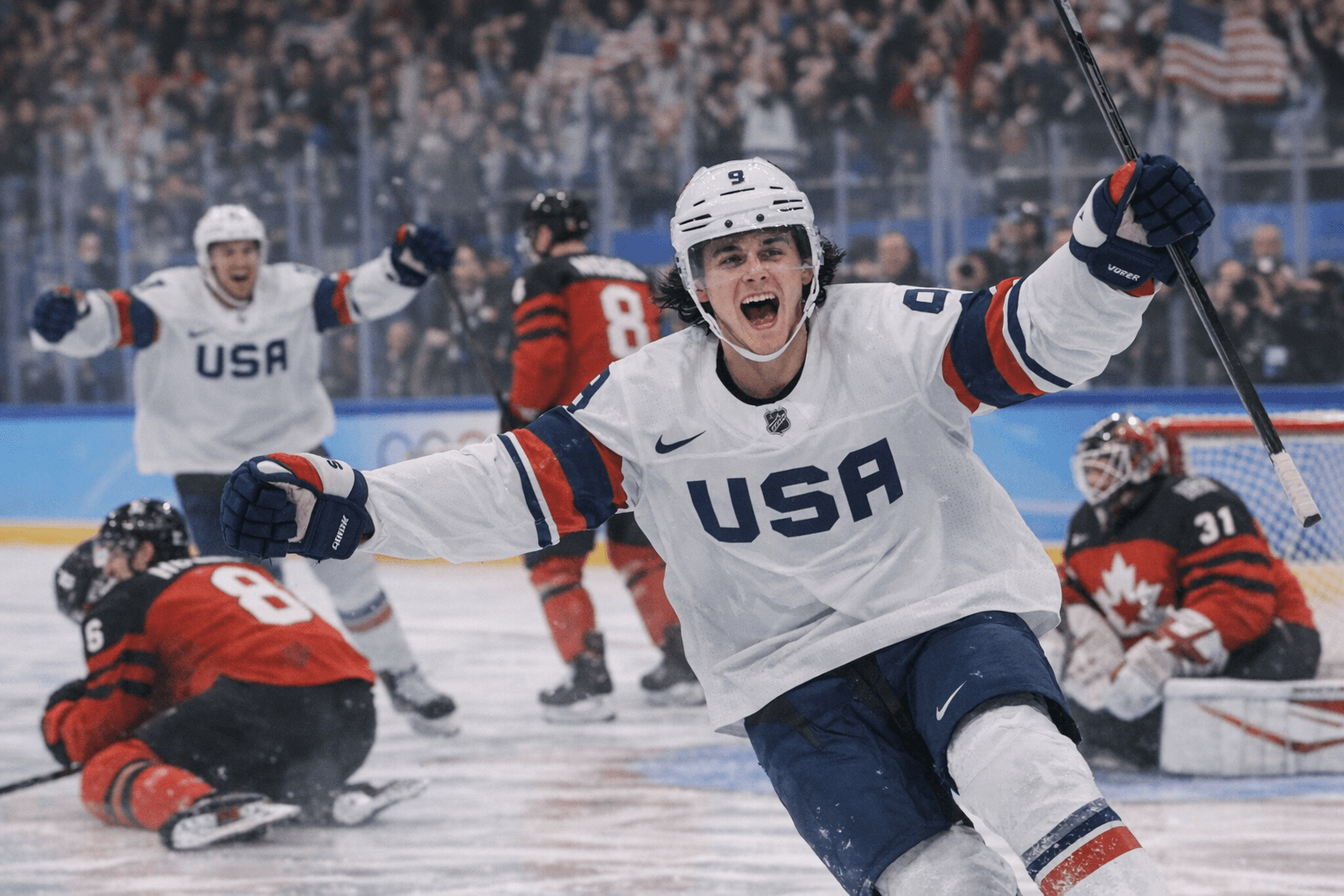
Jack Hughes slipped behind the Canadian defense and finished 1:41 into 3-on-3 overtime to lift the United States to a 2-1 victory and its first Olympic men's hockey gold since the 1980 Miracle on Ice. The sudden-death winner completed a tournament run that brought rare national rejoicing and renewed scrutiny of how the sport’s benefits are distributed at home.
Matt Boldy gave Team USA an early boost by opening the scoring six minutes into the game. Canada pressed back and Cale Makar buried the equalizer with 1:44 left in the second period, setting up a tense finish. A pivotal 93-second 5-on-3 for Canada was killed by the Americans, part of a flawless tournament penalty kill in which the U.S. went 18-for-18 on the road to gold. The Canadians outshot the U.S. 19-8 in the second period, but could not convert.
Goaltender Connor Hellebuyck anchored the defense with what will be remembered as a historic performance. Hellebuyck made several game-changing stops, including a paddle save on a Devon Toews rebound and a key denial of Connor McDavid on a breakaway, and he stopped 40 shots in the first three regulation periods. Jack Hughes summed up his teammates’ view succinctly: "Unbelievable game by Hellebuyck," Hughes said. "He was our best player by a mile."
The victory ends a 46-year wait, marking the United States’ third Olympic men's hockey gold overall. It also broke a long drought against Canada in best-on-best international play; the U.S. had not beaten Canada in a top-level competition since the 1996 World Cup of Hockey. The final was played before a partisan crowd that greeted the U.S. with boos during warm-ups and a sea of maple leaf shirts in the stands, creating a raucous backdrop to a rivalry that has produced only a handful of championship meetings between the two nations.
Beyond the scoreboard, the win highlights the continuing role of collegiate hockey in American talent development. In 2026 the presence of National Hockey League players returned to the Olympics for the first time since 2014, yet 20 of 25 players on the U.S. roster carried NCAA experience, and across the 1980 and 2026 gold-medal rosters combined, 88 percent had college hockey ties. Programs such as Minnesota and Boston University figure prominently in that pipeline, underscoring how college programs remain a pathway to elite competition.
That pipeline success, however, raises equity questions. A national title can spark a surge of interest among young people, but ice time, coaching and travel costs already limit participation for many families. Translating this triumph into broad public-health and community benefits will require deliberate investment: more community rinks, subsidized youth programs, and scholarship pathways so that the post-victory enthusiasm does not translate only into deeper advantages for those who already have access.
The human side of the podium moment was unmistakable. After the medal ceremony, teammates invited two of Gaudreau's children onto the ice to take a picture with the team and their late father's jersey, a small scene of shared grief and celebration amid national euphoria.
Hughes’ sudden-death goal in Milan will be replayed across the country, but whether the victory becomes a lever for healthier, more equitable youth sport participation depends on local and national leaders answering the practical question this win exposes: who will get to lace up next?
This article was produced by Prism’s automated news system from verified source data, official records, and press releases, then run through automated quality and moderation checks before publishing. The system is built and supervised by the people who set the standards it runs under. Read our full AI policy.
Did this article answer your question?