Japan and Tunisia fans bring World Cup fever to Monterrey
Japan and Tunisia fans filled Monterrey Stadium as FIFA marked the World Cup’s 1,000th match, a citywide test for the 2026 host plan.

Japan and Tunisia supporters turned Estadio Monterrey into a preview of World Cup 2026 operations as FIFA marked the meeting as the tournament’s 1,000th match. The game was scheduled for Saturday, June 20, at 22:00 local time in a city that will host four World Cup matches, while FIFA also planned a Fan Festival at Parque Fundidora to spread the event beyond the stands.
The matchup carried real football history. Japan and Tunisia last met in the 2023 Kirin Challenge Cup, when Japan won 2-0, and their World Cup precedent came at Korea/Japan 2002, where Japan again won 2-0 in the group stage. That gave the Monterrey fixture a sharper edge than a simple exhibition of color and noise: it linked a modern host city to a rivalry that already had a clear competitive pattern.
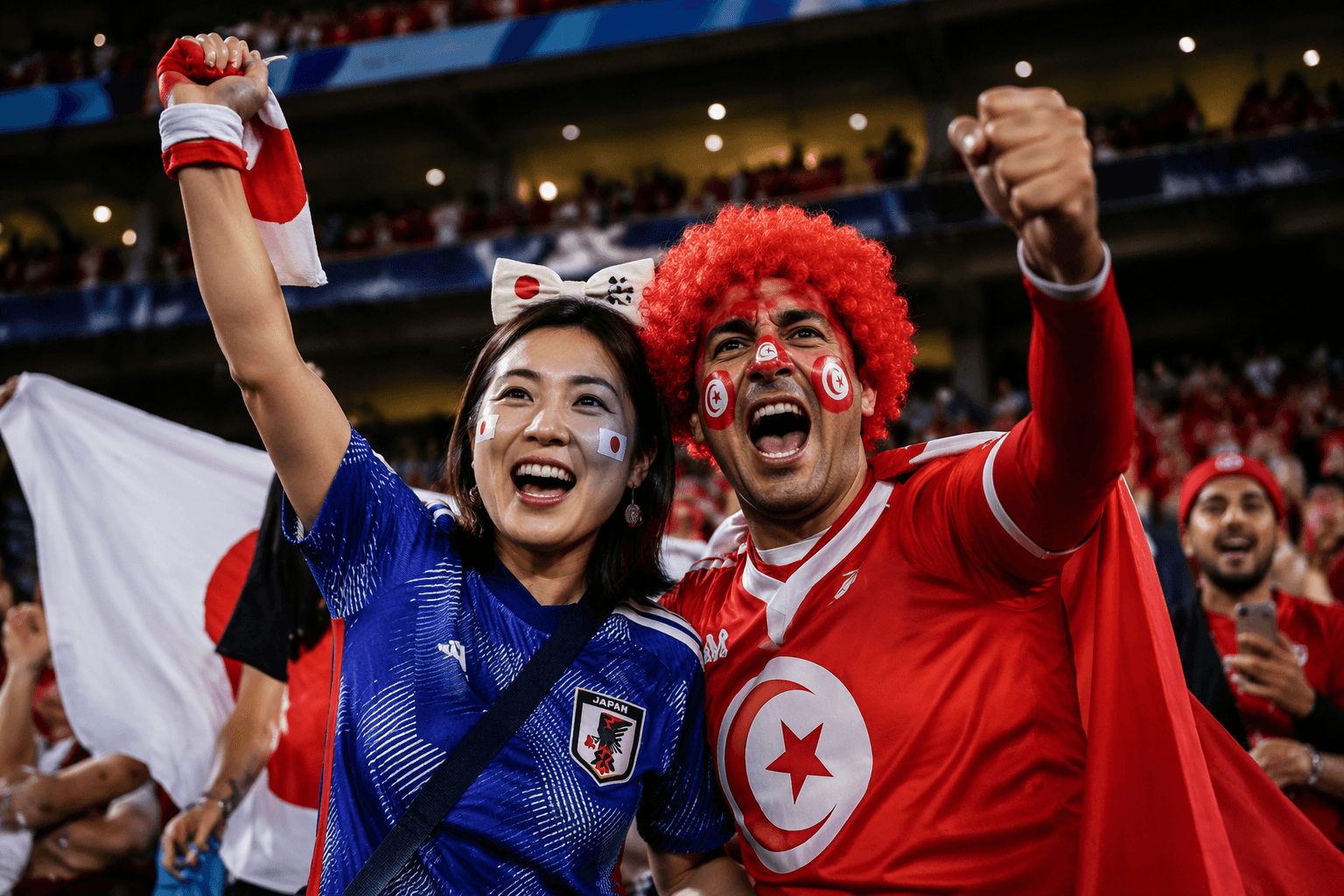
Monterrey Stadium, which FIFA describes as one of the most modern venues in Latin America, is part of Mexico’s role in a expanded tournament that will stretch to 104 matches and 48 teams. With four games assigned to the venue, Monterrey has become a practical test case for how a host city handles simultaneous demands from stadium operations, fan movement, and a broader tournament footprint.
The Fan Festival at Parque Fundidora is central to that effort. By placing a major public gathering away from the stadium itself, Monterrey is extending World Cup activity into one of the city’s most recognizable spaces and giving supporters another place to gather before and after matches. That approach matters in a tournament of this scale, where the experience is no longer confined to the 90 minutes inside the venue.
For cities across North America, including those in the United States preparing for the same tournament, Monterrey offered an early model of what the expanded World Cup requires: a venue capable of handling marquee fixtures, a second civic site to absorb crowds, and a calendar that turns one match into part of a much larger logistical system. The Japan-Tunisia night showed how quickly football can become a host-city operation.
This article was produced by Prism’s automated news system from verified source data, official records, and press releases, then run through automated quality and moderation checks before publishing. The system is built and supervised by the people who set the standards it runs under. Read our full AI policy.
Did this article answer your question?
.jpg&w=1920&q=75)