Japan H3 rocket fails to place Michibiki No.5 into planned orbit
Japan’s H3 No. 8 rocket lifted off from Tanegashima today but its second stage cut off prematurely, leaving the fate of the Michibiki No.5 navigation satellite uncertain. The anomaly raises fresh questions about the H3 program and will prompt a full investigation into a drop in hydrogen tank pressure that reduced thrust.
The H3 No. 8 rocket lifted off from JAXA’s Tanegashima Space Center in Kagoshima Prefecture at 10:51 a.m. local time on Monday, but mission controllers announced that the vehicle failed to deliver the Michibiki No.5 satellite into its intended orbit after the second stage experienced a premature engine shutdown. It remains unclear whether the satellite separated from the launcher, and JAXA said it will first confirm separation status before proceeding to a full investigation.
JAXA reported that the second stage was programmed to perform two ignitions during the flight, the second of which was expected to burn for more than four minutes. Data reviewed immediately after the anomaly show that the second combustion subsided almost as soon as it began. Engineers identified a drop in pressure in a hydrogen fuel tank during the second stage burn, a condition that reduced thrust and caused the vehicle’s altitude to fall midway through the planned burn.
The payload, Michibiki No.5, is the newest member of Japan’s Quasi Zenith Satellite System, a regional navigation constellation designed to improve positioning for smartphones, vehicle navigation and other services by ensuring at least one satellite remains near zenith over Japan at all times. The system also extends coverage to parts of Asia and Oceania. Michibiki No.6 entered orbit earlier this year in February and Japanese officials have publicly described plans to grow the constellation to seven satellites by March 2026 and ultimately to 11 satellites by the late 2030s to increase redundancy and accuracy.
The launch had been postponed twice after equipment irregularities were detected in the weeks before the flight. Those delays underscored the program’s sensitivity to technical readiness and the high expectations placed on the H3 rocket, which Japan developed as a next generation domestic launcher intended to carry government and commercial payloads.
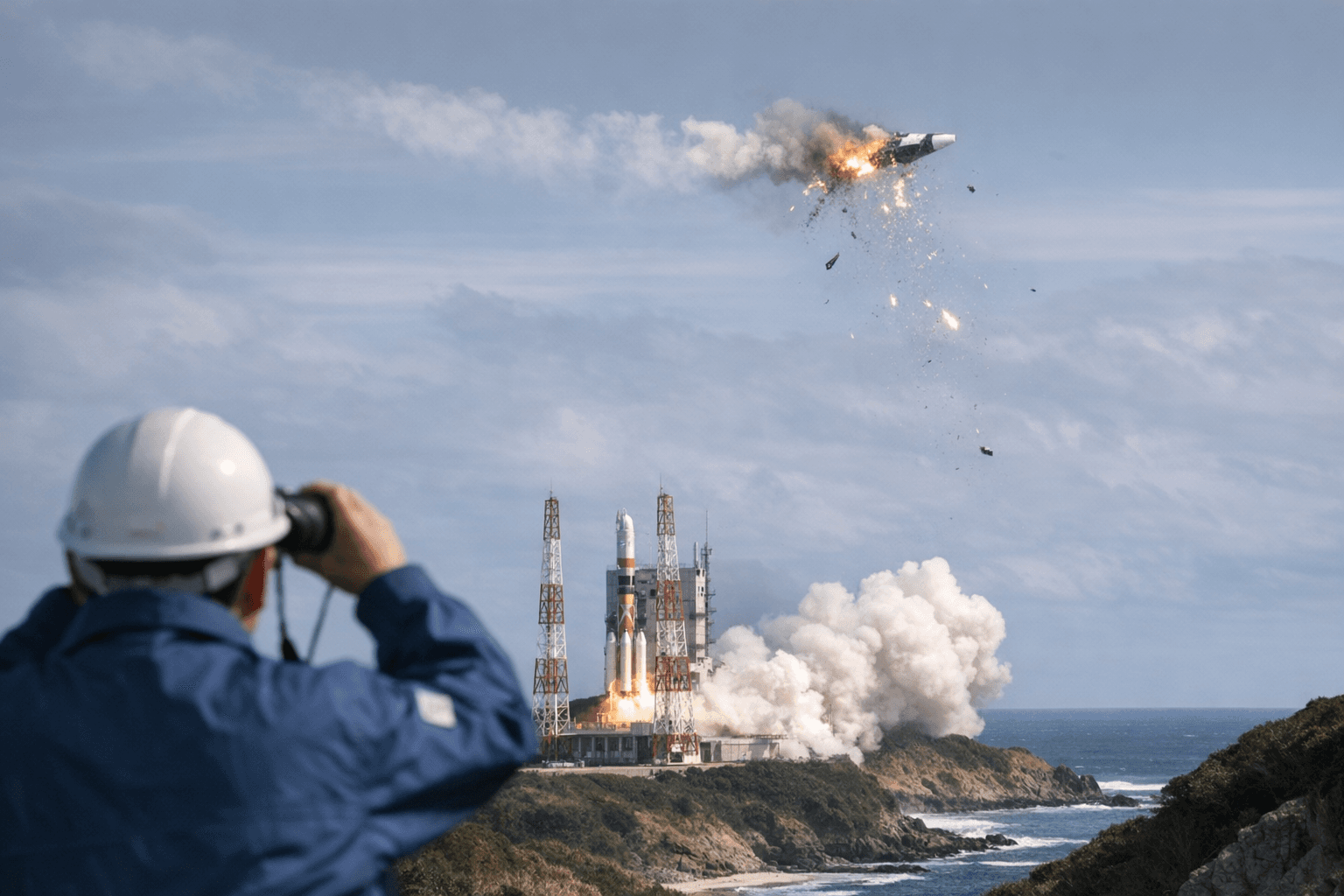
This mission marks a serious setback for the H3 program. It is the second failure for the vehicle following its debut in March 2023, when the first H3 failed to complete its mission when the second stage did not ignite. JAXA and government officials had pointed to subsequent flights as evidence of a maturing capability, but today’s anomaly will prompt renewed scrutiny of design, manufacturing and operations across the program.
Speaking at a news conference after the launch, JAXA President Hiroshi Yamakawa apologized to the public, saying, “We sincerely apologize for failing to meet your expectations.” The science ministry said it would order a comprehensive investigation into the cause of the hydrogen tank pressure drop and the premature cutoff, and JAXA pledged full cooperation.
Engineers will now focus on confirming whether Michibiki No.5 separated and assessing any possible contact with the satellite. The findings of the investigation will determine whether recovery or mitigation steps are possible for the payload and will shape decisions about future H3 flights and Japan’s schedule for expanding its navigation constellation.
This article was produced by Prism’s automated news system from verified source data, official records, and press releases, then run through automated quality and moderation checks before publishing. The system is built and supervised by the people who set the standards it runs under. Read our full AI policy.
Did this article answer your question?