Japan seeks $7 trillion household savings to stabilize bond demand
Japan's finance ministry is moving to channel an estimated $7 trillion in household savings into government bonds as the Bank of Japan scales back direct purchases, a shift that could reshape demand dynamics in the JGB market. The effort matters because it seeks to replace a major buyer, influence borrowing costs and force policymakers to balance fiscal incentives against long term costs for taxpayers.
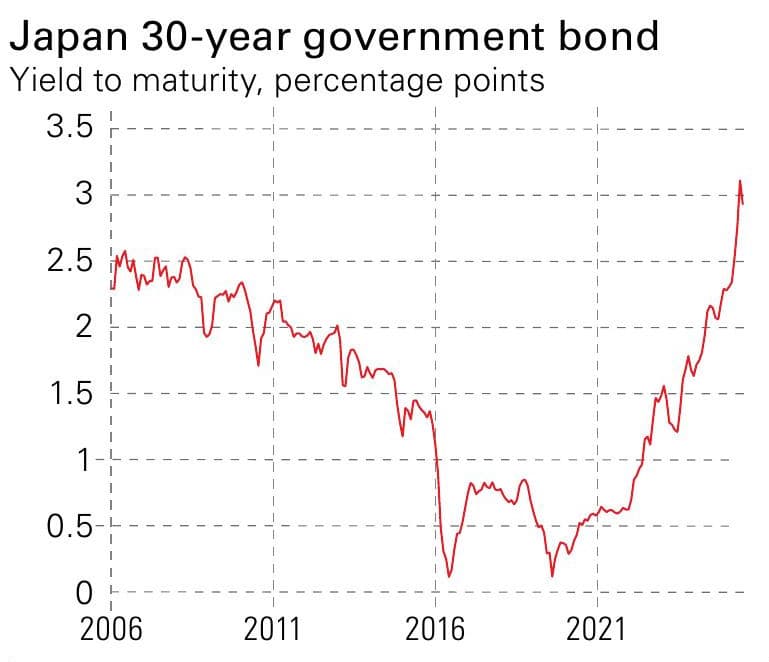
Japan's finance ministry is preparing initiatives to mobilize roughly $7 trillion in household savings to bolster demand for Japanese government bonds as the Bank of Japan reduces its direct bond purchases and commercial banks face limited capacity to expand holdings. Officials describe the drive as an effort to convert recent retail momentum into a more stable pool of long term domestic buyers for government debt.
Retail appetite for JGBs surged in 2025, with sales up 30.5 percent to 5.28 trillion yen, the highest annual retail total since 2007. Using the exchange rate of $1 equals 157.3600 yen, that figure equates to about $33.55 billion. Finance ministry minutes from a late November meeting with more than a dozen institutional investors show market participants urged the ministry to step up efforts to attract retail buyers to fill the void left by the central bank.
Officials are considering a menu of actions that include new product designs and incentives aimed at steering household deposits and savings into government debt. Specific product details and implementation timelines have not been disclosed, but the ministry is shifting away from earlier marketing experiments that relied on mascots and small giveaways toward measures that would make JGBs more attractive on yield and duration terms.
Market strategists say the choices carry trade offs. One option under discussion is to reward longer term retail holdings with higher coupons, a tactic that helped lift retail bond sales in some European markets. Takahiro Otsuka, senior fixed income strategist at Mitsubishi UFJ Morgan Stanley Securities, warned that higher coupon incentives are “essentially the same as offering a tax break,” highlighting the fiscal cost that would accompany efforts to lock in household demand.

The push comes at a delicate moment for Japan’s debt market. For years the BOJ was the dominant buyer, smoothing demand and anchoring yields. As the central bank pares back purchases, volatility and the need for other reliable domestic buyers have risen. Commercial banks, constrained by balance sheet and regulatory limits, are unable to shoulder a large increase in JGB holdings, which leaves households as the most plausible alternative reservoir of demand.
Policymakers must navigate competing objectives. Attracting household savings into JGBs could lower market risk and support smoother government refinancing, particularly if retail holdings prove sticky and long dated. However the potential fiscal price of yield sweeteners and the administrative complexity of designing products that change saver behaviour are real constraints. The trade off will shape not only near term financing costs but also the longer term composition of Japan’s bond ownership.
Investors and analysts will watch closely for concrete product announcements and any signals of intended coupon levels or tax treatment, because those choices determine both the effectiveness of the program and its cost to public finances. For Japan’s policymakers the challenge is clear, mobilize a vast pool of household wealth without turning bond buying into an expensive substitute for central bank support.
This article was produced by Prism’s automated news system from verified source data, official records, and press releases, then run through automated quality and moderation checks before publishing. The system is built and supervised by the people who set the standards it runs under. Read our full AI policy.
Did this article answer your question?