Japan, Vietnam leaders meet in Hanoi amid sharp investment slowdown
Sanae Takaichi’s Hanoi trip came as new Japanese investment in Vietnam fell 75%, sharpening pressure for deeper ties on trade, critical minerals and security.
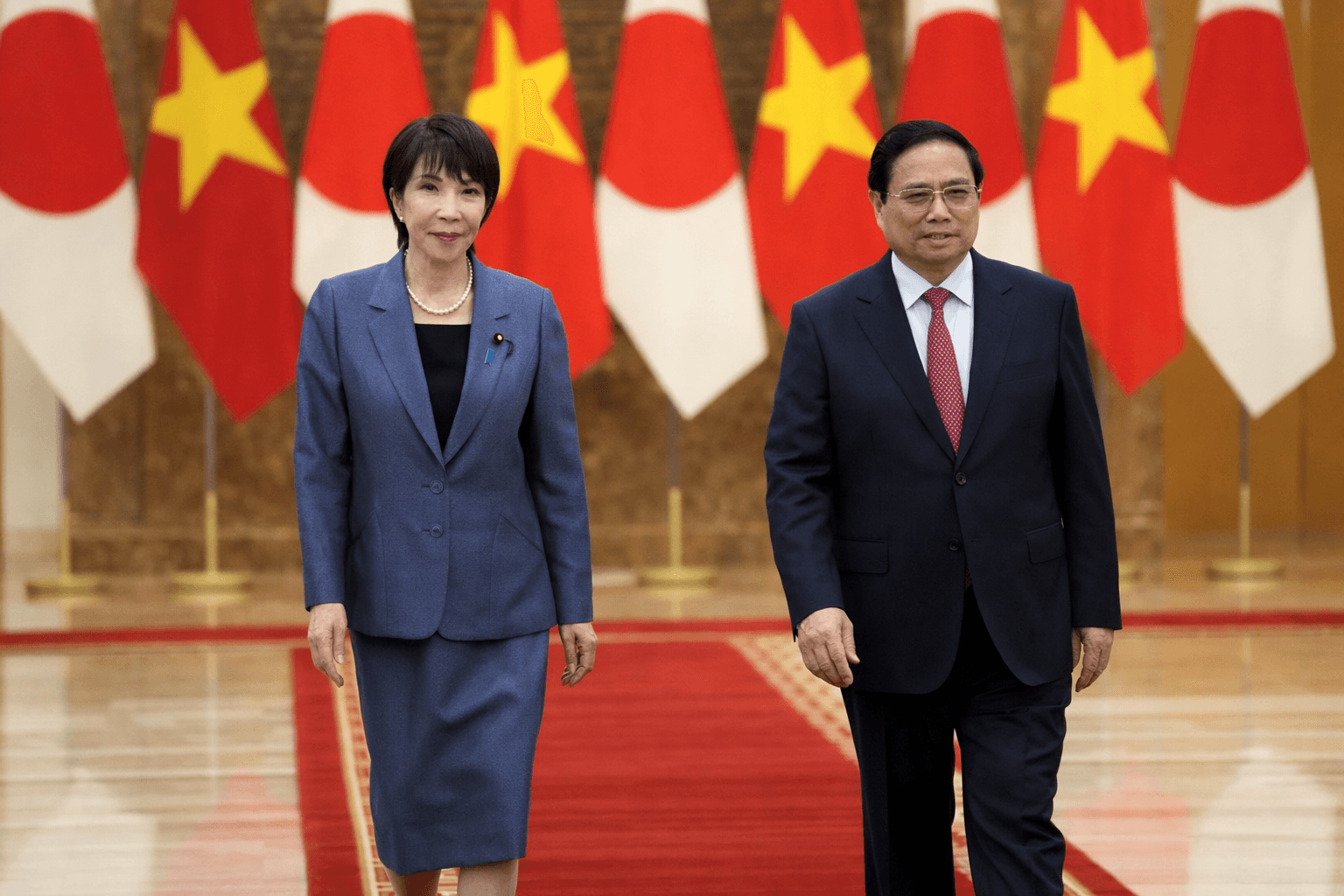
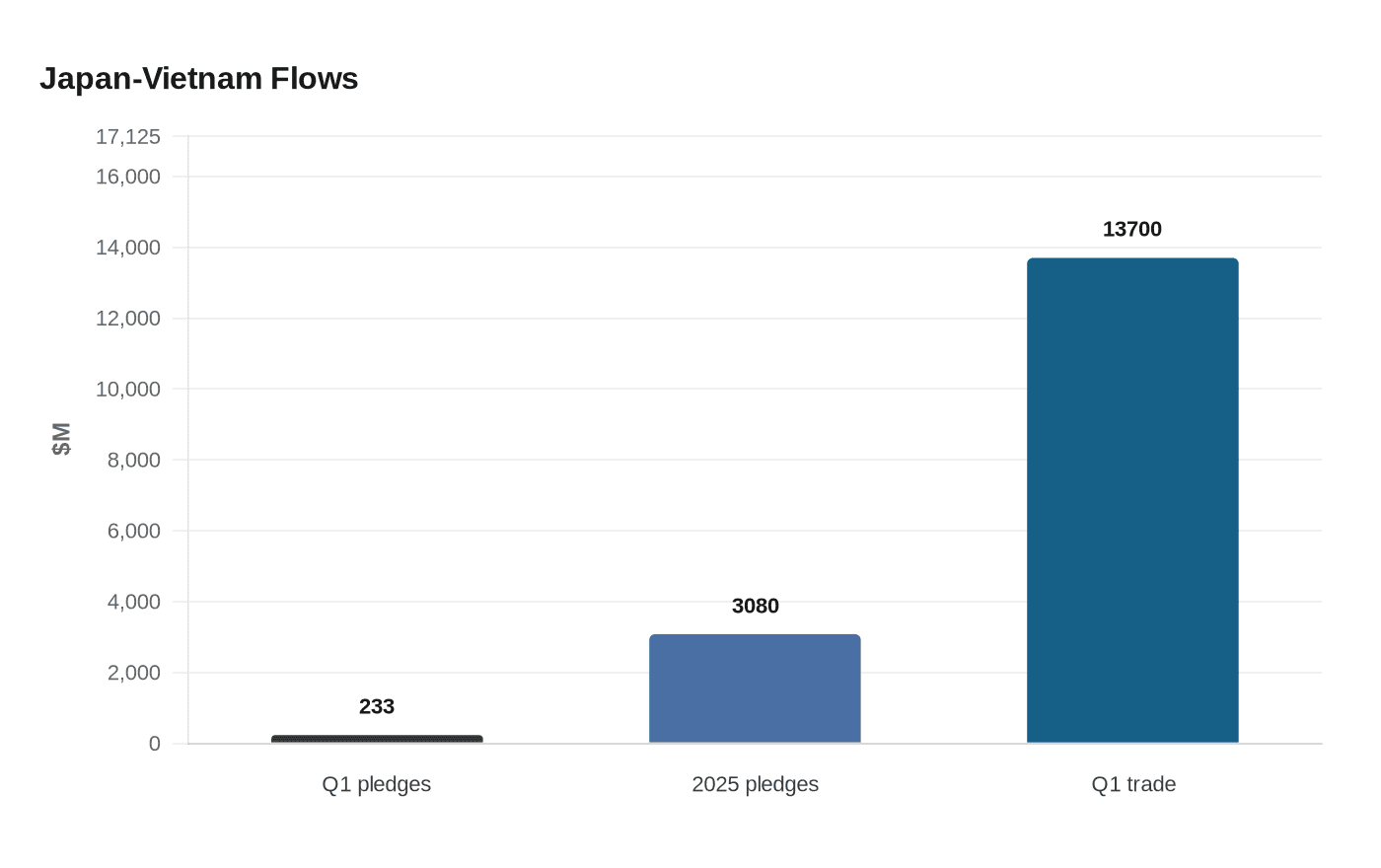
Japanese Prime Minister Sanae Takaichi arrived in Hanoi on Saturday to meet Vietnamese leader To Lam, putting a fresh diplomatic frame around a relationship that is increasingly shaped by economics, supply chains and China’s regional weight. The visit came as new Japanese investment pledges in Vietnam dropped about 75% year on year in the first quarter to $233 million, a sharp slowdown for one of Vietnam’s biggest foreign backers.
The two governments were set to discuss energy, technology, critical minerals and regional stability under the Comprehensive Strategic Partnership for Peace and Prosperity in Asia and the World that they elevated in December 2023. That upgrade built on diplomatic ties established in 1973 and an earlier strategic partnership framework from 2014, and it has already pushed the relationship beyond routine protocol toward security and economic security cooperation. Takaichi was also scheduled to speak at Vietnam National University about the evolution of Japan’s Free and Open Indo-Pacific strategy before heading to Australia.
The investment figures explain why the trip carried more than symbolic weight. While first-quarter pledges weakened, pledged Japanese investment for 2025 rose 19.4% to $3.08 billion from a year earlier, suggesting Japanese companies have not retreated so much as delayed. Trade has remained strong as well, rising 12.3% in the first quarter to $13.7 billion, and bilateral trade surpassed $50 billion in 2025. The scale of that commerce underlines how deeply embedded Japan is in Vietnam’s manufacturing base even as fresh capital slows.
Takaichi was expected to press Vietnamese officials to improve conditions for Japanese companies, including complaints about delayed payments for completed work and difficulty gaining access to major infrastructure projects. Japan’s retreat from the Ninh Thuan 2 nuclear project, after deciding the construction timetable was too tight, also left a mark on Vietnam’s long-term power planning as Hanoi tries to avoid future shortages and expand electricity supply for factories.
The strategic subtext is widening beyond factories and power plants. Japan is looking to reduce dependence on China for critical minerals, while Vietnam has untapped rare earth and gallium reserves but limited processing capacity. That gives Hanoi leverage and gives Tokyo a reason to deepen ties now, especially as both seek more resilient supply chains in Asia.
The trip also intersected with a domestic Vietnamese fight over pollution and mobility. Hanoi has been reconsidering a ban on petrol-powered motorcycles in its city center, a measure aimed at improving air quality in a city that often ranks among the world’s most polluted. Japanese officials and manufacturers have warned that the ban could cost jobs and disrupt a $4.6 billion motorbike market dominated by Honda. Taken together, the visit pointed to a broader realignment, where economic caution, energy security and strategic competition are becoming harder to separate.
This article was produced by Prism’s automated news system from verified source data, official records, and press releases, then run through automated quality and moderation checks before publishing. The system is built and supervised by the people who set the standards it runs under. Read our full AI policy.
Did this article answer your question?