Japan's school lunches help keep obesity rates among the world's lowest
Japan’s low obesity rate is built into school life, where lunch, food education and family habits reinforce one another. The U.S. could borrow pieces of the model, but not its whole cultural and policy framework.
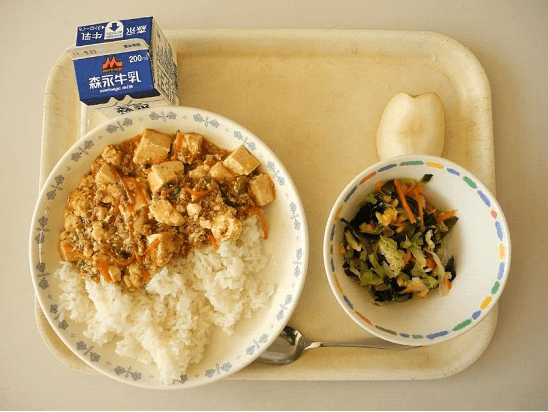
Japan’s child nutrition system is not built around a single menu or a single rule. It works because lunch, classroom instruction and family habits are pulled in the same direction, day after day, under national policy that treats food education as a public good. That matters in a country where obesity remains among the lowest in OECD and World Obesity datasets, while every U.S. state and territory now sits at 25% adult obesity prevalence or higher.
Why the comparison matters
The contrast with the United States is stark. In 2024, the Centers for Disease Control and Prevention reported adult obesity prevalence of 35.9% in the Midwest and 34.5% in the South, with all states and territories at 25% or higher. Japan sits on the other end of the scale, and the difference is not just about calories or cuisine. It is about institutions that shape how children eat, what they learn about food, and which habits become normal early in life.
That is why Japan’s school lunch system draws so much attention. It is not merely a feeding program; it is part of a broader prevention strategy that starts in childhood and continues into adulthood. The CDC’s own framing is clear that obesity prevention and treatment matter across the life course, which makes Japan’s school-based model especially relevant for policymakers looking for durable answers rather than short-term campaigns.
How Japan turned lunch into a lesson
Japan’s school lunch program began in 1889 in Tsuruoka, Yamagata Prefecture, where free lunches were served to children from poor families. The program was interrupted during World War II and then reinstated in 1954 under the School Lunch Program Act. That history matters because it shows the system was built first as a social support, then expanded into a national framework for nutrition, hygiene and habit formation.
Today, school lunches are managed to meet accepted nutritional standards and strict hygiene and sanitation rules. They are designed to provide safe, nutritionally balanced meals, but the policy goes further than composition. Japanese school lunch practice also emphasizes manners, teamwork, cleanup and practical food skills, so the lunch hour becomes a repeated lesson in how to eat and behave around food, not just what to eat.

This is where the system starts to look less like a cafeteria and more like curriculum. Students are not simply served a meal and sent back to class. They learn portion norms, shared responsibility and the social routine of balanced eating, which helps make healthier habits feel ordinary rather than exceptional.
Shokuiku makes food education official policy
Japan’s Basic Act on Shokuiku, enacted on June 17, 2005, gave food and nutrition education national status. The law says shokuiku should be positioned as a foundation of life and promoted so people can choose appropriate foods and adopt healthy dietary habits. It also explicitly ties the policy to concerns about nutritional imbalance, irregular eating patterns, obesity, noncommunicable diseases, food safety and food import dependency.
That scope is important because it shows the government is not treating obesity as an isolated medical problem. Instead, it is linking food knowledge to broader risks in the food system and to the daily routines that shape long-term health. By putting shokuiku into law, Japan made nutrition literacy a shared public responsibility rather than a private lesson that depends on parental time, income or interest.
The result is a system where children hear the same message in multiple places. School lunches demonstrate what balanced meals look like, classroom instruction explains why they matter, and family and community relationships reinforce them outside school. When those channels align, food habits are more likely to stick.
The teachers behind the program
Japan also institutionalized this approach through the school diet and nutrition teacher system, established in fiscal year 2005. According to the Ministry of Education, Culture, Sports, Science and Technology, these teachers use school lunches as living teaching material, provide guidance on childhood nutrition and coordinate with families and local communities. As of May 1, 2022, there were 6,843 school diet and nutrition teachers nationwide.
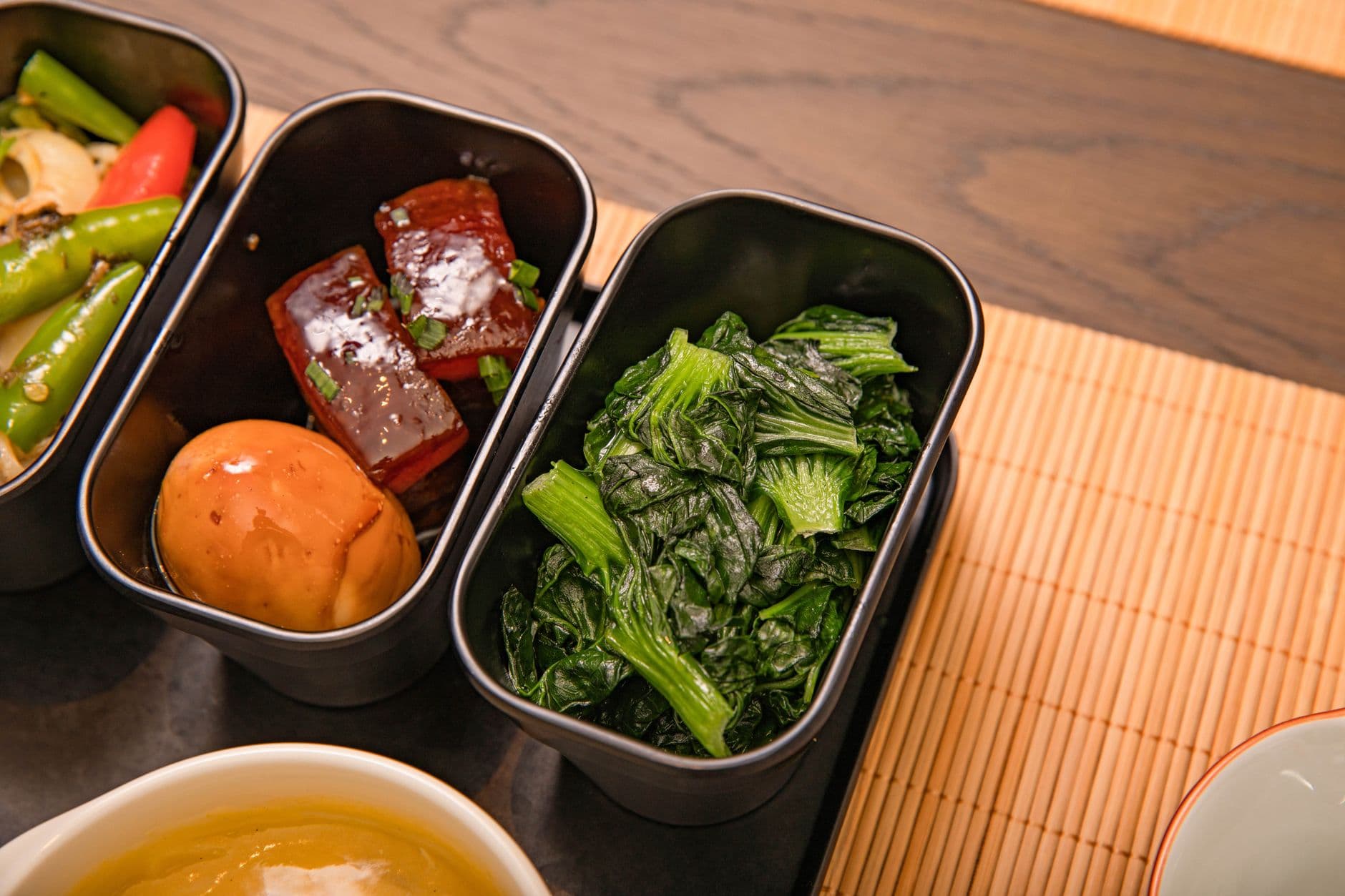
That staffing detail is one of the clearest signs that Japan treats nutrition as a school function, not an extracurricular concern. The teachers are part of the infrastructure that turns an otherwise routine lunch into a structured public health intervention. They also make the program harder to replicate casually, because it depends on trained personnel, administrative coordination and a national commitment to seeing food education as part of schooling itself.
The reach of the program is similarly notable. As of May 2021, school lunches were provided to 99.7% of public elementary schools and 98.2% of public lower secondary schools in Japan, according to a 2023 case study by the Ministry of Education, Culture, Sports, Science and Technology and the Ministry of Agriculture, Forestry and Fisheries. That near-universal coverage means the system can shape norms at scale, rather than only in isolated districts or pilot sites.
What the U.S. could realistically borrow
The United States can learn from Japan, but not by trying to copy the whole model line for line. The most transferable pieces are the structural ones: universal or near-universal school meals, stronger nutrition instruction, and a workforce that treats food education as a formal role rather than an add-on. The Japanese example suggests that if children repeatedly see balanced meals, learn why they matter and practice eating them in a social setting, healthier choices become easier to sustain.
Some parts are harder to transplant. Japan’s approach benefits from a national policy framework that links food education, school meals and family engagement, while the U.S. school system is more fragmented across states and local districts. The American obesity picture is also more severe, with every state and territory at or above 25% adult obesity prevalence in the CDC’s 2024 maps, so any reform would have to operate against a much larger baseline problem.
Still, the policy lesson is straightforward. Japan’s low obesity rate is not just a story about traditional dishes or smaller portions. It is a story about institutions that teach, feed and normalize healthier behavior together, beginning in childhood and reinforced across the school day. That kind of system is difficult to improvise, but it is exactly the kind of long-term public investment that can change a country’s health trajectory.
This article was produced by Prism’s automated news system from verified source data, official records, and press releases, then run through automated quality and moderation checks before publishing. The system is built and supervised by the people who set the standards it runs under. Read our full AI policy.
Did this article answer your question?


