Jeffries demands transformational DHS reforms tied to funding fight
House Democrats say they will withhold DHS funding without sweeping ICE reforms as talks enter a 10-day sprint to avert broader disruption.
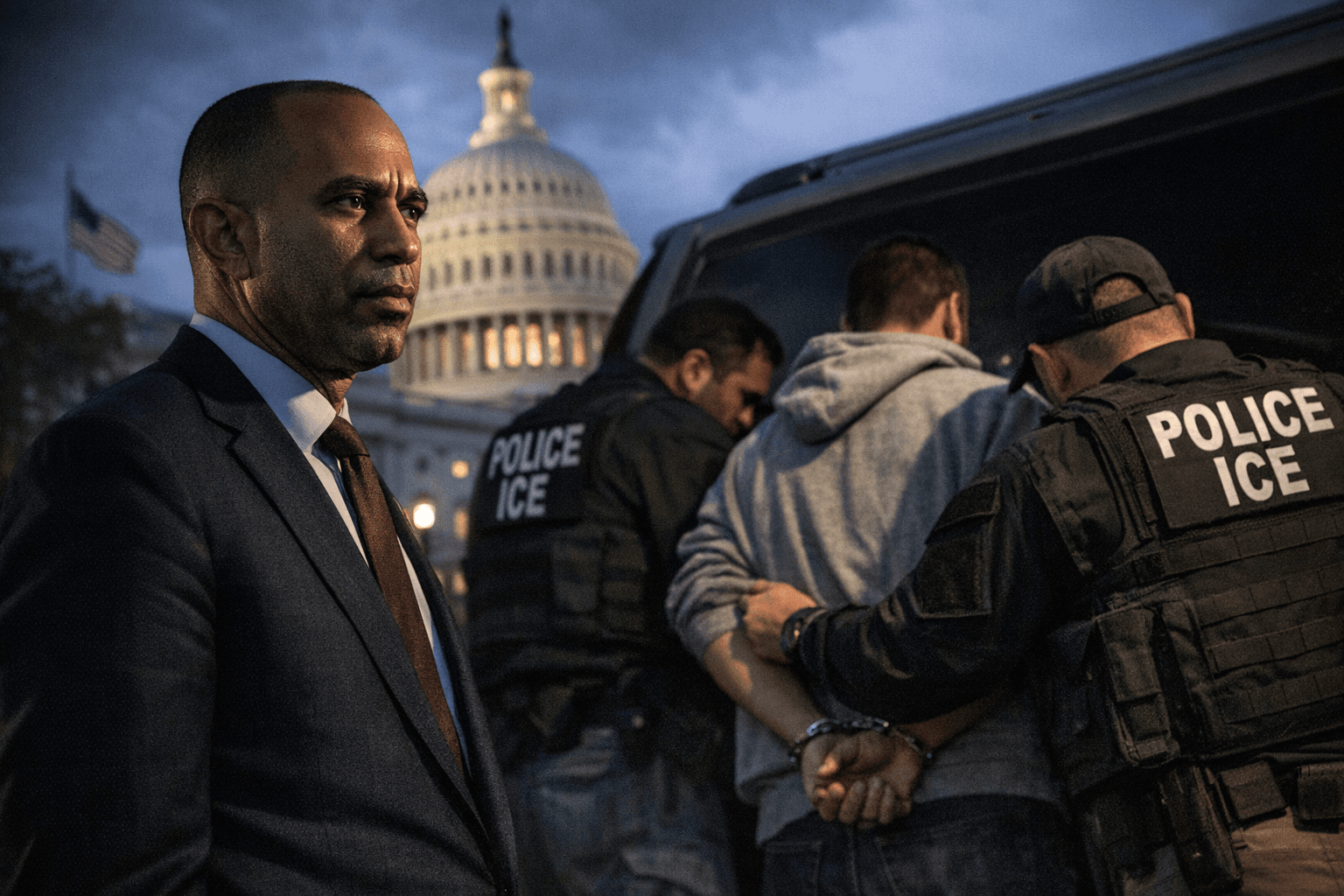
House Minority Leader Hakeem Jeffries pressed Republicans on a set of sweeping changes at the Department of Homeland Security, saying Democrats will not support continued DHS funding unless the agency and its law-enforcement arms undergo “dramatic, bold, meaningful and transformational” reforms. His demands, aired across multiple interviews and a joint letter with Senate Democratic Leader Chuck Schumer, raise the stakes in a narrow negotiation window as lawmakers rush to prevent a broader shutdown.
Jeffries told CBS News that Democrats want concrete guardrails on immigration enforcement, including judicial warrants before ICE can enter private property. “For instance, judicial warrants should be required before ICE agents can storm private property or rip everyday Americans out of their homes,” he said. He also called for independent investigations that would allow state and local officials to pursue criminal prosecutions when laws are allegedly violated, arguing certain officials could not be trusted to lead probes. “We cannot trust Kristi Noem or Pam Bondi to conduct an independent investigation,” Jeffries said on CBS.
NPR reported that the letter Jeffries and Schumer sent to House Speaker Mike Johnson and Senate Majority Leader John Thune listed additional measures such as body-worn cameras for immigration agents and prohibitions on masks so officers are identifiable. Some Republicans have signaled limited openness to reforms such as body cameras, NPR and Politico noted, but many draw a line at a mask ban. Politico reported Jeffries called a GOP counterproposal “woefully inadequate,” and quoted Senate Republican John Thune saying there remained room for compromise even as he warned that at least seven Senate Democrats would be needed to pass any stopgap to avert a shutdown.
The political timetable is compressed. PBS noted that an agreement to reopen parts of the government launched a “10-day sprint” for bipartisan talks on how ICE should operate. Jeffries voted against the measure to reopen the partial shutdown even though more than 20 House Democrats broke with their leadership to support it, telling PBS the vote underscored his insistence that funding should be conditioned on policy change.
Jeffries tied his demands to recent deadly encounters involving immigration enforcement that he cited in interviews. Speaking to CBS, he invoked the killings of Rene/Renee Good and Alex Pretti, CBS placed those deaths in Minneapolis, while NPR used the spelling “Renee Macklin Good”, and said taxpayer dollars should not “be used to brutalize or kill them.” He warned that Republicans and the White House seem willing to let FEMA, the Coast Guard and TSA face disruption rather than accept sweeping reforms.
Beyond the immediate political fight, the dispute has wider policy and economic implications. A partial or protracted DHS funding lapse could interrupt aviation security screening, disaster response and maritime operations, raising costs for commerce and travel and testing supply chains already sensitive to staffing and procedural disruptions. Market reaction to a short shutdown would likely be muted if a quick stopgap is reached, but prolonged brinkmanship could reverberate through transportation and logistics sectors and increase federal contingency spending.
For Democrats, the push frames a long-term effort to impose law-enforcement standards on immigration agencies and to extract accountability mechanisms that would outlast the current negotiations. For Republicans, the challenge will be balancing concessions such as body cameras against political resistance to broader structural changes. With just days to bridge those gaps, the outcome will shape both immediate funding decisions and the next phase of federal immigration oversight.
This article was produced by Prism’s automated news system from verified source data, official records, and press releases, then run through automated quality and moderation checks before publishing. The system is built and supervised by the people who set the standards it runs under. Read our full AI policy.
Did this article answer your question?