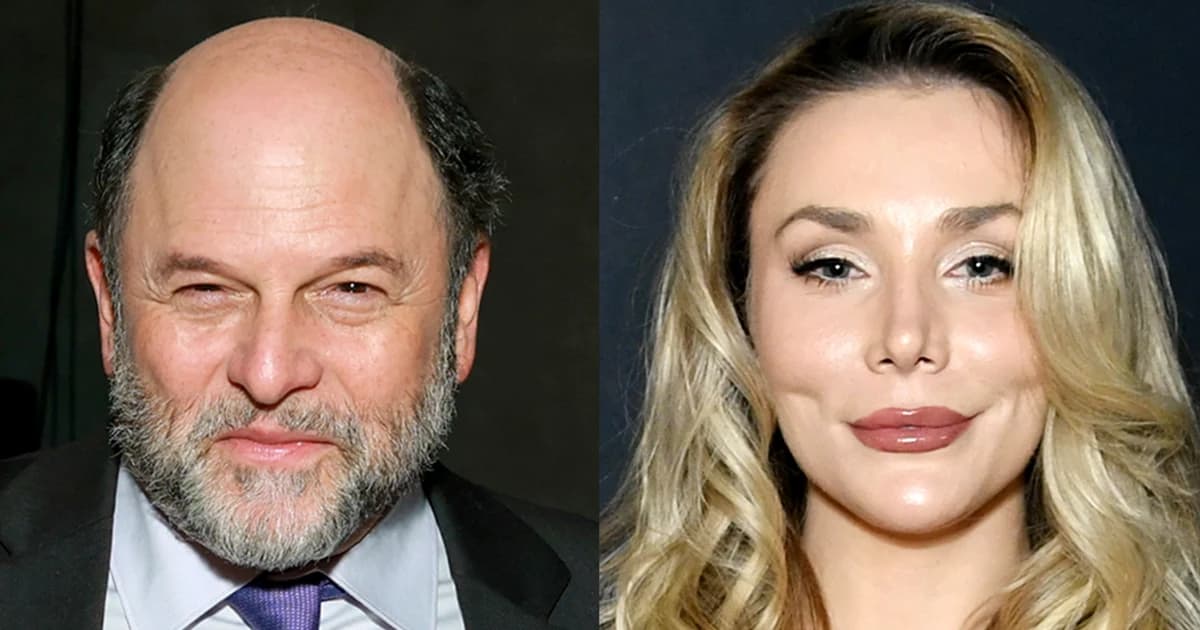
Jia Tolentino says plastic surgery and AI are warping beauty standards
Tolentino argues that subtle surgery and AI filters are making edited faces feel normal, resetting what people read as natural beauty.
Plastic surgery and AI are collapsing the old boundary between an edited face and a real one, and Jia Tolentino has spent years tracing how that shift rewrites beauty itself. In her work for The New Yorker, she argues that cosmetic refinement is no longer reading as obvious alteration; it is becoming the baseline for what looks normal, desirable, even human.
Instagram face became a shared template
Tolentino’s 2019 essay, "The Age of Instagram Face," came out of The New Yorker’s Decade in Review coverage and gave a name to a style that had already begun to feel unavoidable. She described social media, FaceTune, and plastic surgery as having produced a single, "cyborgian" look, one that spread through professionally beautiful women as online metrics rewarded what looked polished, symmetrical, and familiar. The core point was not that one procedure or app created the trend, but that each layer of digital and cosmetic editing reinforced the same face.
That logic matters because it changes how people read appearance in everyday life. If the most visible faces online are shaped by filters, injectables, and surgery, the eye adjusts downward, treating a manufactured look as the natural one. Tolentino’s warning was that metrics push people toward generic sameness because some things perform well, and once that loop sets in, the standard no longer feels like a standard at all.
The New Yorker’s contributor page says Tolentino has been a staff writer there since 2016, and in 2023 she won a National Magazine Award for her columns. That matters because her critique is not a passing reaction to a trend cycle. It comes from a writer whose work has tracked the social costs of appearance culture long enough to see the shift from spectacle to normalization.
The change is becoming harder to detect
In "Our Plastic-Surgery Nightmare," Tolentino took the argument further, saying cosmetic procedures are becoming both more invisible and more extreme. That combination is what makes the present moment so disorienting: the changes can be subtle enough to evade notice while still moving faces far enough from ordinary human variation to alter the cultural baseline. The result is not just more surgery, but a new familiarity with surgical-looking perfection.
Tolentino also wrote that the face is increasingly "more technically beautiful but more spiritually unattractive, replete with new information but devoid of human meaning." The line captures the central tension of the current aesthetic economy. A face can be refined, brightened, lifted, and smoothed until it satisfies every visible check box, while also becoming harder to read as an individual body with age, friction, and distinctiveness.
That tension has public health implications as much as cultural ones. When the altered face becomes ordinary, people absorb a narrower idea of normal appearance without realizing the standard has shifted. That can intensify pressure on younger audiences, especially in environments where image is tied to social standing, work, and self-worth.
What "Instagram face" now means in practice
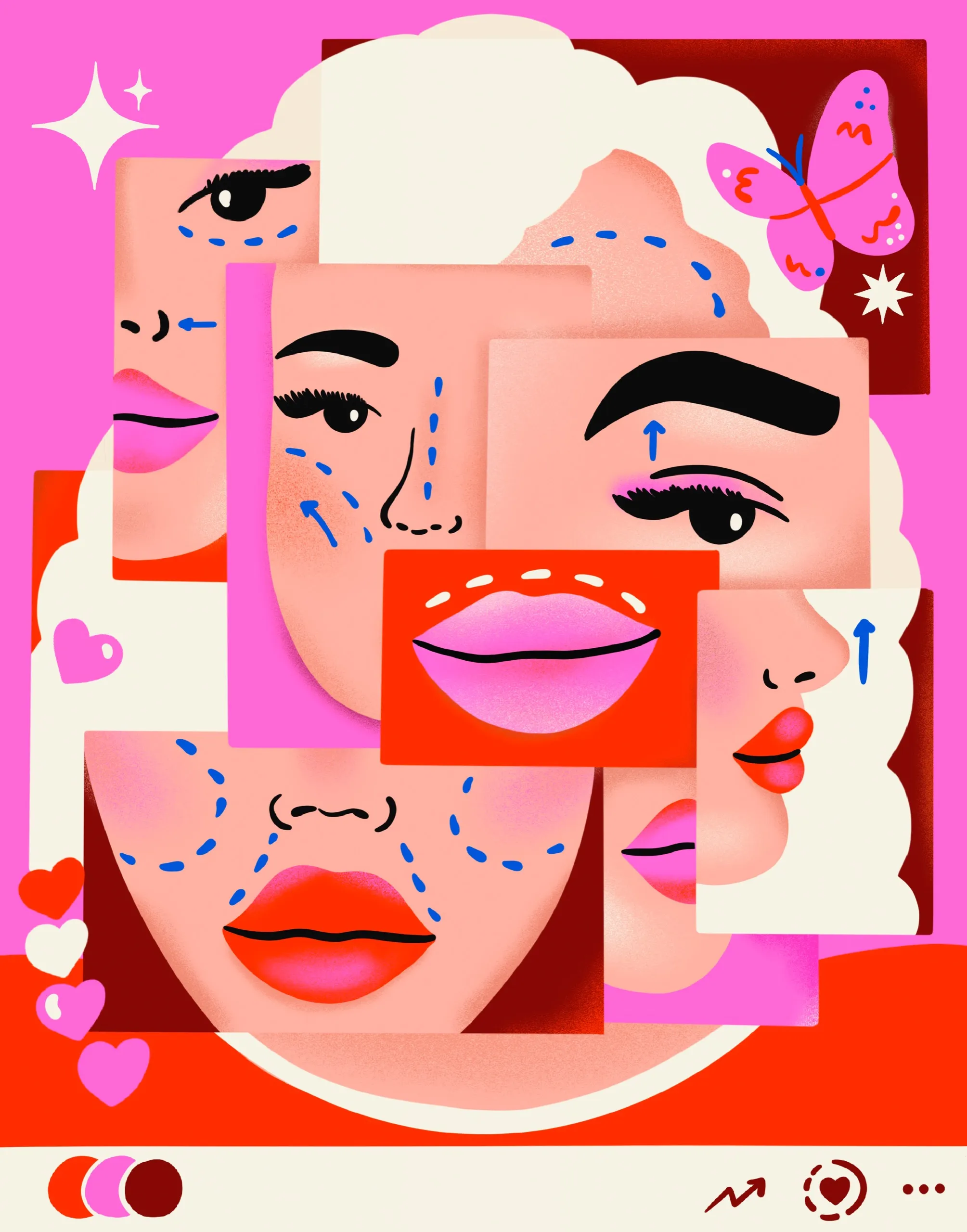
A 2024 MDLinx article described "Instagram face" as a uniform look achieved through injectables and plastic surgery. The look is defined by poreless skin, high cheekbones, catlike eyes, long lashes, a small nose, and full lips. Those features are specific enough to be recognizable, but broad enough to circulate across celebrity culture, influencer culture, and ordinary social feeds.
- Poreless skin removes texture that used to signal a real face under real light.
- High cheekbones and a small nose sharpen the face into a more stylized profile.
- Catlike eyes, long lashes, and full lips push the result toward a soft, exaggerated glamour that still reads as "natural" when done well.
The cultural trick is subtlety. When the procedure is successful, the change is harder to identify than a dramatic makeover, and that invisibility makes the standard more powerful. People do not just want to look enhanced, they want to look like they have not been enhanced at all.
AI is intensifying a beauty ideal already built for algorithms
The newest layer in this story is AI, which does not create the obsession from scratch so much as sharpen it. Tolentino’s concern about sameness fits a world where faces are increasingly sorted, smoothed, and scored by systems that reward the most legible version of beauty. If social media helped build the template, AI helps perfect and distribute it.
The New Yorker’s 2026 piece "What Happened to Your Face?" pushed this logic into even sharper language, saying the human countenance has become something to study, edit, optimize, and scan. That framing turns the face into an object of continuous management rather than a place where identity simply appears. It also describes the cultural mood now surrounding appearance, where people do not only pose for images, they increasingly audit themselves against them.
That shift reaches beyond celebrity aesthetics. It affects clinics, feed algorithms, filters, and the private calculations people make before a photo, a job interview, or a night out. Once the face is treated as a project that can always be improved, "natural" stops meaning untouched and starts meaning only not yet optimized.
Why this recalibration matters
Tolentino’s critique lands because it identifies a social change that is easy to miss in real time. The face nearest to us is often the one we have edited, retouched, or surgically refined just enough to seem ordinary, and that is precisely how the standard moves. The danger is not only that beauty is becoming more artificial, but that artificiality is becoming hard to distinguish from the baseline of human appearance.
That has consequences for equity as well as identity. A culture that rewards one narrow face shape, one skin texture, one eye and lip ratio, turns appearance into a form of discipline that some people can buy and others cannot. In that sense, the warping of beauty standards is not just aesthetic drift. It is a quiet recalibration of what counts as normal, and once that baseline shifts, it is difficult to remember what was there before.
This article was produced by Prism’s automated news system from verified source data, official records, and press releases, then run through automated quality and moderation checks before publishing. The system is built and supervised by the people who set the standards it runs under. Read our full AI policy.
Did this article answer your question?