J.P. Morgan lifts Europe stock targets on stronger earnings outlook
J.P. Morgan lifted its STOXX 600 target to 680, but the call depends on earnings upgrades, calmer geopolitics and continued investor inflows.
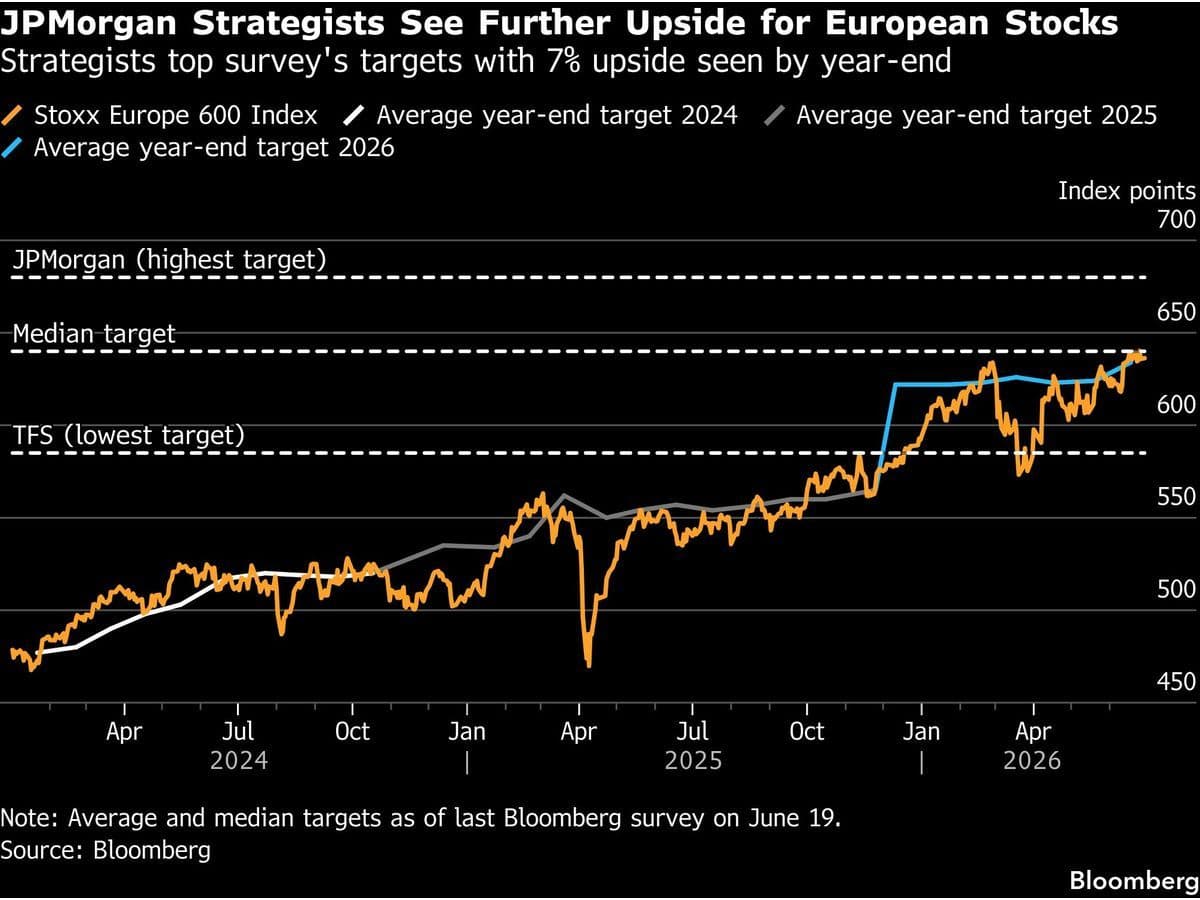
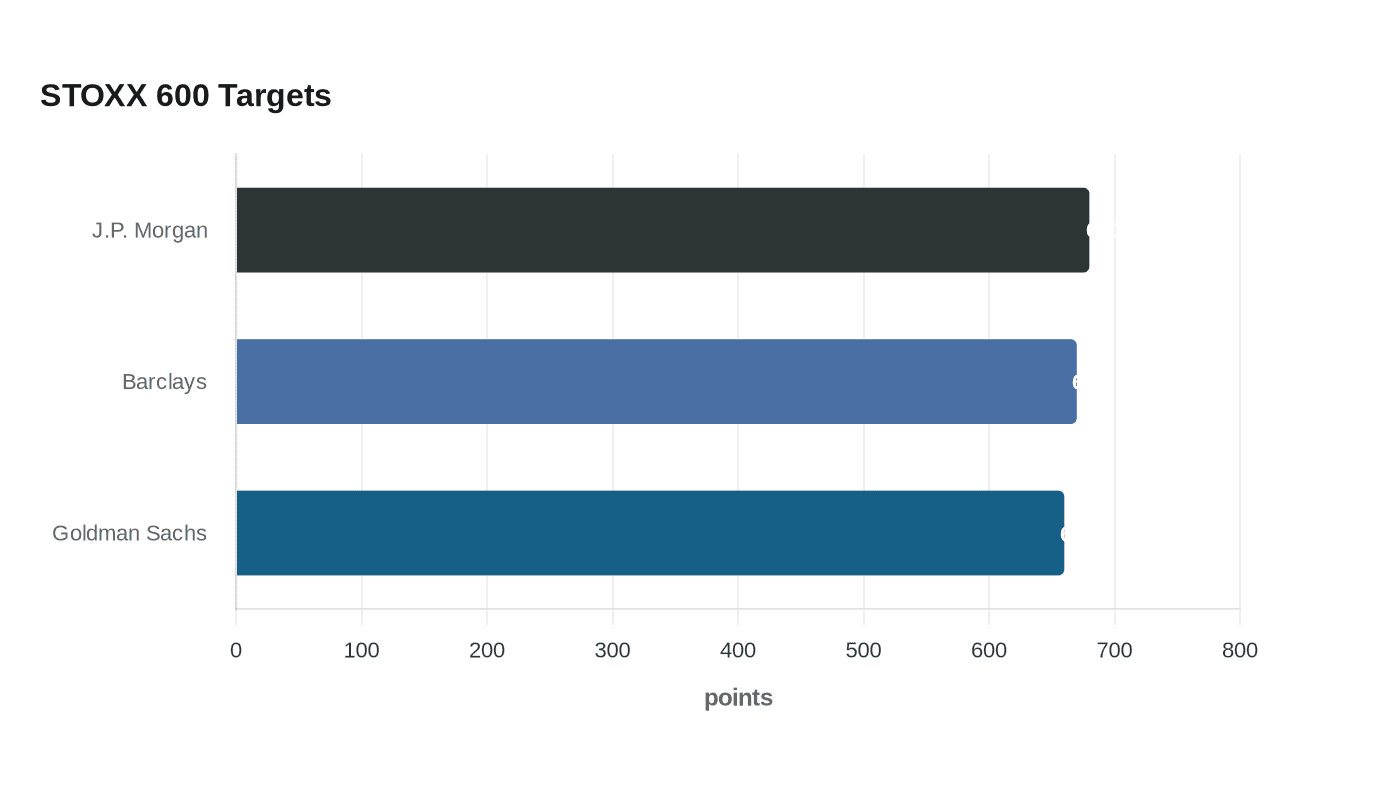
J.P. Morgan lifted its year-end target for the STOXX 600 to 680 from 630 and raised its MSCI Eurozone target to 420 from 385, betting that stronger corporate earnings and a steadier geopolitical backdrop could keep European shares climbing. The new STOXX 600 target implied about 7% upside from Friday’s close of 635.88 points.
The call from strategist Mislav Matejka added fresh momentum to a June rerating of European equities. Barclays had already raised its own STOXX 600 target to 670 from 620 and dropped its Europe underweight stance, calling the shift a “peace target” after lower oil prices and the possibility of a U.S.-Iran deal improved the outlook. Goldman Sachs also lifted its 12-month STOXX 600 target to 660, citing resilient earnings growth despite the war in the Middle East.

J.P. Morgan tied its upgrade to a view that euro-zone earnings are entering a stronger phase. The bank expects euro-zone EPS growth of 18% in 2026 and 12% in 2027, a forecast that would justify higher equity valuations if it holds up. It also said global investors remain underexposed to Europe, leaving room for inflows if positioning shifts and sentiment improves.
That optimism rests on more than just lower conflict risk. J.P. Morgan said Europe could benefit from lower oil prices, lower bond yields, reduced tariffs and a better-than-expected recovery in China. Those forces would help if market breadth broadens in the second half of the year, allowing gains to spread beyond a narrow set of stocks and sectors. The bank’s argument is that Europe may be moving from a laggard trade to a market with catch-up potential, but only if earnings upgrades continue and macro conditions stay stable.
The market backdrop has helped that case. A June 15 market note said the U.S. and Iran had reached a preliminary peace agreement that would open the Strait of Hormuz and end the three-month conflict in the Middle East, easing some of the oil and inflation worries that had weighed on risk assets. Still, the call is not a risk-free one: a renewed geopolitical flare-up could quickly reverse the tone, especially if investors decide the recent move into Europe is mostly a rotation away from pricier U.S. assets rather than the start of a deeper economic turn.
This article was produced by Prism’s automated news system from verified source data, official records, and press releases, then run through automated quality and moderation checks before publishing. The system is built and supervised by the people who set the standards it runs under. Read our full AI policy.
Did this article answer your question?