Judge Orders FDA Safety Review of Mifepristone Before Louisiana Telemedicine Case Proceeds
A federal judge blocked Louisiana's immediate bid to end telehealth mifepristone prescriptions, but ordered an FDA safety review before the case can proceed.
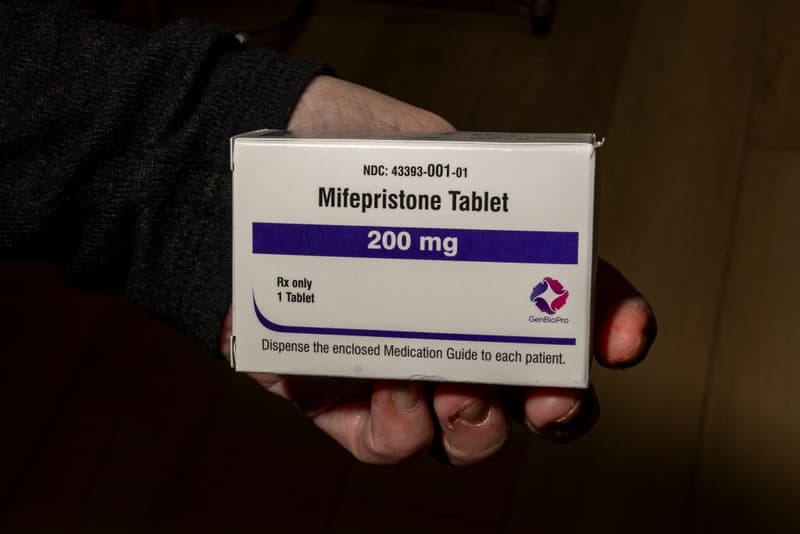
A federal judge in Lafayette refused Tuesday to immediately halt the distribution of mifepristone by mail across the United States, denying Louisiana's push for an emergency injunction while simultaneously ordering the Food and Drug Administration to complete a safety review of the abortion pill before the underlying lawsuit can move forward.
U.S. District Judge David C. Joseph issued a 37-page ruling holding that access to mifepristone can remain as it currently stands nationally for the moment, though he was explicit that his decision was not an endorsement of telehealth abortion. Joseph granted a request from the FDA to put a hold on the case while the agency completes its own safety review of mifepristone, and ordered the agency to update the court on its progress in six months.
The ruling draws a precise jurisdictional line. Writing that his decision was sympathetic to Louisiana's arguments about the harms the state suffers from mifepristone being available via telemedicine, Joseph nonetheless wrote: "ultimately it is FDA, not this Court, that possesses the expertise to evaluate scientific evidence and make public health judgments."
Louisiana Attorney General Liz Murrill had asked that FDA rules allowing mifepristone to be dispensed through the mail be paused while the challenge to those 2023 regulations moved through the courts. The case was filed on behalf of Rosalie Markezich, a Louisiana woman who said her ex-boyfriend coerced her to take abortion drugs. Murrill responded to the ruling by announcing she would ask an appeals court to invalidate the federal rules, noting that Joseph himself had concluded that Louisiana's arguments had merit.
The FDA policy at the center of the case dates to 2023, when the Biden administration revised the drug's Risk Evaluation and Mitigation Strategy to allow mifepristone to be prescribed via telehealth and shipped by mail without an in-person examination. The lawsuit hinges on whether the safety profile of the drug changed significantly following that liberalization, which enabled telehealth providers to prescribe the medication across state lines and without in-person patient exams.

What the ruling does not change is the fractured map of access that has taken shape since the Supreme Court overturned Roe v. Wade. At least eight states have enacted shield laws that protect clinicians within their borders who provide telehealth abortion to people across all 50 states. Approximately 15,000 people in states with abortion bans and severe restrictions obtain abortion pills via telehealth each month. States with outright abortion bans, including Louisiana itself, still fully prohibit the procedure regardless of Tuesday's ruling.
One study found that by the end of 2024, one-fourth of all abortions were accessed by telehealth, representing a fivefold increase in two years. A separate study found that in 2025, women in states where abortion is banned were more likely to obtain one by getting pills through telehealth than by traveling to other states.
The pause order intensifies an already sharp divide within the Republican coalition over abortion strategy. Mary Ziegler, a legal history professor at the University of California, Davis, said: "We're seeing a kind of civil war between Republicans about how quickly and how far to go that the Louisiana case exemplifies." The FDA's safety review was reportedly delayed until after the November 2026 midterm elections, and was prompted by a politically criticized, non-peer-reviewed report released by an antiabortion group.
Erin Hawley of Alliance Defending Freedom, who represented Markezich, argued during February hearings that the FDA review could take an "indefinite amount of time," making the court injunction necessary. Joseph's six-month reporting requirement for the FDA suggests he shares some of that concern about open-ended delay, and he was direct that the stay would not last forever. Missouri, Idaho, Kansas, Texas, and Florida are also suing the FDA over mifepristone's regulations, seeking to restrict or rescind approval of the drug altogether, meaning Tuesday's ruling represents only one front in a broader federal-state confrontation over medication abortion that will likely reach its next significant checkpoint when the FDA delivers its court-ordered progress report.
This article was produced by Prism’s automated news system from verified source data, official records, and press releases, then run through automated quality and moderation checks before publishing. The system is built and supervised by the people who set the standards it runs under. Read our full AI policy.
Did this article answer your question?