Judge's contempt threat prompts ICE release of Ecuadorian detainee
An Ecuadorian man detained in Minnesota was released after a federal judge threatened to hold acting ICE leadership in contempt for failing to follow court orders.
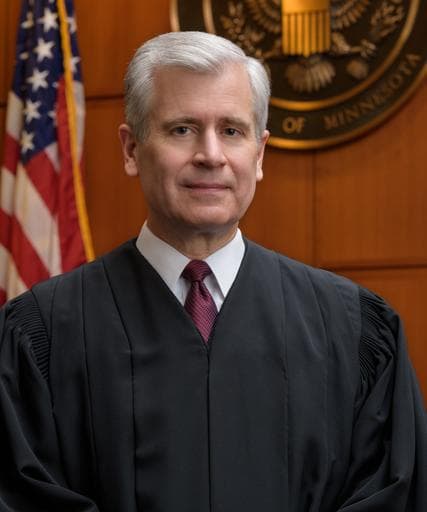
Federal immigration authorities released an Ecuadorian man Tuesday afternoon after Chief U.S. District Judge Patrick J. Schiltz threatened to hold acting ICE Director Todd Lyons in contempt for repeated noncompliance with court orders. The detainee, identified in court filings as Juan T.R. and by his attorney as Juan Tobay Robles, was held at Fort Snelling in the St. Paul field office and was released in Texas shortly after 1 p.m., his lawyer said.
The case has exposed a widening clash between the federal government’s aggressive enforcement strategy in Minnesota and the federal judiciary’s attempts to enforce basic procedural protections. Attorney Graham Ojala-Barbour filed a habeas petition on Jan. 8 challenging his client’s continued detention. Schiltz ordered the government to certify the basis and duration of the confinement and required either a bond hearing or release within seven days. Multiple subsequent district-court orders directed release, but the man remained in custody into late January, according to court filings.
Faced with ongoing delays, Schiltz issued an order directing Lyons to appear in his Minneapolis courtroom to "show cause why he should not be held in contempt" for the government’s alleged pattern of failing to follow court directives. The judge sharply rebuked ICE’s conduct in public filings, writing that "ICE is not a law unto itself" and warning that "the court’s patience is at an end." The threatened contempt proceeding was framed as an extraordinary measure to compel compliance and to secure an on-the-record explanation for systemic practices that the court said had caused unnecessary hardship.
The dispute unfolded amid a broad federal enforcement initiative known as Operation Metro Surge, which sent large numbers of agents to Minnesota and, according to court filings, produced hundreds of habeas petitions and related lawsuits. Schiltz and other judges in the district have described recurring patterns in which detainees are held longer than necessary, transferred far from family and counsel, or released in other states without arrangements for return. Those practices have raised concerns about due process and the capacity of courts to ensure meaningful access to counsel and bond hearings.

Public health and community advocates say the practical effects of transfers and out-of-state releases deepen harms to immigrant communities. Disrupting continuity of medical care, separating individuals from caregivers and local support networks, and creating confusion about legal status and services can exacerbate chronic health conditions, increase stress and trauma, and complicate the ability of local health systems to coordinate care. For people who arrived as minors and have decades-long ties to local communities, the risks extend beyond legal uncertainty to include lost employment, family instability and barriers to accessing mental and physical health services.
Policy implications extend to oversight and accountability for federal immigration enforcement. Judges in the district have signaled a willingness to use contempt and other remedies to force compliance, a move that could prompt operational changes or formal negotiations between the Department of Homeland Security and the courts. With the detainee’s reported release, Schiltz indicated the scheduled hearing could be canceled if a notice confirming the release were filed, potentially averting Lyons’s required in-person testimony.
ICE and the U.S. attorney’s office have not filed public responses in the court docket explaining the delays. Ojala-Barbour said he was informed by the U.S. attorney’s office that his client was released and was in Texas but had not yet spoken with him directly. The case underscores persistent tensions between federal immigration enforcement priorities and judicially ordered protections, with immediate consequences for individuals, families and the broader public health and civic fabric of affected communities.
This article was produced by Prism’s automated news system from verified source data, official records, and press releases, then run through automated quality and moderation checks before publishing. The system is built and supervised by the people who set the standards it runs under. Read our full AI policy.
Did this article answer your question?

