Jury Finds Meta, YouTube Negligent in Landmark Social Media Addiction Trial
A Los Angeles jury ordered Meta and YouTube to pay $3 million to a 20-year-old woman who began using Instagram at age 9, finding the companies negligently designed their platforms to addict children.
A Los Angeles jury found Meta and YouTube negligent in the design or operation of their social media platforms, producing a bellwether verdict in the first lawsuit to take tech giants to trial for social media addiction. Compensatory damages were assessed at $3 million, with Meta on the hook for 70% and YouTube the remaining 30%. The multimillion-dollar verdict will grow, as the jury decided the companies acted with malice, meaning they will hear new evidence shortly and head back into the deliberation room to decide on punitive damages.
The jury stated that Meta's and YouTube's negligence were a substantial factor in causing harm to the plaintiff, identified in court by her initials K.G.M., and that the companies failed to adequately warn users of the dangers of Instagram and YouTube. The jury returned an answer of "Yes" to every question posed relating to negligence and failure to warn of dangers, with ten jurors in favor of the plaintiff for every question and two in favor of the defense.
During her testimony, Kaley, now 20 years old, described spending all day on social media and getting an emotional "rush" from likes and notifications, keeping her glued to her phone. She began using YouTube at age 6 and Instagram at age 9. In the Los Angeles case, lawyers took a different approach by focusing on how tech companies built their platforms, arguing that features like infinite scroll, constant notifications, autoplay and beauty filters made apps like Instagram and YouTube equivalent to a "digital casino," which young people found too irresistible to put down.
"How do you make a child never put down the phone? That's called the engineering of addiction," said KGM's lawyer Mark Lanier, a Texas trial attorney and part-time pastor who had a penchant for drawing on documents with markers on overhead project slides to keep the jury engaged. In closing arguments, Lanier went further, comparing the social media companies to "a lion stalking a pack of vulnerable gazelles."
Social media companies have long deflected such accusations by taking legal refuge behind Section 230, a clause in the 1996 Communications Decency Act that protects internet companies from liability for third-party content posted on their platforms. This case, however, centered around how the apps are designed, not the content itself. Jurors were instructed not to weigh the specific posts or videos Kaley encountered, keeping the legal focus squarely on product architecture.
The decision caps a weeks-long trial that put Meta CEO Mark Zuckerberg and Instagram head Adam Mosseri on the stand to defend their products in a case that drew comparisons to the tobacco industry lawsuits in the 1990s. YouTube CEO Neal Mohan was not called to testify. During the Los Angeles trial, Meta and YouTube denied that Kaley's use of social media led to her mental health issues, arguing that her family history, difficulties at home and school and learning disabilities played a more significant role in her psychological and emotional struggles.
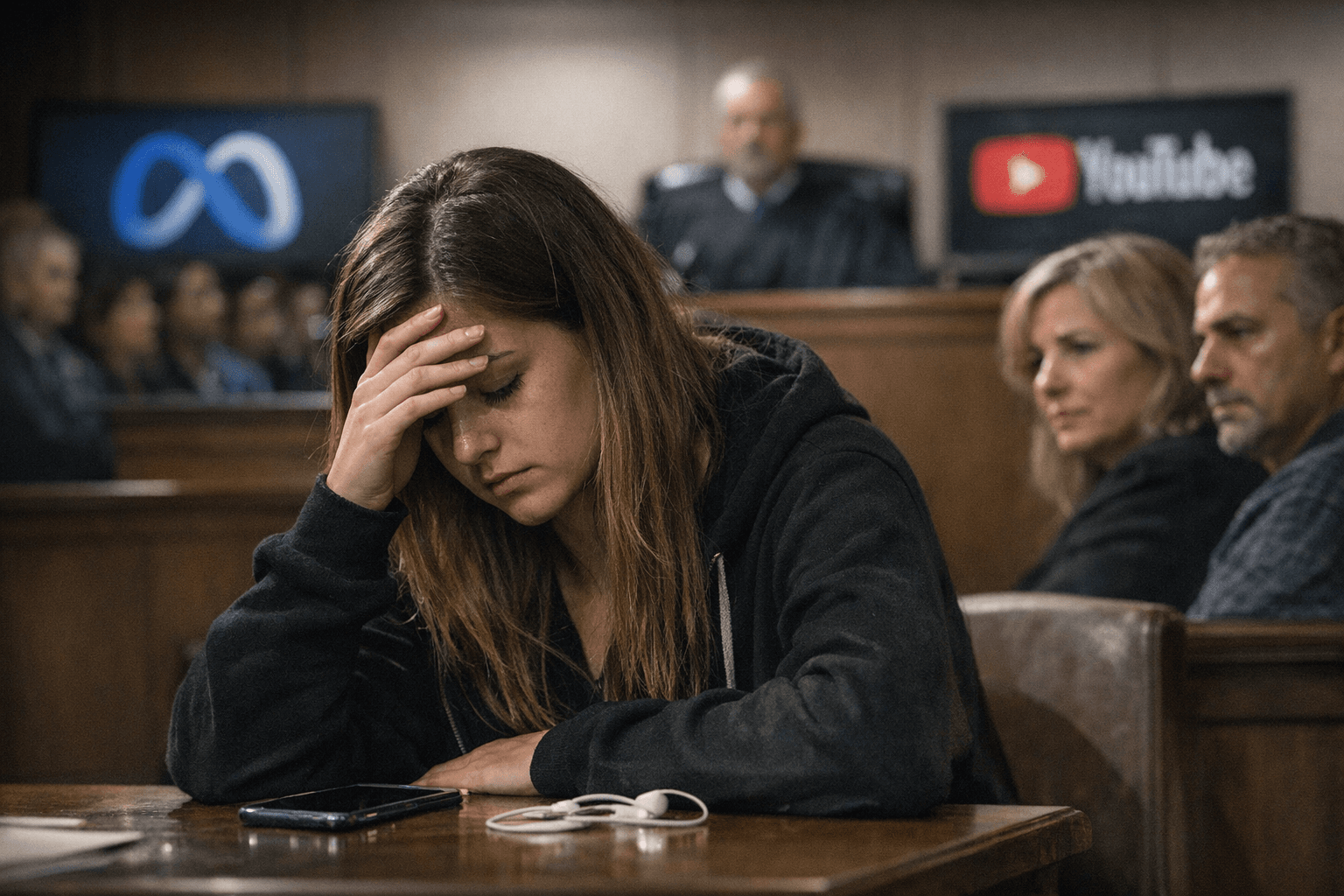
"We respectfully disagree with the verdict and are evaluating our legal options," Meta said in a statement. Google did not immediately respond to requests for comment.
The court chose the plaintiff's case as a bellwether to help determine verdicts in similar and connected litigation throughout the state of California under so-called Judicial Council Coordination Proceedings. The trial is a test case tied to about 2,000 other pending lawsuits brought by parents and school districts arguing that social media giants should be considered manufacturers of defective products for hooking a generation of young people to social media feeds.
The Los Angeles verdict arrived one day after a separate jury delivered an equally consequential blow to the industry. The New Mexico jury found on Tuesday that Meta violated the state's consumer protection laws and ordered the company to pay $375 million in civil penalties. New Mexico Attorney General Raúl Torrez called it "a historic victory for every child and family who has paid the price for Meta's choice to put profits over kids' safety," adding that "Meta executives knew their products harmed children, disregarded warnings from their own employees and lied to the public about what they knew." Meta has stated that the company disagrees with the verdict and plans to appeal.
This week's verdicts mark the first time juries have decided that tech companies are at least partially liable for online and offline dangers kids and teenagers encounter after incessantly using social media. A federal trial is set to begin this summer in the Northern District of California involving similar, consolidated claims by school districts and parents nationwide, alleging that apps from Meta, YouTube, TikTok and Snap helped foster detrimental mental health-related harms to young users.
Know something we missed? Have a correction or additional information?
Submit a Tip