Justice Department charges Southern Poverty Law Center in paid informant scheme
A federal grand jury accused the SPLC of secretly routing more than $3 million to extremists. One informant allegedly got about $270,000.

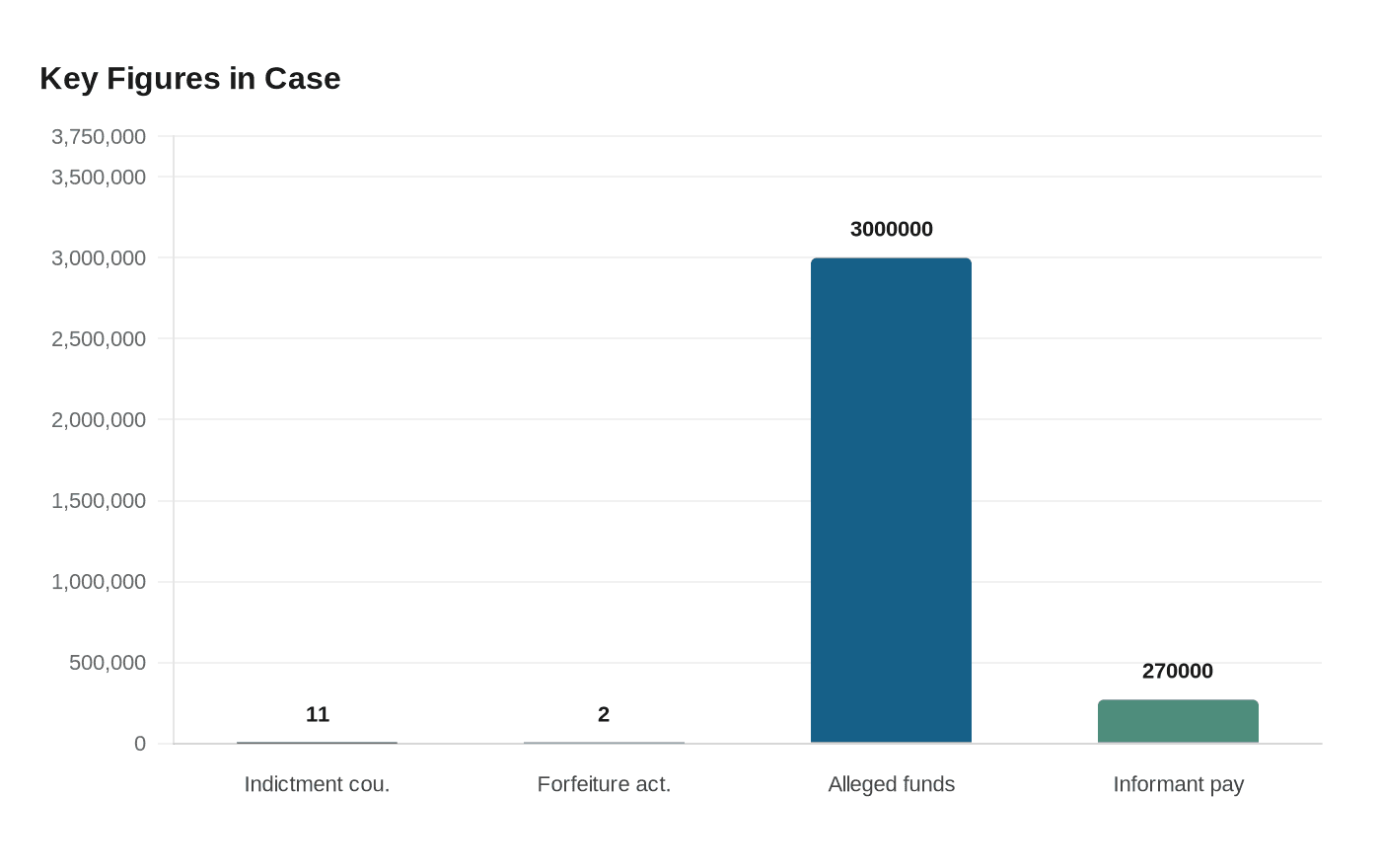
A federal grand jury in Montgomery, Alabama, indicted the Southern Poverty Law Center on 11 counts, accusing the civil-rights organization of secretly funneling more than $3 million in donated money to people linked to violent extremist groups. The Justice Department said the conduct stretched from 2014 to 2023 and included wire fraud, false statements to a federally insured bank, and conspiracy to commit concealment money laundering.
Prosecutors said the payments went to individuals associated with the Ku Klux Klan, Aryan Nations, the National Socialist Party of America, the National Socialist Movement, American Front and the Aryan Nations-affiliated Sadistic Souls Motorcycle Club. The indictment says the SPLC used fictitious entities and shell-company bank accounts to hide the money trail. FBI agents and IRS Criminal Investigation assisted in the case, and the U.S. Attorney’s Office for the Middle District of Alabama filed two forfeiture actions to recover the alleged fraud proceeds. Acting Attorney General Todd Blanche said one informant tied to the Unite the Right protest in Charlottesville, Virginia, was paid about $270,000 over eight years.
The SPLC, headquartered in Montgomery and founded in 1971, said it was reviewing the charges and called the allegations false and politically motivated. Interim CEO Bryan Fair said the organization believed the case focused on its prior use of paid confidential informants to gather intelligence on extremely violent groups, and said that information had been shared with law enforcement. Fair said the organization was “outraged by the false allegations,” and said the investigation had “been going on for a long time,” later revived during Trump’s second term.
The case reaches far beyond one nonprofit’s internal controls. The Justice Department said the SPLC’s covert informant network began in the 1980s, turning a long-used tactic for tracking hate groups into the center of a fraud case. That creates a stark test for advocacy groups that pay sources to infiltrate extremist circles: whether intelligence gathering can be treated as legitimate watchdog work, or whether it becomes criminal once donor funds and bank records are used to conceal how the money moved.
Know something we missed? Have a correction or additional information?
Submit a Tip