Justice Department reportedly examines funding behind E. Jean Carroll lawsuits
Federal investigators are examining who helped finance E. Jean Carroll’s Trump lawsuits, raising questions about when transparency becomes intimidation.

Federal investigators are examining who helped pay for E. Jean Carroll’s lawsuits against Donald Trump, a move that could set a sharp test for how far the government may go in scrutinizing private litigation funding before that scrutiny starts to chill ordinary plaintiffs who challenge powerful figures.
The reported inquiry is said to focus on outside financing linked to billionaire Reid Hoffman and his nonprofit American Future Republic, which allegedly helped cover some of Carroll’s legal bills rather than paying her directly. The probe has been described as operating out of the U.S. Attorney’s Office for the Northern District of Illinois in Chicago and as looking at possible money laundering, obstruction and conspiracy. One account also said investigators initially considered a perjury theory tied to Carroll’s deposition testimony, but later said Carroll herself was not the focus.
Andrew Boutros, the U.S. attorney in Chicago, publicly denied on May 28, 2026, that his office had opened, or ever opened, a criminal investigation into Carroll. The White House referred questions to the Justice Department. Carroll’s attorneys declined to comment, and Hoffman did not immediately respond to requests for comment.
The legal backdrop is Carroll’s two major civil wins over Trump. In 2023, a New York jury found Trump liable for sexually abusing Carroll and defaming her, awarding her $5 million. In 2024, after a nine-day federal trial in Manhattan, another jury awarded Carroll $83.3 million in a separate defamation case over Trump’s 2022 statements. The 2nd U.S. Circuit Court of Appeals affirmed that verdict on December 30, 2024, and in September 2025 upheld the $83.3 million award as fair and reasonable in light of what it called egregious facts, while rejecting Trump’s argument that presidential immunity required a new trial.
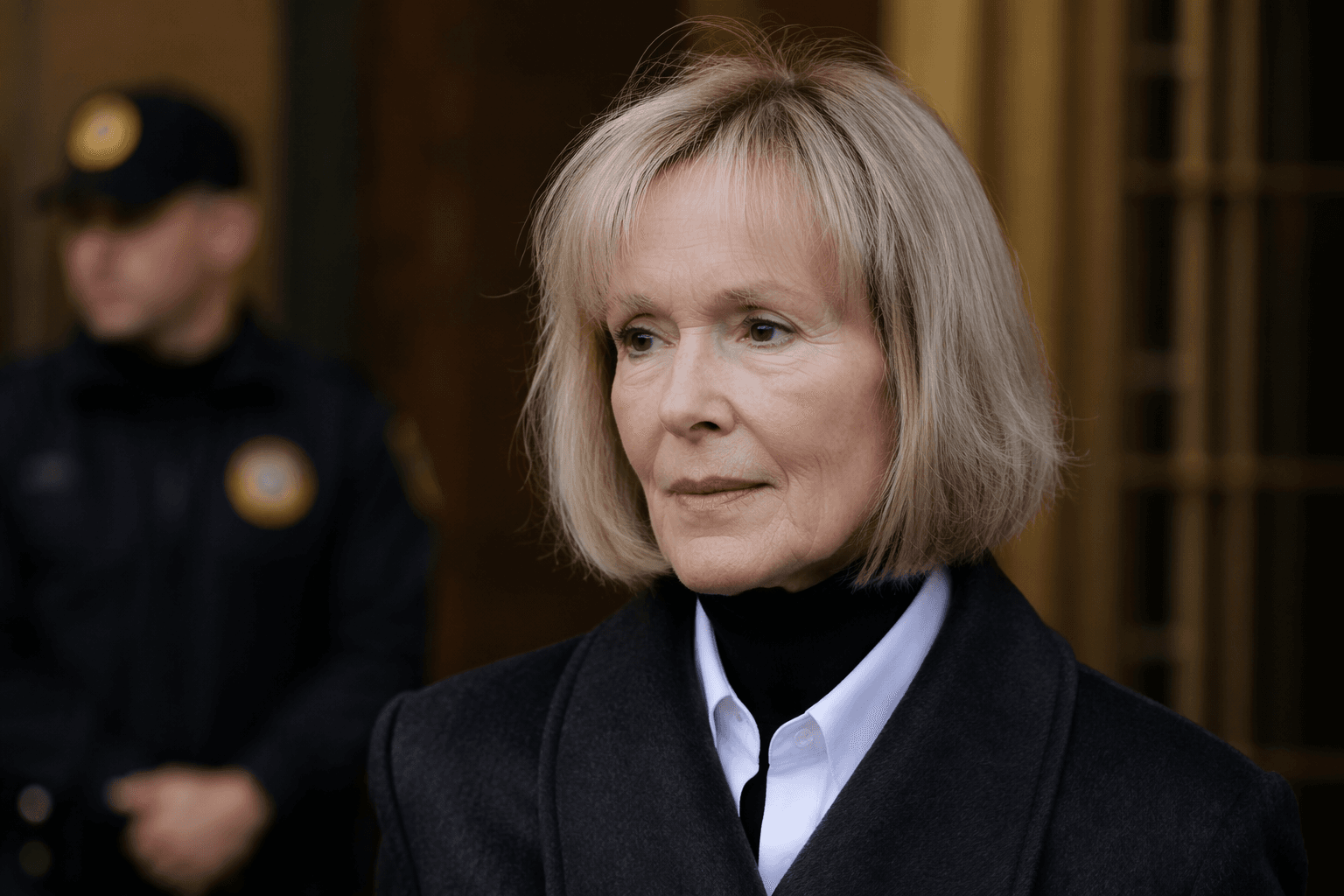
Carroll’s broader legal fight began after she publicly described her allegation in New York magazine in 2019. One of the cases relied on New York’s Adult Survivors Act, the temporary law that reopened the door for older sexual-assault civil claims. In a 2024 opinion, the appeals court also said Carroll plausibly represented that she had forgotten about limited outside funding when she was first asked about it in 2022.
That is what gives the new probe its wider significance. Outside funding of lawsuits is common in the United States and not generally illegal, but a criminal investigation into a donor network tied to a president’s political adversaries raises a separate question: when does legitimate scrutiny of litigation finance become a signal meant to deter nonpolitical plaintiffs from ever suing the powerful? The answer will shape not just this fight, but the boundaries of access to court for anyone facing a public figure with the full force of government behind him.
This article was produced by Prism’s automated news system from verified source data, official records, and press releases, then run through automated quality and moderation checks before publishing. The system is built and supervised by the people who set the standards it runs under. Read our full AI policy.
Did this article answer your question?

