Kacey Musgraves rises with debut album rooted in Texas life and individuality
Kacey Musgraves turned a Texas-rooted debut into a country breakthrough, and the 2013 profile now reads like the start of a much bigger genre shift.
A debut that announced a new kind of country star
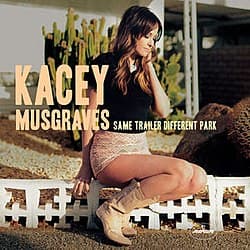
Kacey Musgraves did not arrive as a safe bet for Nashville. When CBS Sunday Morning aired its April 7, 2013 profile, her debut studio album, *Same Trailer Different Park*, had already pushed her into the national conversation, and it would soon reach No. 1 on Billboard’s Top Country Albums chart on March 27, 2013. The timing mattered because the album did more than introduce a new artist. It helped make visible a strain of country music built on character, candor, and individuality rather than formula.
The profile with Anthony Mason captured Musgraves at the moment when an artist from Golden, Texas, was becoming a broader cultural signal. Her major-label solo debut, released by Mercury Nashville on March 19, 2013, was rooted in rural Texas and small-town life, but it carried a point of view that felt sharp and newly expansive. In hindsight, the interview reads like a time capsule from the point when those qualities were still being tested against country-radio conservatism.
From Golden, Texas to songwriting at nine
Musgraves’ background is central to understanding why the album sounded different. Born on Aug. 21, 1988, in Golden, Texas, she began playing music at age 8 and writing songs at age 9. CBS noted that her earliest songs started as poems before she learned how to turn them into music, a detail that helps explain the album’s emphasis on language and observation.
That early start gave her work a precision that felt personal without becoming narrow. The family that inspired her and the rural setting she came from were not treated as nostalgic scenery. They were the raw material for songs that looked closely at everyday life, especially the emotional routines and social pressures that shape small-town experience. In a genre often tied to broad archetypes, Musgraves built her identity from specifics.
**Why *Same Trailer Different Park* landed so strongly**
The album’s power came from its balance of polished Nashville craft and unsparing detail. Rather than leaning on the clichés of trucks and tailgates, *Same Trailer Different Park* centered on character-driven storytelling and personal reflection. That made it feel both accessible and quietly rebellious. Listeners heard not just a young singer with a strong voice, but a writer willing to describe the compromises, frustrations, and ambitions that sit beneath country’s surface narratives.
Its early singles helped define that reputation. “Merry Go 'Round” introduced Musgraves as a songwriter with a clear eye for social routines and inherited patterns. “Blowin' Smoke” widened the picture, showing how her writing could move between wit and weariness without losing its bite. Together, the songs established the album as more than a breakout package. They made a case for an artist whose songs were rooted in place but not limited by it.
By the time the record hit No. 1 on Billboard’s Top Country Albums chart, the industry was already responding to something larger than sales momentum. The album signaled that a country artist could build a mainstream career while writing from the margins of the genre’s traditional messaging.
The controversy that clarified her point of view
That tension became even clearer when “Follow Your Arrow” entered the conversation. The song later became a flashpoint because of its pro-individuality and pro-LGBTQ themes, along with its criticism of the country music establishment. In a commercial environment that still policed authenticity through narrow expectations, the song made Musgraves’ values unmistakable.
The controversy was important because it showed how early she was pushing against Nashville gatekeeping. Musgraves was not simply offering a softer version of rebellion. She was questioning who country music was for, who got to define its moral boundaries, and how much room women were allowed to have when they wrote about identity on their own terms. What was controversial in 2013 now looks like a preview of debates that have become central to the genre, from authenticity to representation to the authority of radio and label culture.
How the 2013 moment foreshadowed country’s larger shift
The enduring value of the CBS profile is that it now functions as an early marker of a shift that later became mainstream. Musgraves’ rise showed that listeners were ready for songs about ordinary lives told with unusual honesty. It also showed that women in country could push beyond expected roles without waiting for permission from the center of the industry.
That larger arc is easy to miss if the story is reduced to a breakout album. But the sequence matters: a young writer from Golden, Texas, released a major-label solo debut on March 19, 2013; the album reached No. 1 on Billboard’s Top Country Albums chart by March 27; and the CBS Sunday Morning profile on April 7 helped frame her as one of the genre’s most compelling new voices. The record’s themes, especially in “Follow Your Arrow,” pointed directly at the battles over authenticity and inclusion that would shape the years ahead.
The awards confirmed what the music had already argued
The industry eventually caught up with the case Musgraves was making. At the 56th GRAMMY Awards, The Recording Academy gave her Best Country Album for *Same Trailer Different Park* and Best Country Song for “Merry Go 'Round.” Those honors mattered not just as career milestones, but as validation for a style that had already proven its staying power.
In the end, *Same Trailer Different Park* did what the best debut albums do: it introduced an artist and changed the terms around her. Musgraves’ Texas-rooted storytelling, her early seriousness as a songwriter, and her refusal to soften the edges of her perspective all helped shift country music toward a broader idea of who belonged inside it. What looked like a breakout in 2013 now reads as an inflection point.
This article was produced by Prism’s automated news system from verified source data, official records, and press releases, then run through automated quality and moderation checks before publishing. The system is built and supervised by the people who set the standards it runs under. Read our full AI policy.
Did this article answer your question?