Kalshi valued at $22 billion as prediction market volume surges
Kalshi doubled its valuation to $22 billion as investors piled in on surging prediction-market volume, even as regulators in Arizona and Nevada kept pressing.
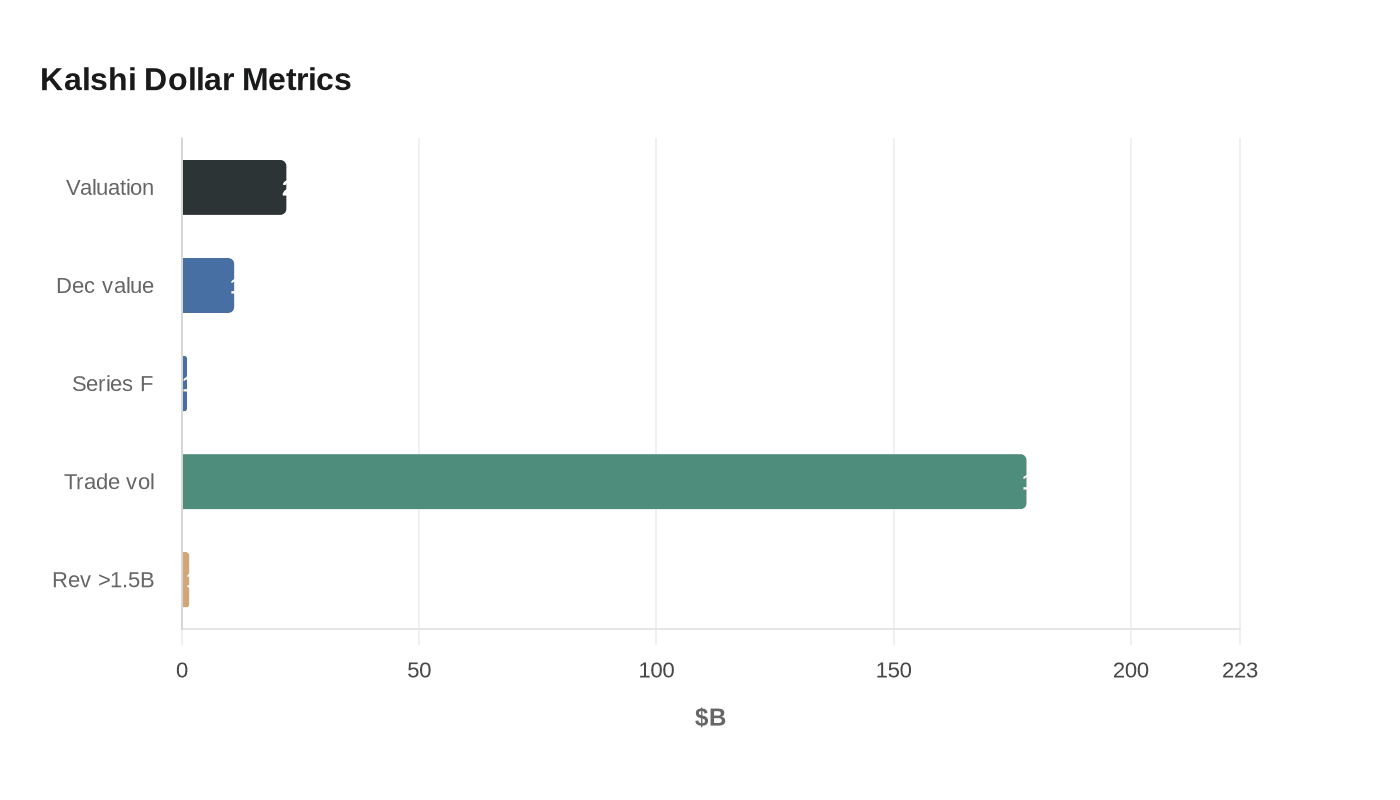
Kalshi’s latest financing valued the prediction-market platform at $22 billion, doubling its $11 billion price tag from December and signaling that investors are willing to keep backing a business still fighting for regulatory legitimacy. The new $1 billion Series F round was led by Coatue and included Sequoia Capital, Andreessen Horowitz, IVP, Paradigm, Morgan Stanley and ARK Invest.
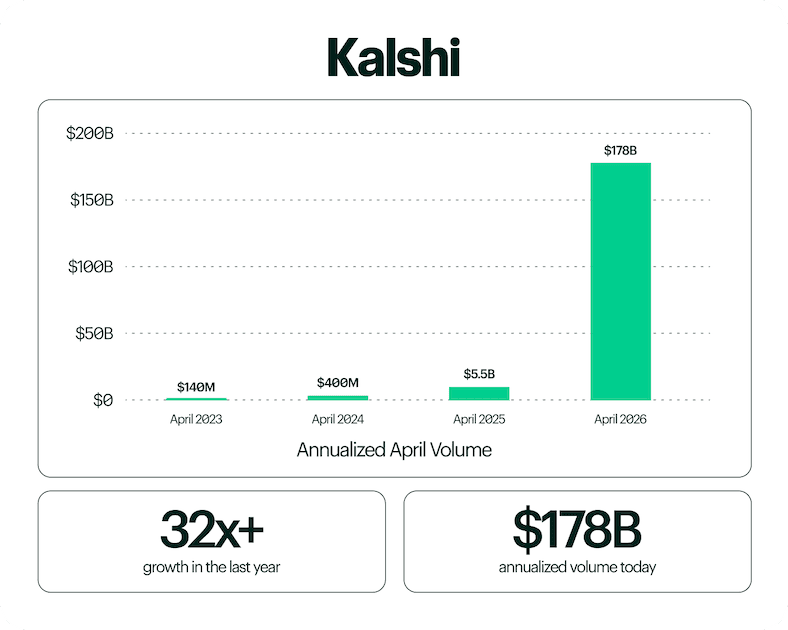
The surge comes as Kalshi has been scaling fast enough to make its pitch harder for investors to ignore. The company said institutional trading volume rose 800% over the past six months, and some recent company materials have claimed more than 90% of U.S. prediction-market activity. Other reports have put its annualized trading volume at about $178 billion, with annualized revenue above $1.5 billion. Those figures suggest a platform that is no longer merely a novelty for political speculation, but a market drawing serious capital from firms that usually back mainstream financial infrastructure.

Kalshi was founded in 2018 by Tarek Mansour and Luana Lopes Lara, who met at the Massachusetts Institute of Technology. The company won Commodity Futures Trading Commission approval as a designated contract market in November 2020 and launched publicly in July 2021. The new valuation has also turned both founders into billionaires, and Lopes Lara has been described as the youngest self-made woman billionaire.
The timing is notable because Kalshi’s business model still sits in the middle of a widening legal fight over whether prediction markets are a form of trading, gambling, or something in between. The Commodity Futures Trading Commission dropped its appeal in a key Kalshi case in May 2025, leaving a favorable lower-court ruling in place for the company’s political event contracts. But in 2026, state regulators have kept challenging Kalshi over sports, entertainment and election markets.
That pressure intensified on May 6, 2026, when a federal judge blocked Arizona from pursuing a criminal case against Kalshi. In Nevada, state court action has temporarily restricted some Kalshi markets, including sports, election and entertainment contracts. The CFTC’s Division of Enforcement also issued a prediction-markets advisory on February 25, 2026, after public release of two enforcement cases involving misuse of nonpublic information and fraud on KalshiEX.
For investors, the wager is no longer just on one company. It is on whether prediction markets can move from a legal gray zone into a broader financial asset class. Kalshi’s new valuation suggests capital is still betting that the answer will be yes.
This article was produced by Prism’s automated news system from verified source data, official records, and press releases, then run through automated quality and moderation checks before publishing. The system is built and supervised by the people who set the standards it runs under. Read our full AI policy.
Did this article answer your question?


%2Fcdn.vox-cdn.com%2Fuploads%2Fchorus_image%2Fimage%2F62603944%2FAP_18334483871272.0.jpg&w=1920&q=75)