Keanakolu cabins reopen, offering rustic camping and wildfire precautions
Keanakolu bunkhouse and ranger cabins reopened Jan. 15 after a drought closure; locals should note access, safety rules, and health risks when planning trips.

The Keanakolu bunkhouse and ranger cabins in the Hilo Forest Reserve reopened for camping Jan. 15 after a closure that began in October because of drought and dry conditions. The state Division of Forestry and Wildlife resumed reservations as staff lifted immediate restrictions tied to heightened wildfire danger, restoring access to a high-elevation retreat above 5,000 feet.
The site offers a rustic getaway for Big Island residents and visitors, serving as a base to explore surrounding native forest and nearby hiking trails. Each cabin is heated with a wood burning stove, and a covered outside barbecue pit and grill are available for shared use by cabin users. An adjacent fruit tree orchard produces apples, pears and plums between June and October; fruit is available to permit holders during the harvest months.
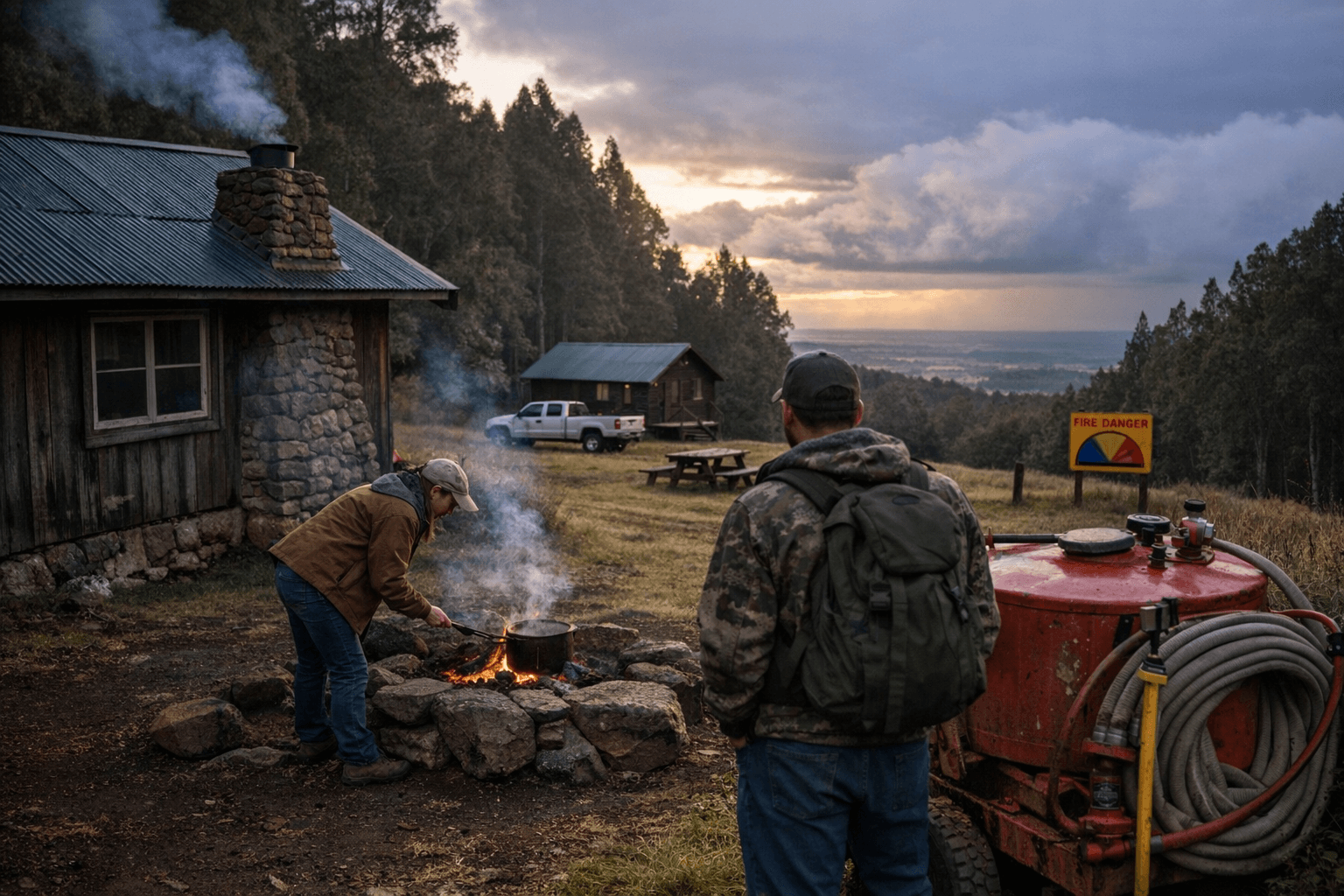
Practical access and safety details matter for local families and caretakers. The cabins require a four-wheel-drive vehicle to reach, which creates a transportation barrier for people without four-wheel-drive access and raises equity questions about who can use the reserve. Reservations are available seven days a week through the Explore Outdoor Hawaiʻi website.
Public health and wildfire prevention remain central to operations. Forest reserve staff reminded campers to place all ashes in the provided ash pits and to extinguish cooking fires completely. The presence of wood stoves and shared outdoor cooking areas also carries respiratory health implications; wood smoke can worsen asthma, chronic obstructive pulmonary disease and other lung conditions. Residents who live with respiratory vulnerabilities or who care for children and elders should weigh those risks when deciding to stay, and prepare to minimize smoke exposure.
Reopening also restores mental health and community benefits. Time outdoors in native forest and quiet ridge-top air can reduce stress and support wellbeing, especially for island residents with limited green space close to home. For many families, affordable access to public lands for camping and harvesting fruit is an important resource for cultural connection and recreation.
At the same time, the requirement for four-wheel-drive access and the seasonal nature of orchard harvest highlight persistent equity gaps in outdoor recreation on the island. Community leaders and land managers may need to consider outreach, transportation solutions or program adjustments to ensure broader, safer access for low-income residents, seniors and those without rugged vehicles.
What this means for readers: plan ahead and book online, bring appropriate cold-weather gear and fire-safety supplies, and be mindful of smoke risks for vulnerable household members. Continue to follow Division of Forestry and Wildlife guidance and check conditions before heading up to Keanakolu, as drought and wildfire risk can change with seasonal weather.
Sources:
Know something we missed? Have a correction or additional information?
Submit a Tip