Kennedy Defends HHS Cuts, Vaccine Record in Marathon Congressional Hearings
Kennedy tried to sell budget cuts and vaccine skepticism as one message, but Congress pressed him on measles, Tylenol, and the limits of his health overhaul.
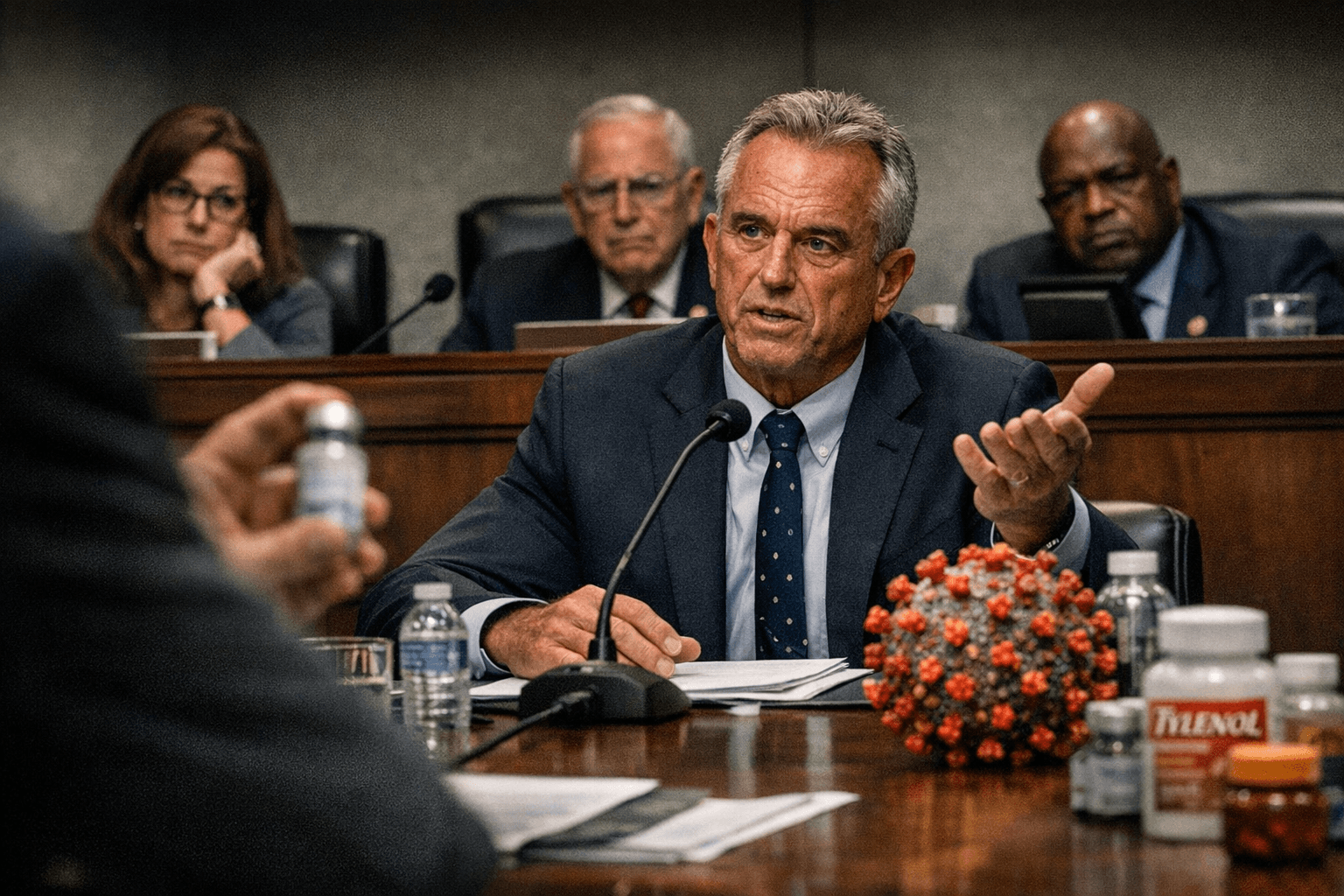
Robert F. Kennedy Jr. spent four days on Capitol Hill trying to satisfy two audiences at once: the White House, which wants a tighter and more aggressive health department, and his MAHA supporters, who want a broad rewrite of federal health policy. The result was a careful but strained defense of the Trump administration’s fiscal 2027 health budget and a string of hard questions about vaccines, measles and how he would actually run the Department of Health and Human Services.
The budget at the center of the hearings would cut HHS funding by $15.8 billion, bringing it to $111.1 billion, a reduction of more than 12 percent. Kennedy defended the push as an effort to fight waste, fraud and abuse, improve affordability and refocus the agency on chronic disease prevention, rural health and nutrition. He also told lawmakers that HHS has 72,000 employees and plans to hire 12,000 more, after a round of staffing cuts and later reversals across federal health agencies.
The appearances were Kennedy’s first before Congress since September 2025 and came during a seven-hearing sprint over seven days. In some sessions he largely sidestepped vaccines. In others, lawmakers pressed him on his overhaul of the childhood vaccine schedule, his doubts about measles vaccines and his comment linking Tylenol use in pregnancy to autism. The tension between those positions and his budget pitch was plain throughout the week.
Democrats focused heavily on the measles outbreaks. They noted that the United States recorded 2,287 measles cases in 2025, the most since the disease was declared eliminated in the United States 25 years ago, and another 1,714 cases had already been recorded in 2026 by the time of the hearings. Kennedy repeatedly deflected blame and argued that the country is containing outbreaks better than the rest of the world.
Republicans generally gave Kennedy more room, praising him on rural health, dietary guidelines, nutrition and affordability, even as his vaccine record hung over the hearings. White House officials see him as a political asset heading into the midterms, but also as a liability because of his relatively unpopular vaccine views. That conflict was sharpened by the shadow of Senate Health, Education, Labor, and Pensions Committee Chair Bill Cassidy, whose support for Kennedy’s confirmation was tied to promises on vaccine policy that critics say Kennedy later broke. A contentious exchange with Rep. Terri Sewell of Alabama added to the picture of a secretary trying to defend both movement politics and the practical demands of governing.
This article was produced by Prism’s automated news system from verified source data, official records, and press releases, then run through automated quality and moderation checks before publishing. The system is built and supervised by the people who set the standards it runs under. Read our full AI policy.
Did this article answer your question?

