Khamenei names Larijani to lead survival plans as Iran girds for war
Iran has sealed succession layers, hardened military assets, mobilized proxies and prepared cyber and sea options amid belief U.S. strikes are imminent, raising immediate policy risks.
“Ayatollah Ali Khamenei has entrusted Ali Larijani, the top national security official, to ensure the Islamic Republic endures any military attacks and targeted killings.” That directive, and follow-on orders to a small circle of confidants, underpins a sweeping Iranian plan to survive what leaders now treat as an imminent military threat.
Senior Iranian officials and Guard members say Tehran is operating on the assumption that U.S. strikes are “inevitable and imminent.” The response, according to those officials and state-aligned reporting, is a dual-track approach: continue diplomatic channels while simultaneously hardening the state’s military, political and information infrastructure to survive initial blows and strike back.
At the center of the planning is a detailed succession regimen. Six senior officials and Guard members report Khamenei has named “four layers of succession for each of the military command and government roles that he personally appoints.” Leaders have been instructed to designate up to four replacements and to delegate decision authority to a tight circle prepared to act if senior figures are killed or incapacitated. The move appears aimed at preserving continuity of command amid targeted killings or decapitation strikes.
Military and civil defenses are being reinforced. Maj Gen Abdolrahim Mousavi, chief of staff of the armed forces, said during a tour of an IRGC missile city, “We are ready for any action by enemies,” and that “After the 12-day war, we changed our military doctrine from defensive to offensive by adopting a policy of asymmetric warfare and a crushing response to enemies.” State-aligned outlets and military statements describe dispersal of critical assets, redundant command nodes, and extensive underground facilities designed to survive initial strikes and preserve counterattack capability.
An Iranian plan published by IRGC-affiliated outlets lays out multi-phase retaliation scenarios that include strikes on U.S. bases, the opening of proxy fronts across Iraq, Lebanon, Yemen and Syria, cyber operations against transport and energy networks, and efforts to disrupt global oil flows. Those outlets frame geography and asymmetric tactics as advantages over superior technology, stating that “Middle Eastern geography would win out against American technology, Iran insists.” They also warn that countries allowing U.S. basing or airspace support could be declared “legitimate targets.”
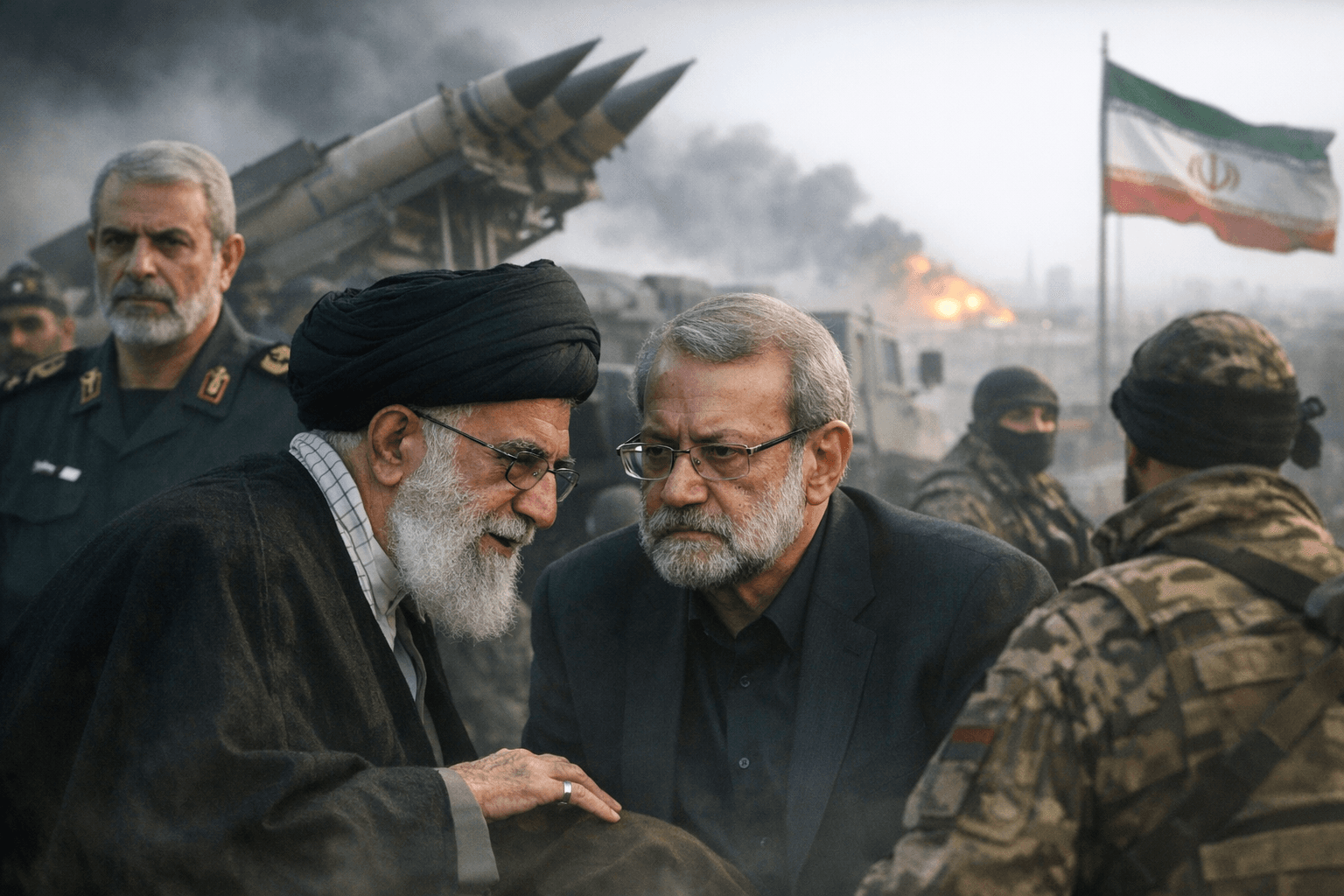
The security environment has already seen provocative incidents at sea. U.S. defense officials say two aircraft carriers were deployed to the region this month and that one shot down an Iranian drone as it approached in the Arabian Sea. A U.S. military spokesman also reported that IRGC gunboats earlier threatened to board a U.S.-flagged tanker in the Strait of Hormuz. The mix of naval tension, proxy mobilization and cyber threat planning elevates risk to merchant shipping, regional partners and the global oil market.
Domestically, authorities are tightening information controls. State and security-aligned reporting and analysts point to stepped-up internet controls and digital isolation strategies, while Iranian accounts of pre-attack infiltration by foreign intelligence services have helped justify a widening crackdown on dissent.
The combined posture presents immediate policy choices for U.S. and regional decision-makers: whether to de-escalate through diplomacy and restraint, or to prepare for broader confrontation with significant economic and human costs. Political rhetoric is already feeding the pressure; one U.S. political figure warned the supreme leader “should still be ‘very worried.’” For legislators and voters in allied countries, the questions are practical: how to protect shipping and civilians, ensure oversight of military deployments, and calibrate sanctions and diplomacy to reduce the chance of a conflict that both sides appear to be bracing for.
This article was produced by Prism’s automated news system from verified source data, official records, and press releases, then run through automated quality and moderation checks before publishing. The system is built and supervised by the people who set the standards it runs under. Read our full AI policy.
Did this article answer your question?

