Killed Iranian Intelligence Chief Was Among Officials With Brief Tenures
Majid Khademi served less than 10 months as IRGC intelligence chief before being killed Monday, continuing a pattern of rapid turnover among Iran's senior security leadership.
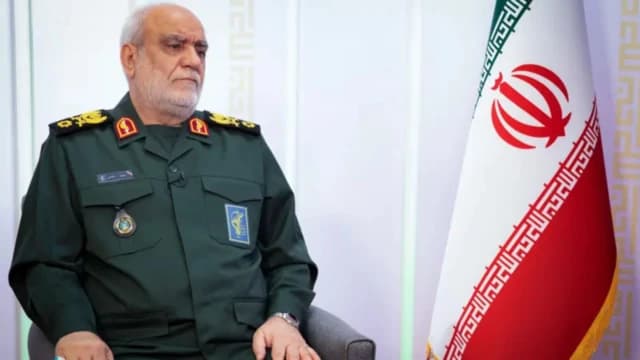
The killing of Maj. Gen. Majid Khademi, the intelligence chief of Iran's Islamic Revolutionary Guard Corps, in a US-Israeli airstrike in Tehran on Monday morning brought a tenure of less than ten months to a violent end. Khademi was appointed head of the IRGC Intelligence Organisation on June 19, 2025, replacing Mohammad Kazemi, who was killed along with other Revolutionary Guards officers in Israeli airstrikes on June 15 during the Twelve-Day War. He was killed before he could reach the one-year mark in the role.
The Israel Defense Forces confirmed the killing, stating that the Israeli Air Force, acting on precise military intelligence, struck in Tehran overnight and eliminated Khademi. The same strike also eliminated Asghar Bagheri, the Quds Force's special operations commander. Israeli Defense Minister Israel Katz confirmed the strike, saying: "The Revolutionary Guards are shooting at civilians and we are eliminating the leaders of the terrorists. Iran's leaders live with a sense of being targeted. We will continue to hunt them down one by one."
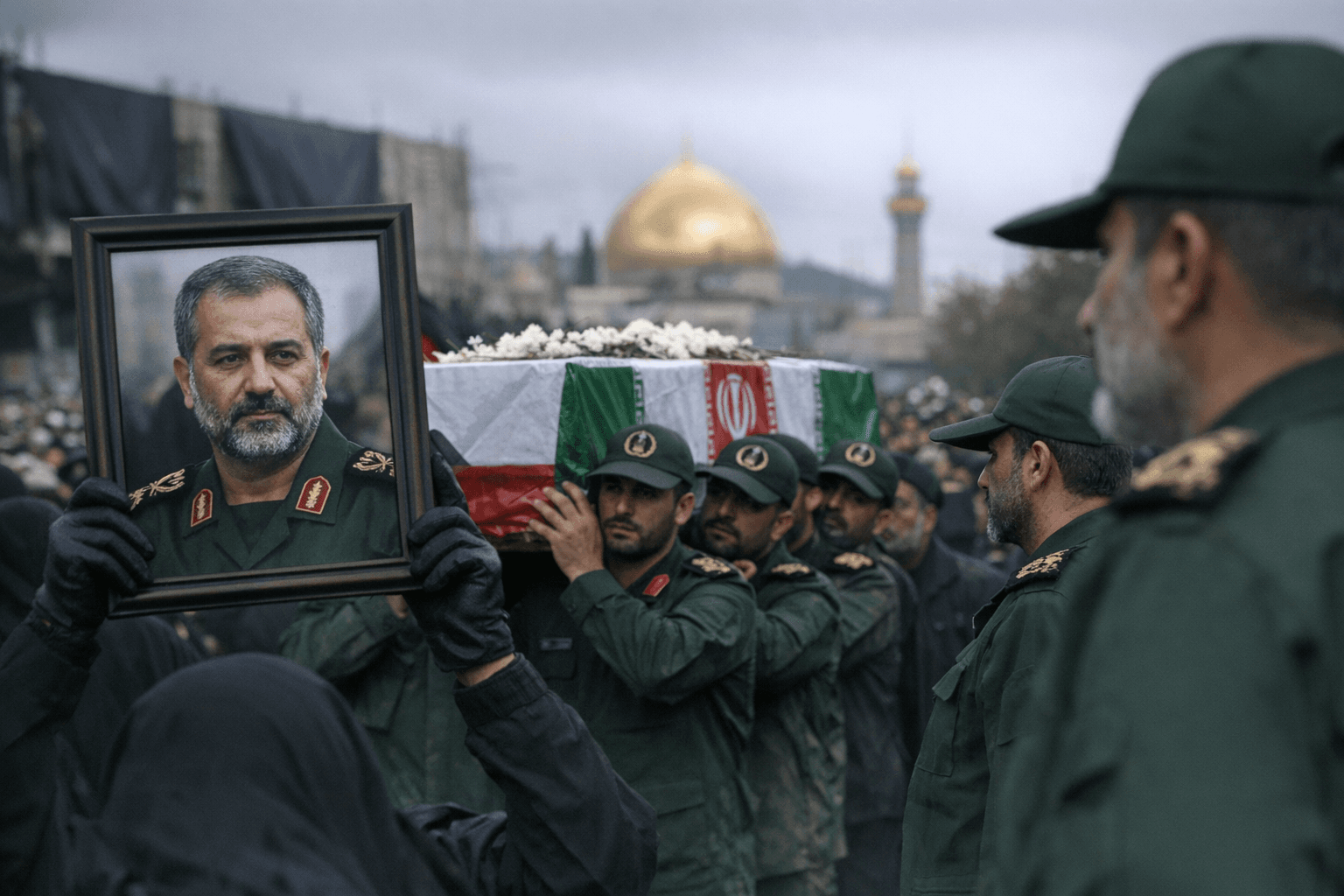
Khademi was not alone in occupying a senior post for only a matter of months before being killed. The same cycle played out across Iran's highest military commands in the months before his death. Mohammad Pakpour was appointed IRGC commander-in-chief on June 13, 2025, following the death of his predecessor, Hossein Salami, in the Twelve-Day War. Pakpour was killed on February 28, 2026, after a tenure of just eight and a half months. Abdolrahim Mousavi was also appointed chief of the armed forces general staff in June 2025, replacing Mohammad Bagheri, and was likewise killed in the same wave of strikes that took Pakpour. Defense Minister Aziz Nasirzadeh was among the other senior figures killed in the renewed offensive.
The 2026 Iran war began on February 28, and since the joint campaign commenced, more than 1,340 people have been killed. The rapid elimination of replacement commanders has been a defining feature of the conflict's prosecution.
Iranian planning had anticipated this vulnerability. Before his own killing, Supreme Leader Ali Khamenei reportedly instructed senior officials to ensure that multiple predesignated successors existed for every key military and civilian post, with as many as four replacements designated for each senior position, an approach that became known as the "fourth successor" doctrine. Whether that layered planning survives the pace of attrition now facing Tehran's security apparatus is an open question.
Khademi had risen through Iran's intelligence and security system over decades, holding multiple sensitive roles before his appointment. As intelligence chief of the IRGC, he led one of the most powerful and opaque security bodies in Iran, an organisation that reports directly to the country's supreme leader and plays a central role in intelligence gathering, counter-espionage, and monitoring internal dissent. The IDF said he had used that position to help advance terrorist attacks abroad and to oversee surveillance of Iranian civilians during domestic protests.
The post he vacated once again falls to a successor operating under immediate threat, filling a chair that has not remained occupied for a full year since before the Twelve-Day War began.
This article was produced by Prism’s automated news system from verified source data, official records, and press releases, then run through automated quality and moderation checks before publishing. The system is built and supervised by the people who set the standards it runs under. Read our full AI policy.
Did this article answer your question?