Kim Jong Un Parades Daughter Ju-ae at Kumsusan Palace, Deepening Succession Signals
North Korean state media published Jan. 1 images showing Kim Jong Un with his daughter Kim Ju-ae at the Kumsusan Palace of the Sun, a symbolic first for the family mausoleum that enshrines the regime’s founders. The appearance, alongside Ju-ae’s growing visibility at domestic and overseas events, sharpens speculation about dynastic succession ahead of a key party congress expected in early 2026.
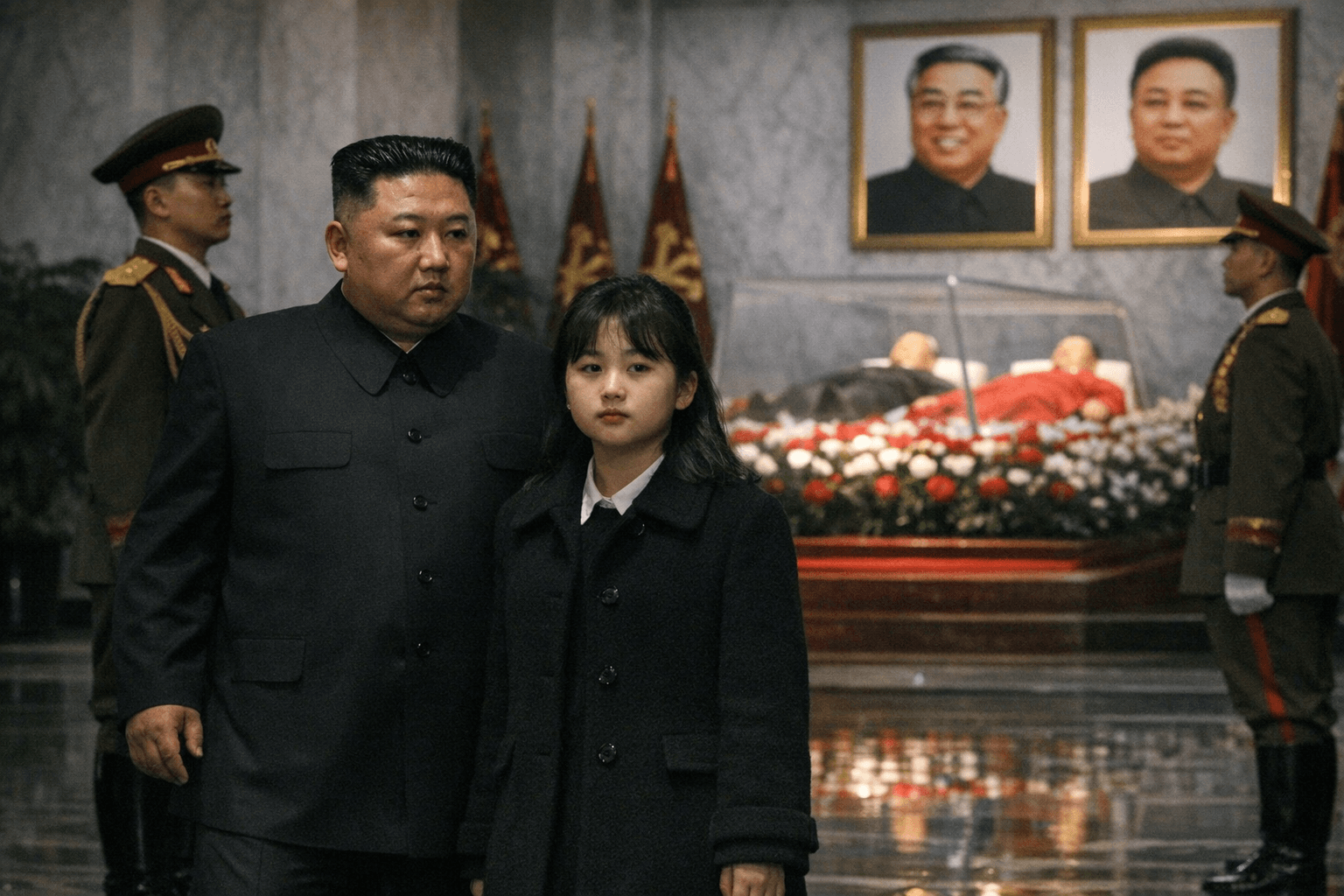
State media images released Jan. 1 showed Kim Jong Un visiting the Kumsusan Palace of the Sun in central Pyongyang accompanied by his daughter, Kim Ju-ae, marking the first known publication of her at the mausoleum that houses the preserved bodies of Kim Il Sung and Kim Jong Il. The Korean Central News Agency said Kim visited the palace accompanied by "top officials" and released photographs that place Ju-ae alongside her father at one of the regime’s most sacrosanct sites.
The Kumsusan complex is central to North Korean state mythmaking. The two founders are formally enshrined as the regime’s "eternal leaders," and ritual homage at the palace has long been a cornerstone of legitimacy for the Kim family. Ju-ae’s presence at the site, even in staged media, thus carries symbolic weight in a system where visual rites and carefully curated appearances signal internal political intentions.
State photographs also depicted Ju-ae at New Year celebrations and public performances in Pyongyang, including images showing her beside Kim at the May Day Stadium where she sat next to him, held his hand and embraced children. Her visibility follows appearances overseas; she was seen with her father during his trip to Beijing when he met with leaders from Russia and China, reflecting a deliberate pattern of bringing the young figure into high-profile diplomatic and domestic settings.
Analysts and intelligence officials have long watched such signals for clues about succession in a country that has institutionalized hereditary rule without transparent procedures. South Korea’s National Intelligence Service has assessed that Kim Ju-ae is the most likely candidate to become the next supreme leader, a view that underscores why state choreography around her matters beyond family pageantry. Yet officials and observers also emphasize the limits of public imagery: Ju-ae’s youth and the absence of any formal designation mean that any succession plan remains opaque and subject to change.
The timing of the published images also dovetails with Kim Jong Un’s New Year remarks, cited by KCNA, in which he lauded the people’s efforts that produced "successes and phenomenal changes" in 2025 and urged unity ahead of a party congress expected in early 2026. That congress is widely anticipated to set strategic priorities and personnel decisions for the regime’s next phase; projecting a familial heir at the mausoleum can be read as preparatory messaging to domestic elites and the armed forces about continuity.
For neighboring states and global powers, carefully staged signals about succession carry practical implications. A credible lineage claim could preserve internal cohesion and continuity of policy, including in nuclear and missile programs. Conversely, ambiguity about leadership transitions risks factionalism that could produce instability on the Korean Peninsula, complicating diplomatic approaches by China, the United States, South Korea and others.
The images published by KCNA provide verifiable evidence of Ju-ae’s elevated public role, but they do not resolve the central question of formal succession. In a polity where symbolism is policy, the placement of the leader’s daughter at the mausoleum is a clear act of political theatre designed to shape perceptions at home and abroad even as concrete institutional outcomes remain unannounced.
This article was produced by Prism’s automated news system from verified source data, official records, and press releases, then run through automated quality and moderation checks before publishing. The system is built and supervised by the people who set the standards it runs under. Read our full AI policy.
Know something we missed? Have a correction or additional information?
Submit a Tip