Kimmel mocks Trump’s shifting Iran deadlines as tensions rise
Kimmel turned Trump’s “two weeks” refrain into a punch line as Iran deadlines slid from March 21 to April 7 and kept moving.
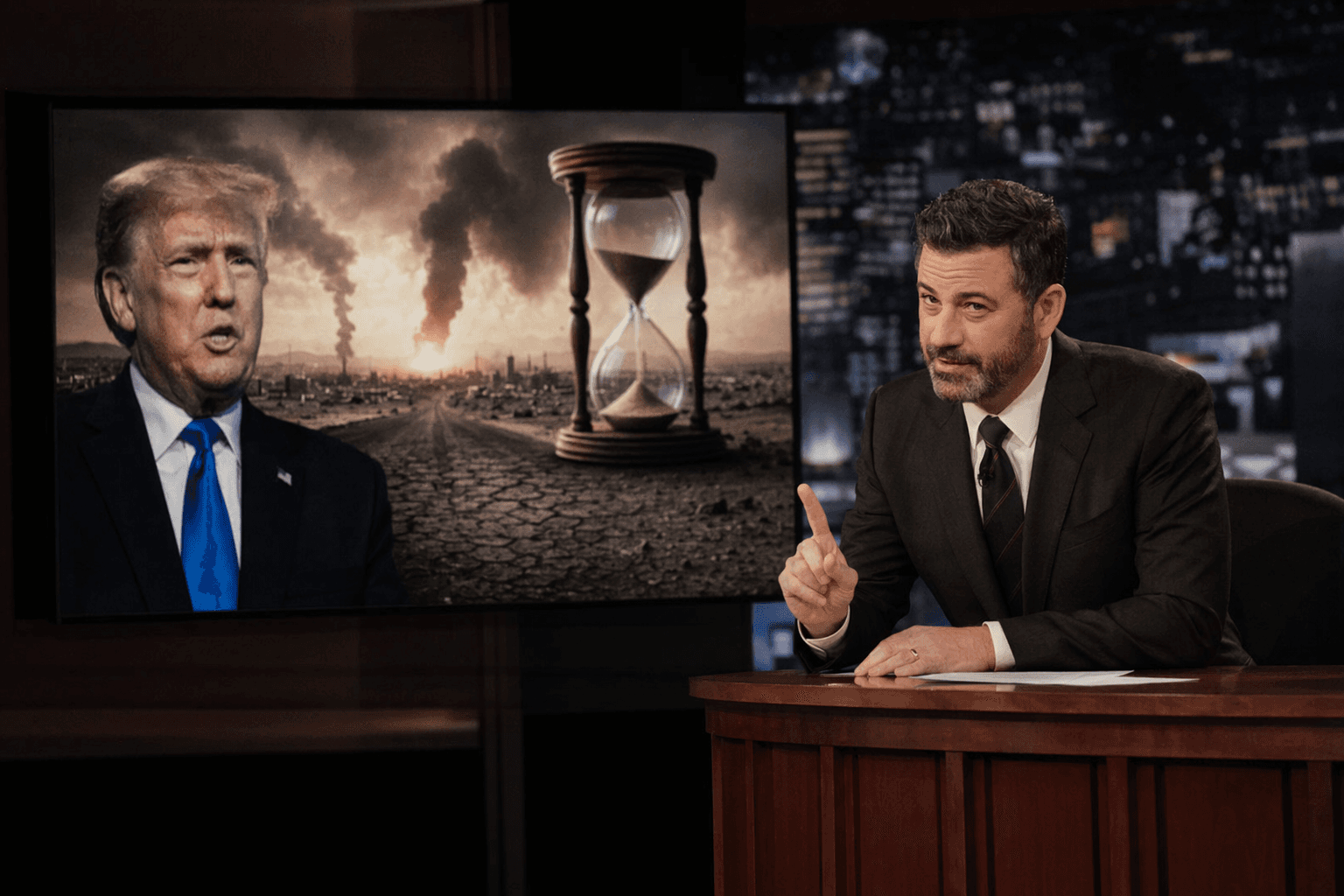
Jimmy Kimmel’s joke about Donald Trump backing down on his own deadlines “every Tuesday. It’s like a new episode of ‘NCIS.’” landed because it matched a real pattern. Trump’s ultimatum to Iran kept slipping, turning a show of force over the Strait of Hormuz into a public test of presidential credibility.
On March 21, Trump posted a 48-hour ultimatum demanding Iran fully reopen the Strait of Hormuz or face strikes on Iranian power plants. The deadline moved again on March 23 and then again on April 7, when Trump said he would suspend the “bombing and attack of Iran” for two weeks if the strait reopened. Just hours before Trump’s 8 p.m. ET Tuesday deadline, Pakistan Prime Minister Shehbaz Sharif publicly asked him to extend it by two weeks so diplomacy could continue, and Trump then said he would hold off on military attacks for two weeks.
The repeated resets mattered because the Strait of Hormuz is a vital global oil-shipping chokepoint. Every shift in the deadline carried implications for oil markets, regional security and international trade, while also deepening the sense that U.S. policy was being rewritten in real time. As the rhetoric escalated, the threats expanded from power plants to bridges and desalination facilities before settling into a broader ceasefire framework that still lacked a clear end state.
The instability also carried human costs. After early U.S.-Iran talks failed, officials saw the prospects for a durable deal as poor, with no trust between Washington and Tehran. Later in the crisis, tens of thousands of seafarers were stranded around the Persian Gulf because of security concerns, a reminder that deadlines on a screen can quickly become hazards for crews, cargo and coastal communities.

By late April and early May, the ceasefire had been extended again, but the conflict remained unresolved. That is why Kimmel’s joke resonated far beyond late-night television. The humor came from the same place as the alarm: a pattern of shifting red lines that blurred the line between strategic ambiguity and political improvisation, while allies, markets and shipping routes waited for the next two-week delay.
Know something we missed? Have a correction or additional information?
Submit a Tip