King Tide and Surge Caused Major Coastal Flood Advisory for Bay Shoreline
A coastal flood advisory was issued for the Bay Area on January 4, 2026, as king tides plus storm surge drove a high tide roughly 2.56 feet above normal, producing localized inundation and prompting warnings about road closures and slope stability. The event highlights growing risks to San Francisco County shoreline infrastructure, businesses and homes as high tides increasingly interact with storm systems and rising seas.

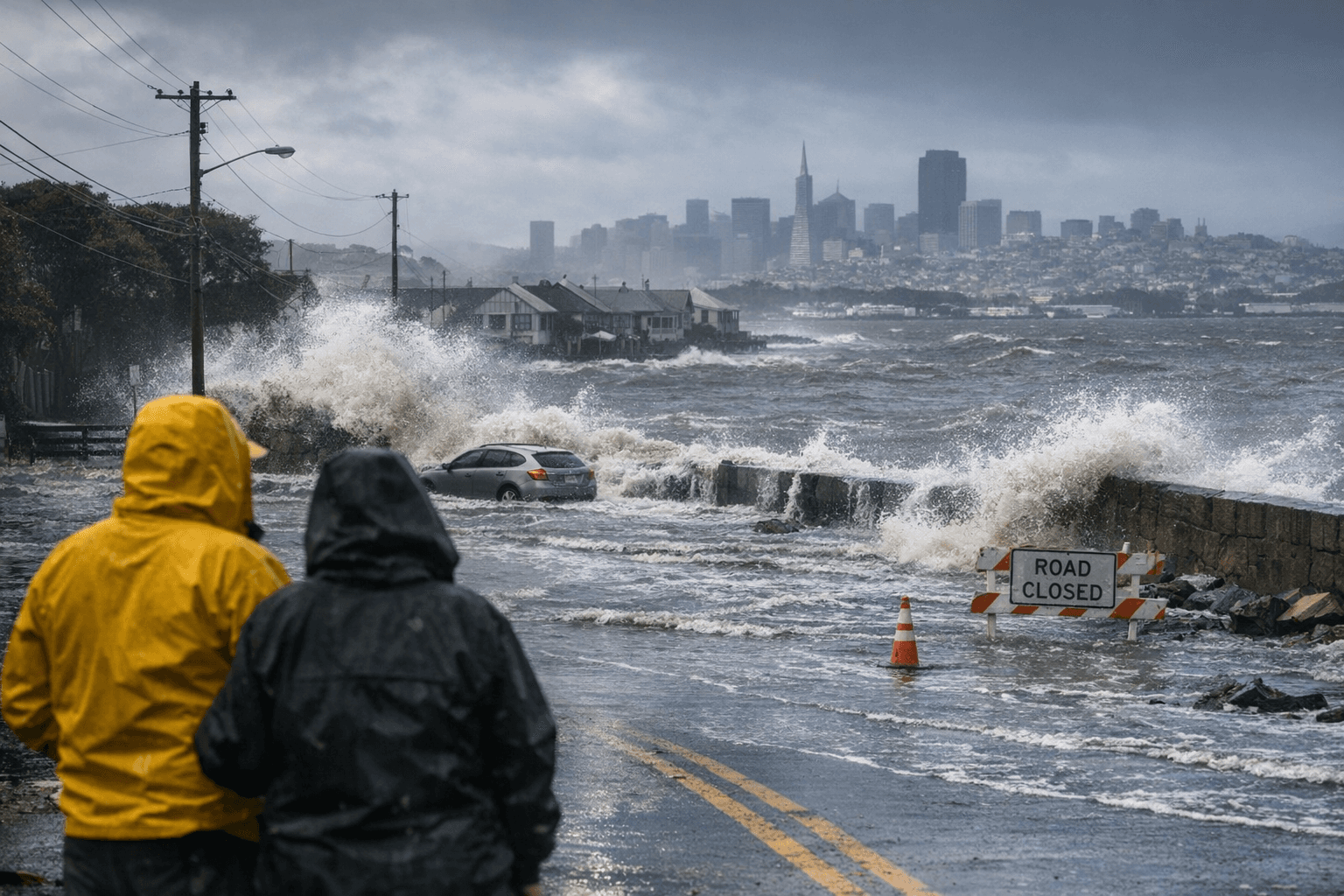
On January 4, San Francisco County and neighboring coastal communities experienced one of the highest high tides on record when king tides combined with storm surge to push a high tide roughly 2.56 feet above normal. A coastal flood advisory covered the San Francisco Bay shoreline, San Pablo Bay, Monterey Bay and portions of the Pacific Coast, and officials warned that saturated soils and elevated slide risks in nearby hills increased the danger of secondary impacts beyond shoreline flooding.
The most immediate effects were localized inundation of low-lying shoreline streets and promenades and the potential for temporary road closures where tides overtopped sea walls or reached waterfront roadways. Municipal services faced short-term pressure: crews monitored vulnerable access routes and low-lying infrastructure, and transit and commercial operations along the shoreline faced delays or altered schedules while waters receded. Forecasters said tides would subside as the moon’s alignment changed and the storm surge eased, limiting the duration of acute flooding.
For San Francisco County residents and local officials, the episode is more than a one-day disruption. Events that place tides multiple feet above normal impose recurring costs on public works budgets, accelerate deterioration of seawalls and roadways, and raise the probability of property damage in waterfront neighborhoods. Repeated episodes of king-tide driven inundation can also lead insurers to reprice coastal risk, increase premiums for at-risk properties, or reduce coverage availability, which in turn affects home values and household budgets.
Longer term, the interaction of storm surge with naturally high king tides is consistent with the broader trend of increasing coastal flood frequency as mean sea level rises. That raises policy questions for San Francisco County: whether to prioritize hard infrastructure such as seawalls and flood gates, invest in nature-based buffers and wetland restoration, or adjust land-use and building standards in flood-prone zones. Each approach carries trade-offs in cost, timeline and effectiveness; sustained budget planning and updated flood mapping will be necessary to allocate resources efficiently.
Residents living or working near the shoreline should expect intermittent disruptions to access and services during high-tide and storm windows and should follow local advisories when issued. City planners and policymakers will need to weigh short-term maintenance and emergency response expenses against long-term adaptation investments to limit the economic and social impacts of increasingly frequent high-water events.
Sources:
Know something we missed? Have a correction or additional information?
Submit a Tip