Knicks Finals run could soften James Dolan’s long fan resentment
A Knicks title would give James Dolan his best shot at redemption, but it may only narrow the gap between winning and trust, not close it.
A Finals run changes the conversation, but not the history
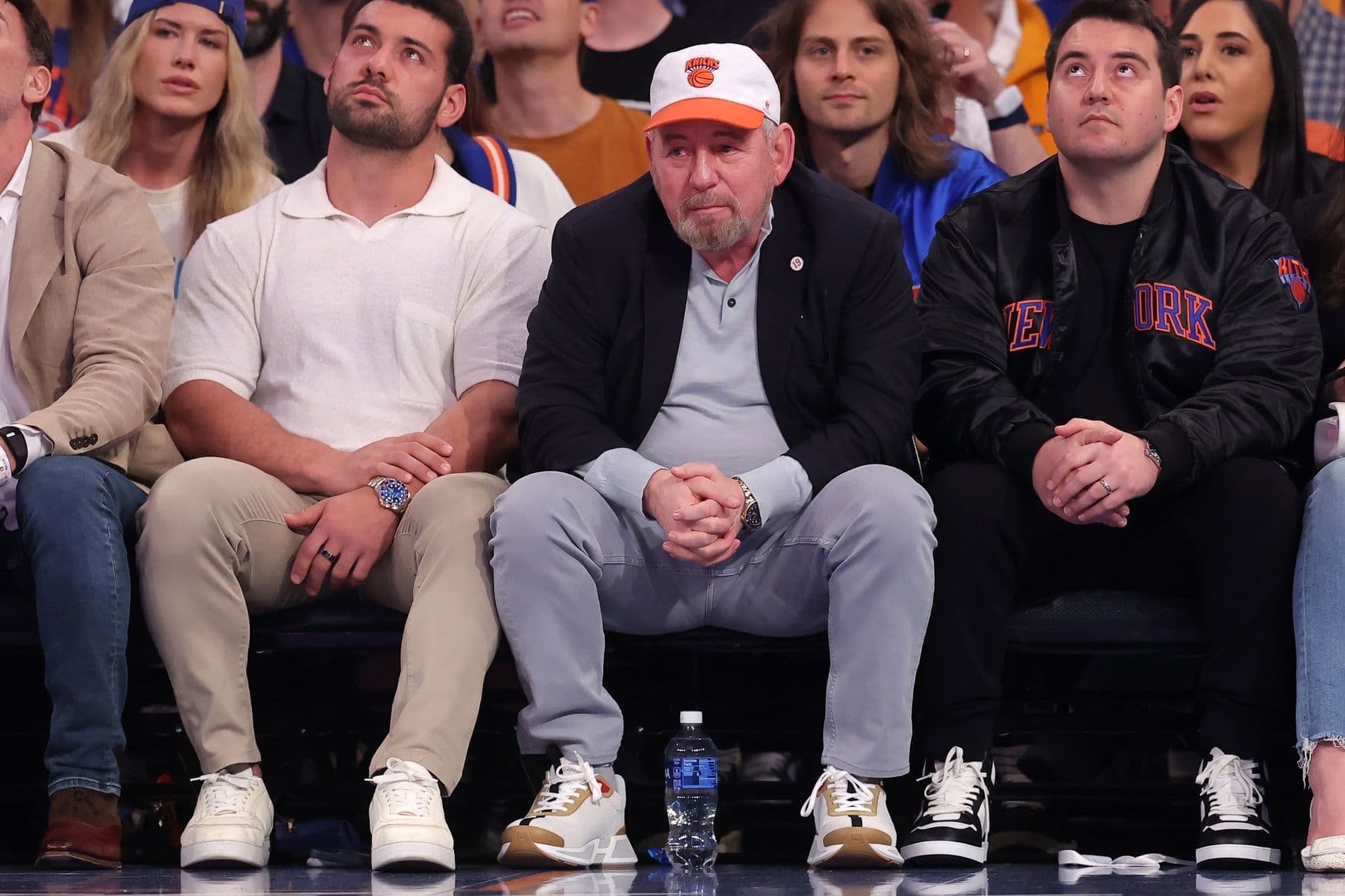
James Dolan has spent more than two decades as the face of Knicks frustration, so a trip to the NBA Finals creates an unusual kind of test: not whether New York can celebrate, but whether it can forgive. The team’s run gives him something he has rarely had in the Knicks era, a public case that results can still matter more than resentment, yet the scale of that resentment means even a championship would not automatically wash it away.
The stakes are unusually high because the Knicks are not a small-market curiosity. They are one of the NBA’s most visible franchises, and their ownership is inseparable from Madison Square Garden, the arena and the institution that defines so much of basketball life in New York. Dolan, who is executive chairman and chief executive officer of Madison Square Garden Sports Corp., has controlled the Knicks since 1999, long enough for generations of fans to judge him not by promises, but by the chronic absence of the one thing the franchise is built to chase.
Why this run feels bigger than one playoff march
The Knicks last won an NBA championship in 1973, and before this 2026 run they had not reached the NBA Finals since 1999. That leaves the franchise with a 53-year title drought, a statistic that explains why every postseason breakthrough is immediately freighted with history. For Dolan, the Finals are not just another step in a playoff bracket. They are a chance to point to a concrete achievement after years in which the team’s brand has been associated as much with disappointment as with ambition.
That tension is part of what makes the Knicks different from most other teams. A normal ownership cycle can survive a few down years if the broader relationship with fans stays intact. In New York, the emotional accounting is harsher. The club’s enormous visibility means every failure is magnified, and every sign of progress is treated as either a breakthrough or a false dawn. A Finals berth therefore carries a double meaning: it is a basketball accomplishment, and it is a referendum on whether Dolan’s tenure can ever be judged on more than its controversies.
The resentment Dolan carries into the Finals
Dolan’s ownership has been marked by years of boos, skepticism and public conflict. The most damaging episodes are the ones that hardened the idea that the problem was not simply losing, but the tone of the relationship between owner and fan base. In February 2017, the Knicks banned Charles Oakley indefinitely from Madison Square Garden after an altercation with security, after Oakley was forcibly removed from a Knicks game and arrested. That episode resonated far beyond one former player and one night at the arena. It became shorthand for a broader belief that the organization was detached from the people who cared most about it.
That matters because ownership reputation is not built only on wins and losses. It is shaped by trust, tone and whether fans believe the person in charge understands the franchise’s identity. Dolan’s long run has included enough friction to make that harder. The result is a rare kind of sports relationship in which a winning season does not necessarily erase the memory of years of conflict.
What reaching the Finals already did for Dolan
Even before any championship is decided, the Finals appearance has changed the immediate narrative around Dolan. In January 2026, he gave a rare interview and said he expected the Knicks to reach the NBA Finals. When the team clinched that berth, Associated Press reported on May 26, 2026, that the accomplishment satisfied one of Dolan’s stated mandates. That is not the same as redemption, but it is evidence that performance can still reshape the terms of the debate.
CNBC reported on May 28, 2026, that the Finals run was already reshaping how New Yorkers view him. That shift is important because it shows how quickly public judgment can soften when a team delivers in a city that has waited so long. For an owner whose legacy has been defined by conflict, success can create a temporary truce. It can replace open hostility with cautious optimism, at least while the run is still alive.
But temporary relief is not the same as absolution. Fans may stop booing as loudly when the team is winning, but that does not mean they have forgotten why they were booing in the first place. A Finals appearance is evidence of competence. A title would be evidence of greatness. Neither automatically proves the wider relationship has been repaired.
Why a championship would still leave a harder question behind
If the Knicks win it all, Dolan would own the most powerful rebuttal possible to years of criticism. A championship ends the drought, validates the roster-building and coaching, and gives the franchise a tangible result fans can point to for the first time since 1973. It also gives Dolan something that has eluded him for most of his tenure: an argument that under his watch the Knicks ultimately delivered the highest prize.
Still, the larger question would remain whether one title can rewrite a legacy built over 25 years of turbulence. Sports history is full of owners who were forgiven far more quickly for winning than for failing, but that forgiveness is rarely complete. Results can buy silence. They can even buy gratitude. Trust is harder. It requires consistency, restraint and a belief that the next chapter will not recreate the problems of the last one.
For the Knicks, that distinction is especially sharp because the franchise’s identity is so closely tied to Madison Square Garden and to the emotional weight of being New York’s team. Winning can make Dolan look better. It can even make him look, for a while, like a different owner. What it cannot instantly do is erase the memory of the years when the team’s most recognizable public moments were less about basketball than about conflict.
The legacy test begins after the celebration
That is why the Finals run matters as more than a sports story. It is a test of whether an owner’s reputation is finally governed by the scoreboard alone, or whether trust remains its own separate ledger. Dolan has spent years as one of the league’s most booed figures. A title would soften that image, perhaps dramatically. It would not, by itself, settle the larger verdict on his Knicks era.
If the franchise closes out a 53-year championship drought, the celebration will be real and the relief will be enormous. But the deepest measure of Dolan’s legacy will not be whether he briefly became more popular during a Finals run. It will be whether winning can truly outlast the resentment that built up over decades.
This article was produced by Prism’s automated news system from verified source data, official records, and press releases, then run through automated quality and moderation checks before publishing. The system is built and supervised by the people who set the standards it runs under. Read our full AI policy.
Know something we missed? Have a correction or additional information?
Submit a Tip