Kootenai County blood centers urgently need type O and platelet donors
Vitalant warned late January that blood supplies are low, especially O and platelets; donors in Kootenai County are urged to give to support surgeries, trauma care, and cancer patients.
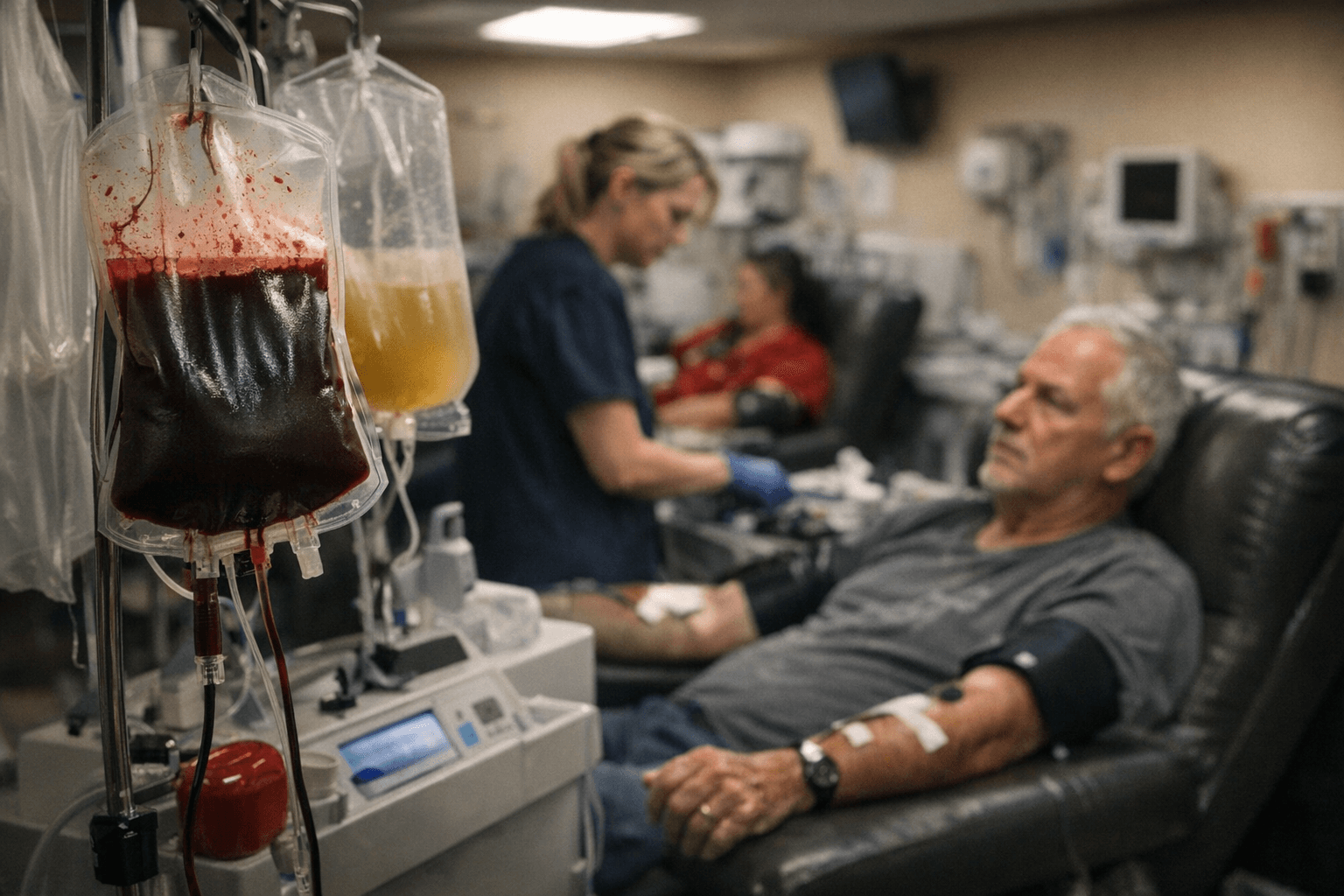
Vitalant issued a late-January call for eligible blood donors as supplies head into February, emphasizing the need for type O donors and platelet donors to support local hospitals and patients. The nonprofit reports a particularly tight supply of O-negative blood and says regional stock across all blood types is well below its usual target.
“We are hovering about a one and a half day supply of O-negative blood,” said Vitalant communications manager Kevin Adler, who added that O-negative “can go into anybody in a moment's notice without having to test or check to see which blood type they have.” Adler also said the organization currently has a roughly two-day supply across all blood types and that “we typically try to have or maintain a four-day supply.” Those shortfalls matter for accident and burn victims, people facing heart surgery or organ transplants, and cancer patients who often rely on platelets to stop bleeding.
January collections are lagging. Vitalant usually brings in roughly 2,000 units of blood in January for the Spokane region but had recorded about 1,300 units as of Monday, a figure reported by Northwest Public Broadcasting. Adler pointed to the flu season as a factor: “More blood donations of all kinds are needed, [as] the flu season has kept more regular donors at home.” Platelets also present a time-sensitive need because “platelets have a short storage life and must be used within a week of donation.”
To make donating easier, Vitalant is offering a $15 gift card to donors who opt in to Vitalant Donor Rewards and use code GIVELOVE-2026-V. Appointments can be made online, via the Vitalant mobile app, or by calling 1-877-258-4825. The donation process typically takes about an hour from arrival to finish, with the actual collection lasting about 10 minutes, Adler said.
Several local and regional drives are scheduled in February. Coeur d’Alene area dates and locations reported by the Coeur d’Alene Press include: Tuesday, Feb. 3, noon to 4:15 p.m. at Kellogg Elks Lodge, 202 1/2 McKinley Ave.; Wednesday, Feb. 18, 9:45 a.m. to noon at WA Trust Bank, 218 E. Lakeside Ave., Coeur d’Alene; Wednesday, Feb. 18, 2 to 4 p.m. at Buck Knives, 660 S. Lochsa St., Post Falls; Tuesday, Feb. 24, 9 a.m. to 1 p.m. at Kootenai High School, 13030 E O’Gara Road, Harrison; Tuesday, Feb. 24, 10 a.m. to 2 p.m. at Bayview Community Council, 347076 N. Main Ave.; and Friday, Feb. 27, 11:30 a.m. to 4:30 p.m. at Post Falls Stake, 1670 McGuire Road. People can also donate at Vitalant’s ongoing donation site at 405 W. Neider Ave., Suite 102, Coeur d’Alene.
Vitalant’s own February listing shows additional drives on Feb. 18 at Slick Rock Tanning & Spa locations: Spokane Valley, 212 N. Sullivan Road, 1:30 p.m. to 3:45 p.m.; Hayden, 281 W. Hayden Avenue, 1:30 p.m. to 3:00 p.m.; Post Falls, 724 N. Highway 41 Unit E, listed as 9:00 a.m. to 11:00 p.m.; and Northside Spokane, 8701 N. Division Street, 9:00 a.m. to 11:15 a.m. The unusually long Post Falls window appears in Vitalant’s posting; donors should confirm hours when booking.
Eligibility rules have also eased in some areas: previous restrictions tied to spending time in certain countries have been removed, and people who received tattoos from licensed artists may donate the same day. However, if a person received a tattoo in a state that does not regulate tattoos, such as Idaho, a three-month waiting period still applies.
“Every 2 seconds somebody in the U.S. needs blood. Make an impact in our community. Your support is critical for patients who are struggling with chronic blood disorders, cancer, and traumatic injuries,” Vitalant’s site message says. For Kootenai County residents, the shortage translates to potential delays or strain on care for surgeries, cancer treatment, and emergency trauma. Donating one hour of time at a local drive helps replenish a resource that cannot be stockpiled and that local hospitals rely on day to day.
Know something we missed? Have a correction or additional information?
Submit a Tip