Kootenai County Drug Court launches alumni support group to strengthen long-term recovery
Kootenai County Drug Court launched an alumni support group to help graduates and current participants maintain recovery and strengthen community ties.

Kootenai County’s Drug Court launched an alumni support group aimed at strengthening long-term recovery for program graduates and current participants, county postings and local coverage say. The move adds a peer-support element to a program that already offers a structured, court-supervised treatment alternative to incarceration for substance-dependent defendants.
The Kootenai County Adult Drug Court Program operates in Coeur d’Alene and spans roughly 15-18 months with four phases plus a three-month Aftercare component. The county’s website describes the court as “a specialized Treatment Court which provides an alternative to traditional prosecution” and notes that participants must attend intensive outpatient treatment, appear before the same Drug Court Judge twice a month, remain on intensive probation supervision and submit random observed drug tests at a minimum of twice per week. Those operational controls are designed to support recovery while monitoring compliance during program participation.
The Drug Court has a decades-long track record in the county. Initial screening began under Judge Judd on Sept. 9, 1998, “9 Sept. 98 – Judge Judd begins to screen candidates. Part-time coordinator assigned.”, and sessions commenced in October 1998. Research descriptions of the court note a sample of 141 offenders used for evaluation and point to the court’s focus on non-violent defendants charged with possession of Schedule I-III substances, forged prescriptions, some possession-with-intent-to-sell cases and some property crimes.
State-level review has characterized the local program as both accountable and treatment-focused. ISP Idaho said, “By any standards Kootenai County Drug Court is a viable functioning drug court which does hold substance abusers accountable for their decisions while providing mandatory, intensive treatment combined with drug testing and the use of graduated sanctions and rewards.” The court’s team-based decision-making includes the judge, a coordinator, prosecutor, defense counsel or public defenders, probation officers and treatment providers; Kootenai County materials also list jail staff or law enforcement as possible team members. Team meetings happen before court sessions to update client status and make consensus-based decisions; sessions are held the second and fourth Tuesday of each month.
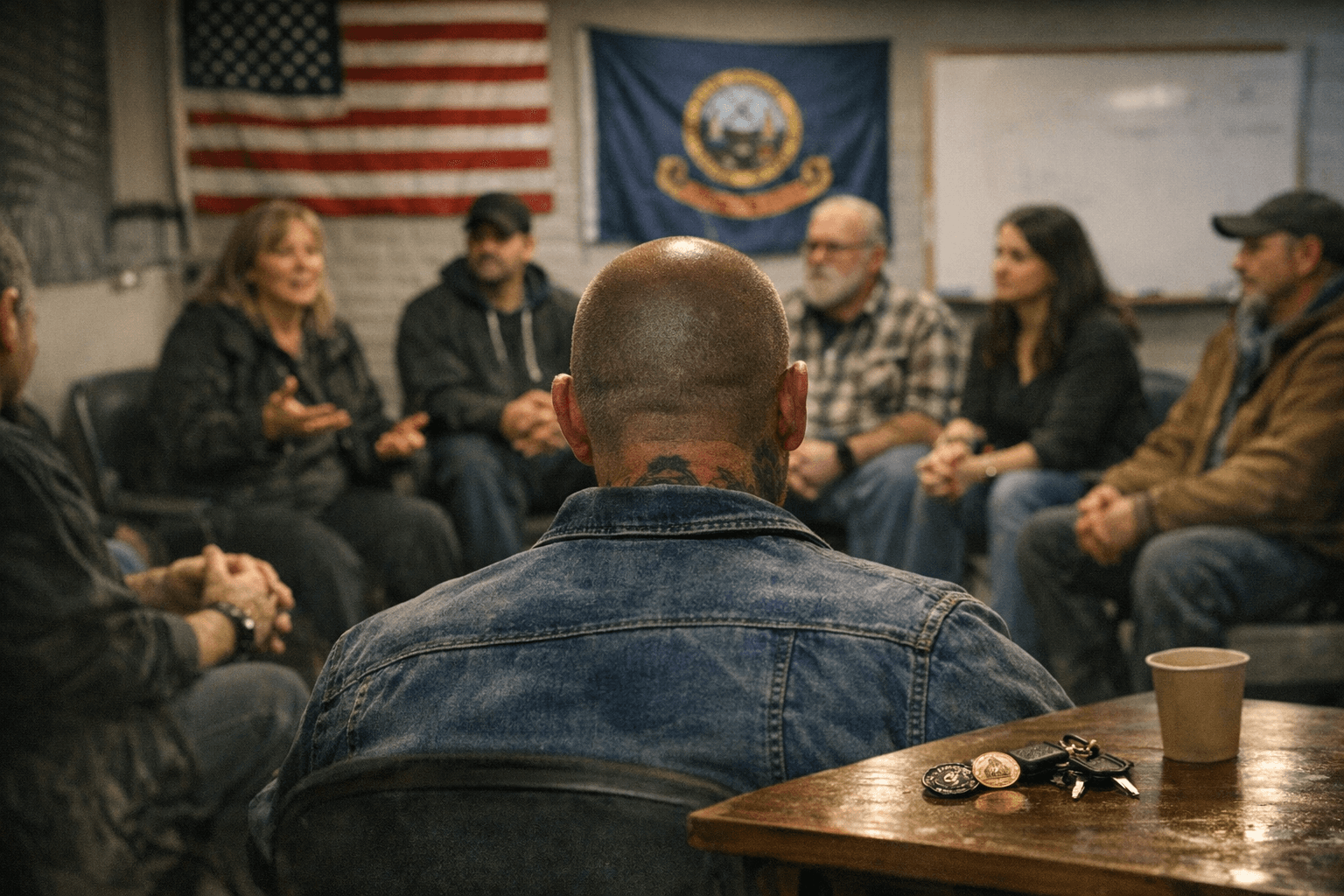
The alumni support group arrives at a transition point for participants. Graduates emerge from a program that can require frequent judicial contact and bi-weekly drug testing and then move into Aftercare and community life. Sources announcing the group do not provide operational details, there is no publicly available information yet on who is organizing the group, meeting schedules, location, membership rules, leadership or contact information. County and court officials will need to clarify whether current participants will be formally integrated with graduates and how participation will be tracked or supported.
For local residents, the alumni group could extend recovery supports beyond court supervision and strengthen community ties that reduce isolation and relapse risk. County officials, the Drug Court coordinator and treatment providers are the logical next contacts for those seeking specifics about meetings or wanting to get involved; reporters and community partners will likely follow up to confirm organizers, logistics and any plans to measure the group’s impact on long-term recovery.
Know something we missed? Have a correction or additional information?
Submit a Tip