Kootenai County Prepares for March 3 Total Lunar Eclipse, Viewing Tips
North Idaho skywatchers were reminded a total lunar eclipse - a "blood moon" - will sweep western North America overnight March 2-3, with EarthSky reporting totality lasting 59 minutes.
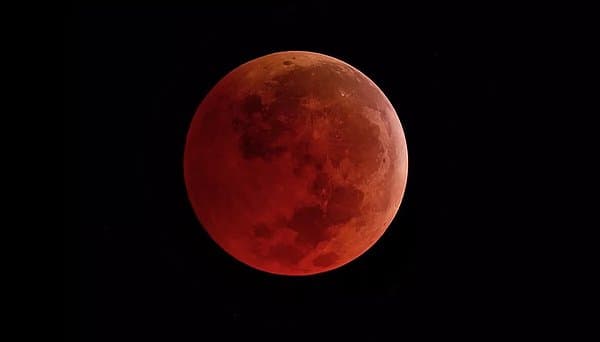
“North Idaho skywatchers were being reminded about several March 2026 celestial events, most notably a total lunar eclipse on the night of March 3 (often called a 'blood moon'), and the March equinox that signals the start of astronomical spring. The Coeur d’Alene Press’s g” That notice puts Coeur d’Alene and broader Kootenai County on alert for the overnight March 2-3 total lunar eclipse identified by EarthSky, Seasky, LiveScience and NASA.
Seasky defines the phenomenon plainly: “A total lunar eclipse occurs when the Moon passes completely through the Earth's dark shadow, or umbra. During this type of eclipse, the Moon will gradually get darker and then take on a rusty or blood red color.” Travel + Leisure similarly calls it one of the year’s most dramatic skywatching events and LiveScience labels the March 3 total lunar eclipse “the standout event,” saying the full moon will “turn a deep red, creating one of the most photogenic sights of the year.”
Visibility patterns matter for local planning. Seasky and EarthSky list the eclipse as visible across much of North America, eastern Asia, Australia and the Pacific Ocean, with NASA singling out heightened visibility for West Coast viewers and noting the event “will occur right before sunrise on the 3rd” for North America. EarthSky adds geographic detail: the Blood Moon will be high in east Asia on the evening of March 3, start on the evening of March 2 in Hawaii, and appear in North America as an early morning event with the moon sinking in the west before dawn.
Sources give differing clock times for the U.S. window. LiveScience reports totality “around 4:04 to 5:03 AM EST, peaking at 4:33 AM EST.” Travel + Leisure, citing Time and Date, gives a different Eastern time line: eclipse begin 4:50 a.m. ET, with totality starting at 6:04 a.m. ET and “lasting about an hour.” EarthSky reports a duration of totality lasting “59 minutes!” and NASA emphasizes the qualitative timing of “right before sunrise.” Given these discrepancies, confirm local, zone-aware times via NASA, Time and Date or EarthSky before setting an alarm.
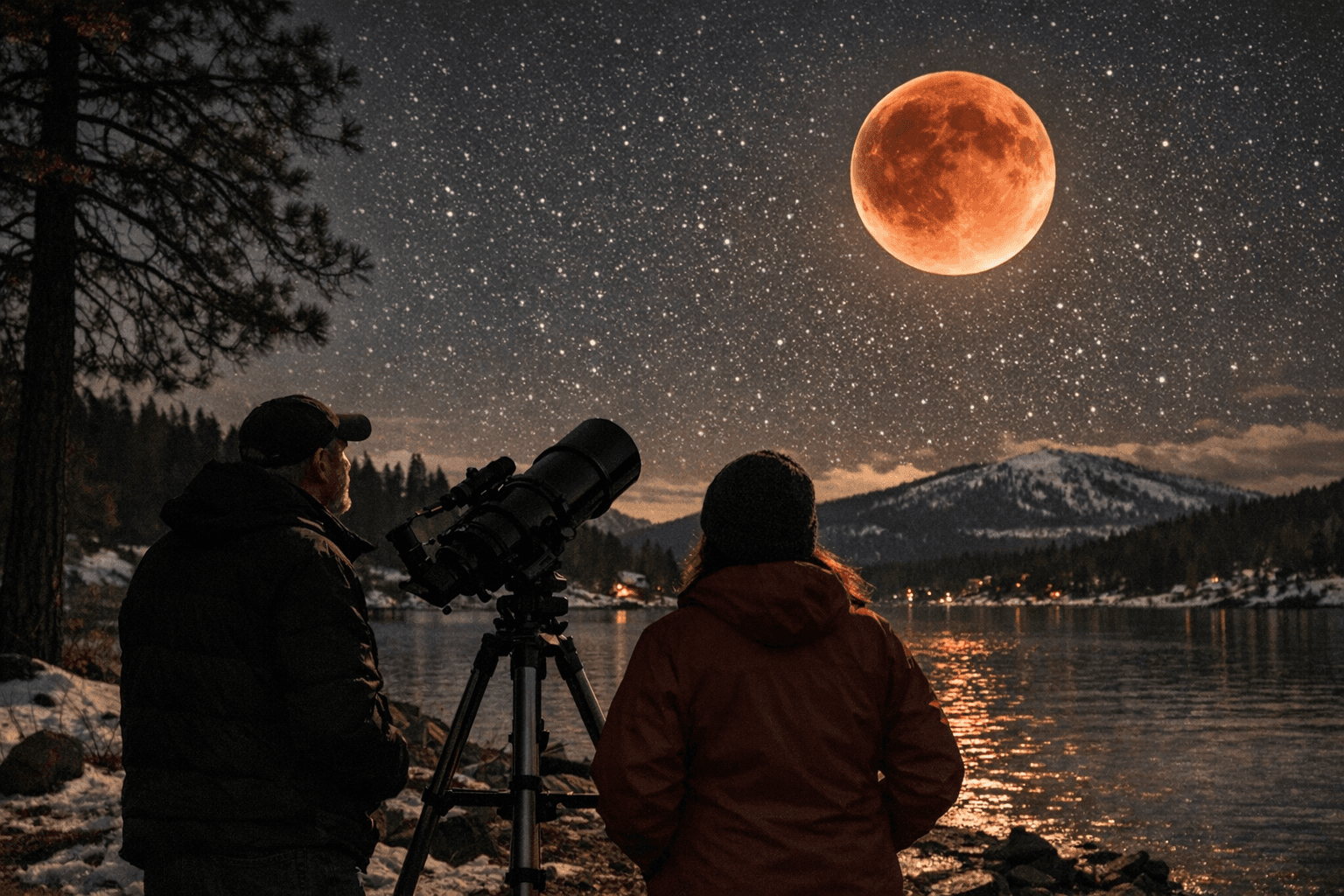
Practical viewing and photography guidance comes from LiveScience: the lunar eclipse “is safe to watch without any specialist equipment,” though binoculars or a telescope enhance the view. LiveScience recommends 8x42 or 10x50 binoculars for quick handheld glimpses and cites the Celestron SkyMaster 15x70 as an example of a tripod-mounted setup that brings the moon closer for photos. Travel + Leisure and LiveScience both call the event a “fantastic photographic opportunity,” and Travel + Leisure cautions that “If clouds get in the way…” viewers will need a clear sky to see the reddish hue.
Other March and 2026 context is relevant for night-sky planning in Kootenai County. Seasky lists a New Moon on March 19 at 01:26 UTC, and NASA lists the March 20 equinox as the start of astronomical spring. Looking beyond March, EarthSky and Travel + Leisure note the next total lunar eclipse visible to much of the U.S. will occur on December 31, 2028, with EarthSky adding subsequent total lunar eclipses on June 26, 2029 and December 20, 2029.
Local skywatchers in Coeur d’Alene, Hayden, Post Falls and Sandpoint should treat the March 2-3 overnight window as the event to plan for, confirm exact local times from NASA, Time and Date or EarthSky, and prepare binoculars or a small telescope if they want enhanced views during the roughly one-hour span of totality reported by EarthSky.
Sources:
Know something we missed? Have a correction or additional information?
Submit a Tip