KPMG Chief Economist Diane Swonk: Revisions Trim 862,000 Payrolls, 2025 Added 181,000
KPMG chief economist Diane Swonk said benchmark revisions cut 862,000 payrolls from April 2024–March 2025 and that 2025 added about 181,000 jobs.

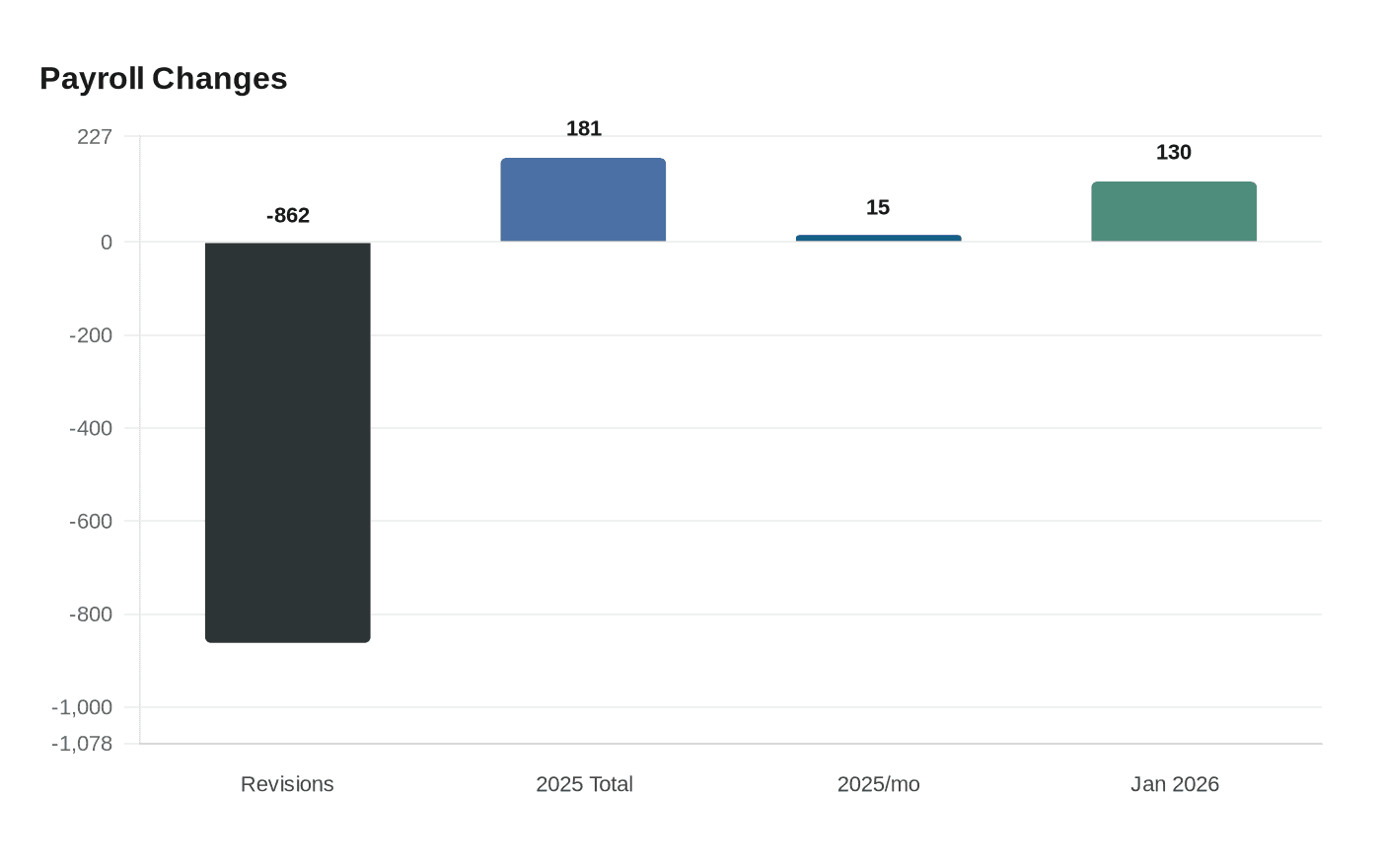
Benchmark revisions to U.S. payroll data trimmed roughly 862,000 positions from April 2024 through March 2025, KPMG Chief Economist Diane Swonk reported in a firm analysis released February 11, 2026. The revised picture shows that payrolls still grew in 2025, but at a much slower pace than earlier estimates: Swonk concluded payrolls generated about 181,000 jobs in 2025, an average of 15,000 per month.
The analysis also flagged a private-sector rebound in January 2026, with payrolls rising by 130,000 jobs and all of that gain concentrated in private employers. Sectoral strength showed up in healthcare and social assistance and in construction, while several financial and information subsectors remained soft. Swonk noted that temporary layoffs were falling and measures of long-term unemployment were easing, indicating some improvement in labor-market durability even as headline growth was pared back.
For workers, the revisions mean the labor market was less robust during the April 2024–March 2025 window than previously thought, reducing the cushion for wage growth and job mobility in that period. Job seekers and employees weighing moves should factor a slower hiring backdrop into timing and negotiation strategy. Long-tenured employees and those in weak subsectors such as some parts of finance and information may face protracted search periods if displaced, while workers in healthcare and construction may see steadier demand.

For employers and HR leaders, the recalibration affects workforce planning, talent-sourcing decisions, and compensation budgeting. Human resources teams that set hiring targets and headcount budgets on the assumption of a stronger market may need to adjust plans for bench strength, contingent staffing, and internal mobility programs. Compensation strategy could shift from across-the-board raises to targeted pay adjustments aimed at critical roles, and talent acquisition may emphasize retention and skills development over aggressive external recruiting.
As an authored KPMG analysis, Diane Swonk’s report is intended for clients and HR leaders who use such commentary to inform workforce planning and strategic decision making. The revised data underscore the importance of monitoring benchmark updates as part of quarterly and annual planning cycles.
Employers and workers should watch upcoming monthly reports and sector-level readings to see whether the January 2026 private-sector rebound broadens and whether soft subsectors regain footing, as those trends will shape hiring, pay, and retention decisions in the months ahead.
Know something we missed? Have a correction or additional information?
Submit a Tip